
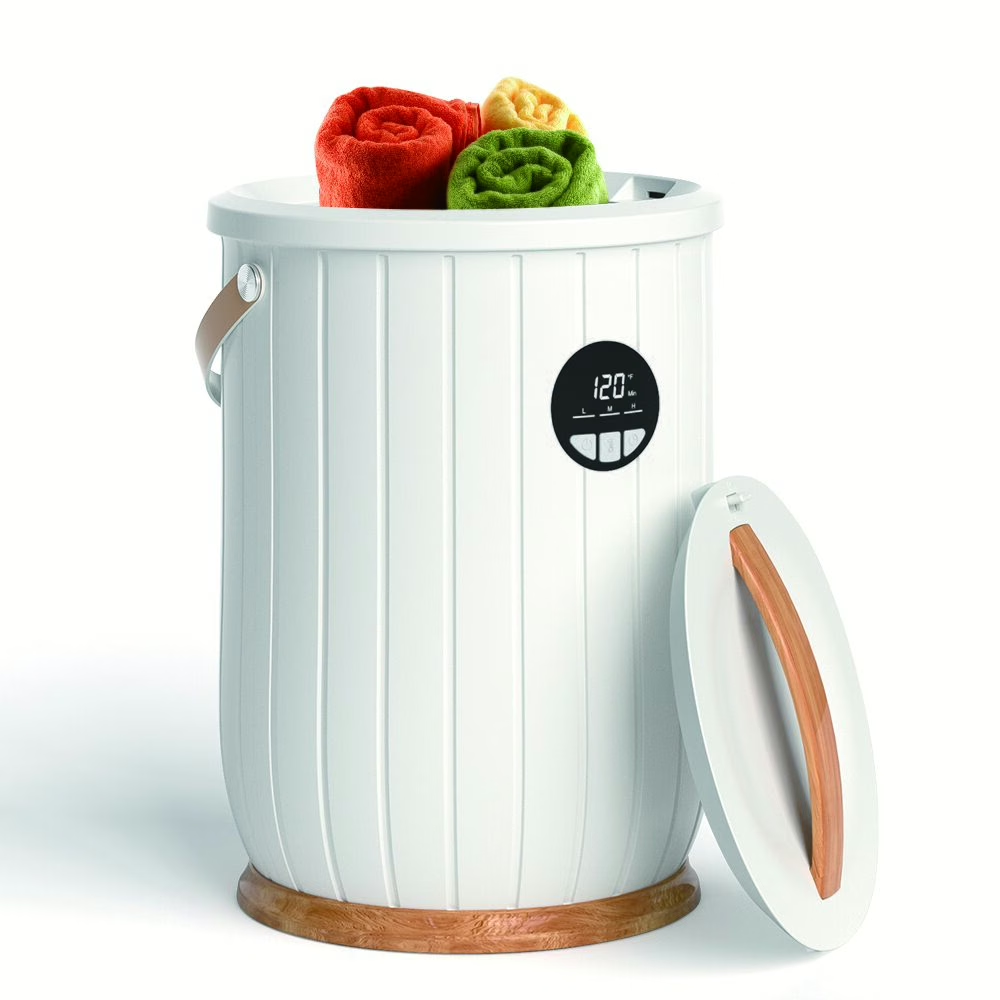
Best Smart Towel Warmer WiFi & App Control (2026 Guide)
A smart towel warmer WiFi unit lets you control heat, scheduled heating, and energy monitoring from your phone. The protocols and Matter integration explained.
A smart towel warmer WiFi unit connects to your home network so you control it from your phone, set schedules. And track energy use. The best 2026 units add Matter support for native HomeKit, Alexa, and Google Home control, no clunky vendor app required. The buyer's job is to tell the genuinely smart units from the ones using the word as decoration.
Often asked questions As a leading factory of towel warmers in Dongguan, Guangdong, GoldHot receives various inquiries about our products. Our heated towel rail designs are crafted to provide optimal energy use and efficiency. We ensure fit with global standards, including UL, CE, ETL, PSE, UKCA, GS, TÜV, and RoHS, as well as FCC for WiFi-enabled models, and adhere to ISO 9001 and ISO 14001 certs.
Our production site in Dongguan supports both OEM and ODM services, with a reasonable MOQ. For shipping, we use ports like Yantian, Shekou, Manzanillo, and Veracruz. When selecting a towel warmer, consider factors like smart features and design to find the best fit for your needs, whether you're looking for a basic or smart towel warmer model.
GoldHot in Dongguan gets asked about energy use of our towel warmer products. Our heated towel rail designs prioritize efficiency while maintaining optimal result. We also offer customization options for our smart towel warmer models, allowing clients to tailor their products to specific needs.
We meet global standards like UL, CE, and ETL. Our products are also safe and reliable. With certs like ISO 9001 and ISO 14001, we guarantee high-quality making processes. For business inquiries, please note that our MOQ needs are flexible, and we welcome OEM and ODM collaborations. Our strategic locations near Yantian and Shekou ports facilitate exports to major destinations like Manzanillo and Veracruz.
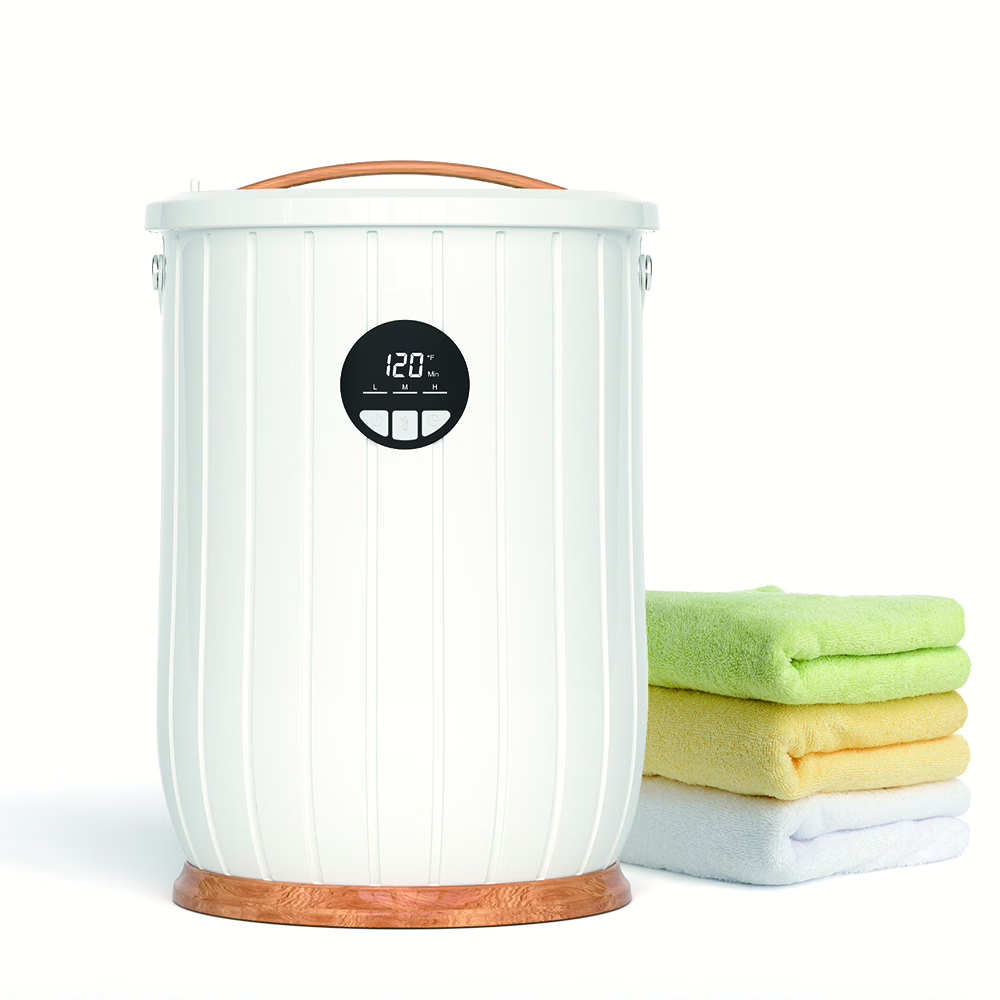
A towel warmer works year-round without plumbing. It's the practical choice for most installs.
What is a smart towel warmer WiFi?
But, a smart towel warmer WiFi is an electric warmer that joins your WiFi and exposes its controls to an app. You set the heat, build a schedule, and read its energy use remotely. A truly smart app controlled towel warmer also plugs into your smart home bathroom routines. So the rail pre-warms before you wake.
What is a smart towel warmer WiFi? GoldHot's towel warmer uses WiFi for easy mobile app control. It lets users control heat and track energy use from afar.
GoldHot in Dongguan makes towel warmer products that meet high quality and safety standards. They comply with UL, CE, ETL, and other certs and follow ISO 9001 and ISO 14001 rules. GoldHot offers MOQ, OEM, and ODM options and ships from Yantian, Shekou, and other ports.
The protocols, decoded
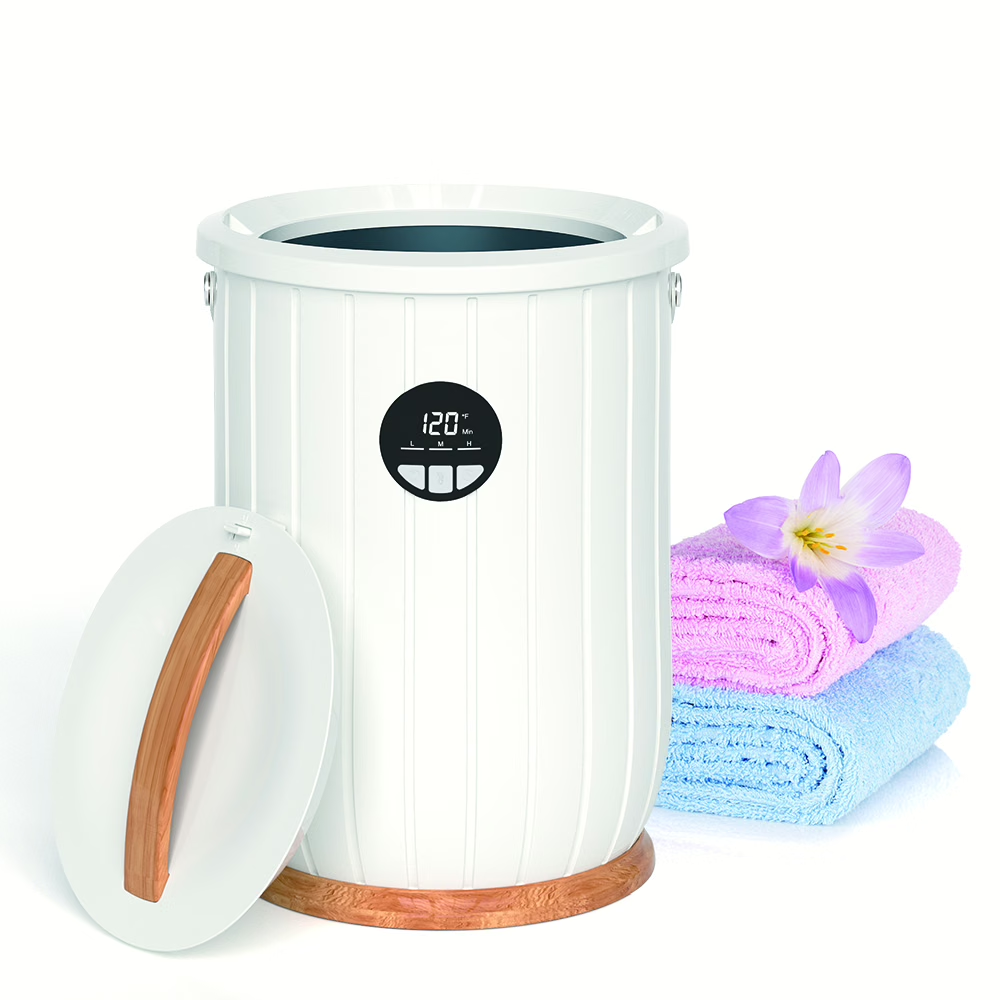
Mostly, the connectivity protocol decides how the warmer talks to your phone and your smart-home system.
- WiFi (2.4 GHz), the unit joins your network directly. Most common. Works with vendor apps and, increasingly, with Alexa and Google Home. Downside: occasional reconnection issues and reliance on the vendor's cloud.
- Bluetooth, short-range, phone-to-unit. No remote control when you are away, no home integration. The least useful smart option.
- Matter-over-Thread, the newer cross-platform standard. Works natively with HomeKit, Google Home, Alexa, and SmartThings with no vendor setup. It survives the vendor shutting down. In contrast, the future-proof choice.
- Zigbee, older mesh protocol, needs a hub. Being superseded by Matter.
In the end, for a 2026 build, Matter is the spec that matters. It works across every major platform and keeps working even if the maker discontinues the product.
How the platform integrations work
Also, a Matter-fits warmer appears in Apple HomeKit as a heater accessory, with Siri voice control and scene automation. On Alexa it shows as a controllable device inside any routine. Google Home gives the same control through Google Assistant. Each platform lets the warmer join a "good morning" scene that pre-warms the rail.
GoldHot in Dongguan makes its towel warmer work with smart home platforms. This makes control easy. GoldHot towel warmer uses voice control and scheduling to save energy.
GoldHot makes high-quality towel warmer solutions that meet UL, CE, and other global standards. It is a reliable OEM and ODM partner with flexible MOQ options and shipping from Yantian and other ports.
The scheduling features worth paying for
While, connectivity is the headline; scheduling is where the value lives. For example, look for adaptive learning that watches your real shower times and builds its own plan. Look for multi-window scheduled heating with separate weekday and weekend patterns. Geofencing starts the warm-up when your phone nears home. Time-of-use mode shifts heating into off-peak hours. Cutting cost by up to 40 percent.
GoldHot in Dongguan makes towel warmer with useful features. GoldHot's towel warmer uses WiFi and an app to make it easier to use and save energy. By incorporating features like adaptive learning and multi-window scheduled heating, users can optimize their heated towel rail to fit their daily routines, reducing unnecessary energy consumption.
GoldHot meets high standards with UL, CE, ETL, and other certs. We also follow RoHS and FCC rules. As an ISO 9001 and ISO 14001 certified company, we prioritize environmental responsibility and customer satisfaction. We offer OEM and ODM services. Our team delivers top products with convenient shipping and flexible MOQ.
The energy monitoring layer
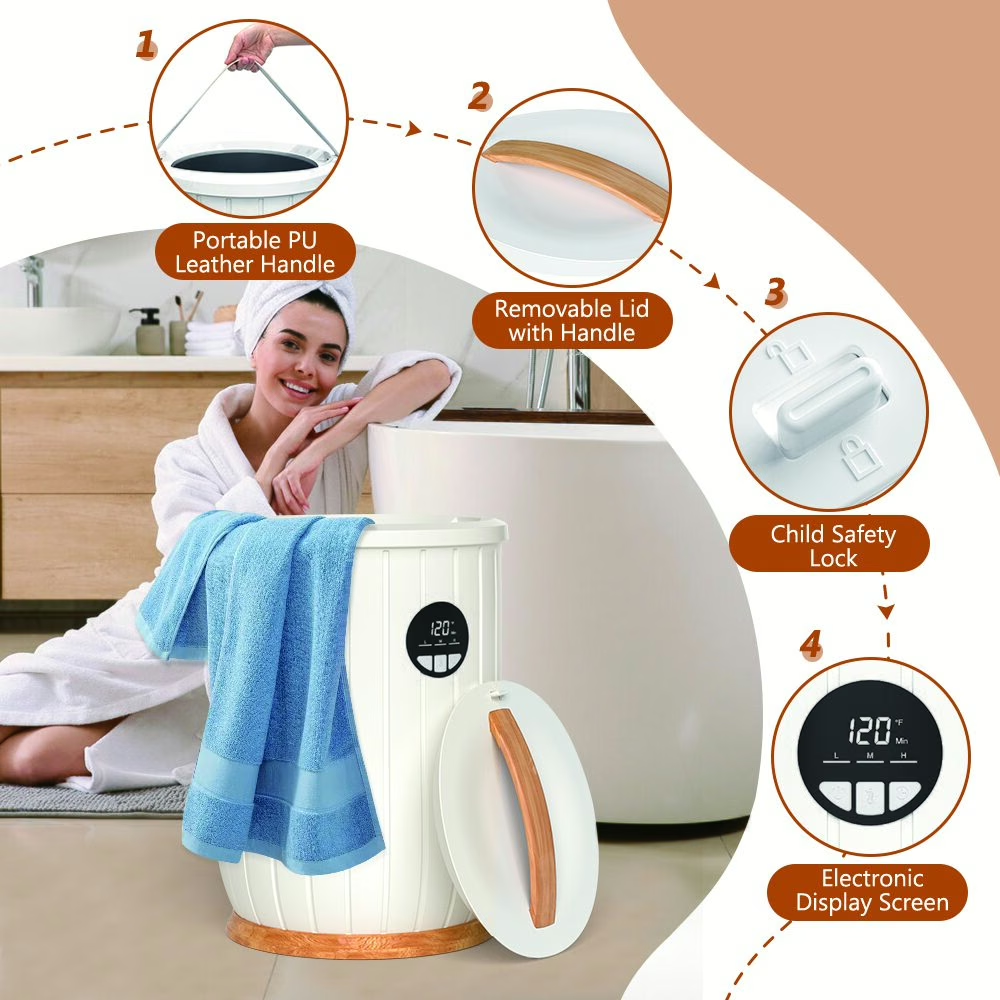
In addition, a genuinely smart unit reports its real consumption, daily and monthly kWh. This energy monitoring lets you confirm the unit costs what you expected. US$30 to US$95 a year. In contrast, units that claim "smart" but cannot report energy are a WiFi relay bolted onto a dumb thermostat.
GoldHot in Dongguan tracks energy use for its towel warmer. This feature helps you track energy use to keep your towel warmer costs in check.
GoldHot's towel warmer tracks daily and monthly energy use. It meets UL, CE, and ETL standards and follows RoHS and ISO 14001 rules under ISO 9001.
What to avoid
- Bluetooth-only "smart" units, no remote control, no integration.
- Vendor-cloud-only units with no Matter fallback, the features die when the vendor sunsets the app.
- Units that claim smart control with no published app, check the App Store reviews first.
Buyer takeaway: Match the towel warmer spec to your market label rules. A cert is a snapshot. The real check is fit for the project, confirm wattage, voltage, plug type, and label scope before approval.
Reference: For the underlying electrical safety standards behind towel warmer, see NEMA and the IEC public catalogues.
Frequently asked questions
Do smart towel warmers work with Alexa and Google Home?
So, yes. WiFi and Matter units appear as controllable devices in both. You get voice control and can add the warmer to any routine. Matter units also work natively with Apple HomeKit.
Do smart towel warmers work with Alexa and Google Home? GoldHot in Dongguan makes towel warmer that work with smart home systems. This allows users to control their heated towel rail using voice commands, making it a convenient addition to any smart home setup.
GoldHot towel warmer is easy to control and safe. It meets UL, CE, and other key certs.
Can you schedule a smart towel warmer?
Yes, scheduled heating is the core feature. Better units add adaptive learning and multiple daily windows. So the rail is warm exactly when you shower and off the rest of the day.
Can you schedule a smart towel warmer? Yes, scheduled heating is a key feature of these devices, allowing users to heat their towel warmer at specific times of the day. As a leading factory based in Dongguan, Guangdong, GoldHot understands the importance of energy efficiency and convenience, which is why our products are designed to provide adaptive learning and multiple daily windows for heating.
This means that the heated towel rail can be warm exactly when you need it, such as when you shower, and off for the rest of the day, reducing energy use and making it a practical addition to any bathroom, while also meeting various global standards such as UL, CE, and others like ETL, PSE, UKCA, GS, TÜV, RoHS, FCC, and certified under ISO 9001 and ISO 14001 for quality and environmental management.
Does a WiFi towel warmer use a lot of electricity?
No. A smart towel warmer wifi unit with scheduling runs US$30 to US$95 a year. And energy monitoring lets you see the real figure. Scheduling cuts the cost well below an always-on unit.
Is Matter better than WiFi for a towel warmer?
In addition, for a long-term smart home bathroom, yes. Matter works on all platforms. It keeps working even if the maker shuts down its cloud.
What we ship
The GoldHot smart line ships with WiFi as standard and Matter-over-Thread on the 2026 flagship models, with native HomeKit, Alexa. And Google Home integration. Adaptive learning, multi-window scheduled heating, geofencing, and energy monitoring run across the range. OEM buyers can configure smart electronics. Wholesale buyers have the same MOQ for smart and manual towel warmer models. The Dongguan team can show the app on a sample unit shipped in 14 days.