
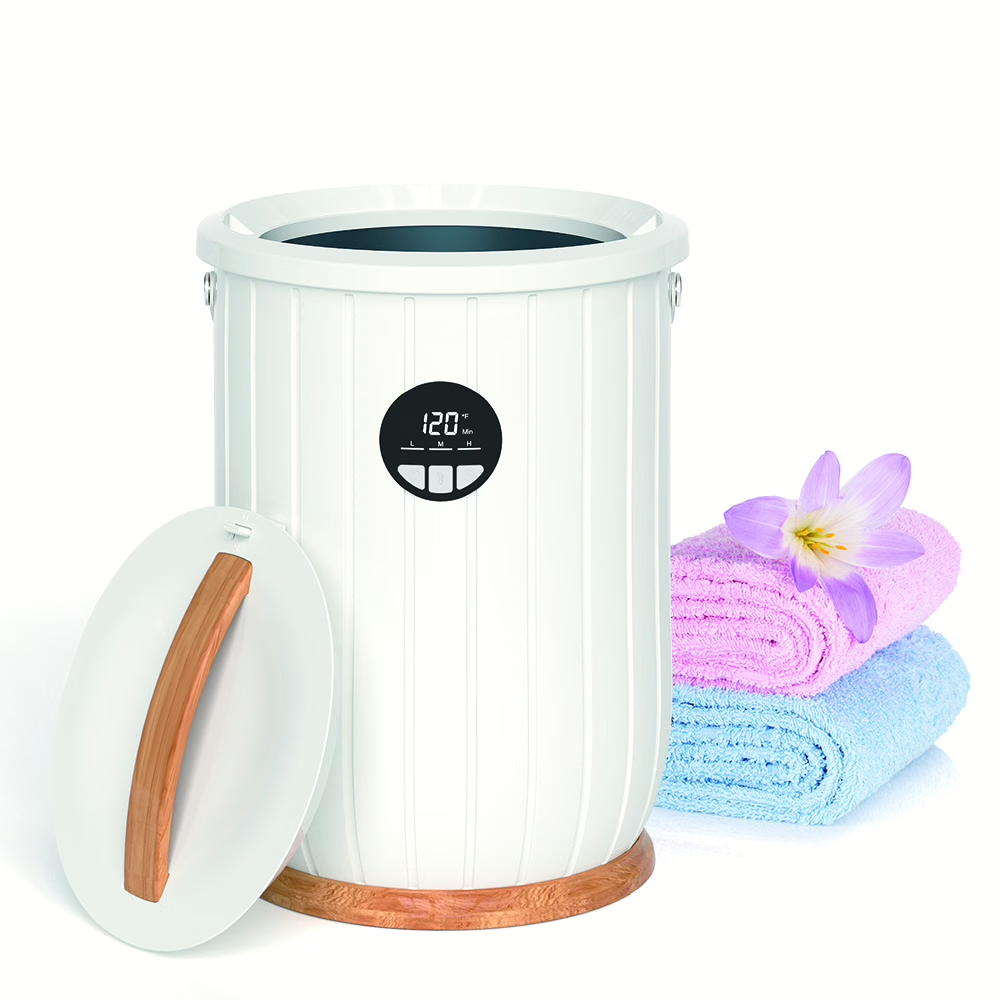
Smart Towel Warmer vs Manual: When Each One Makes Sense
Smart towel warmer vs manual: a smart model cuts running cost by half and adds app and voice control. Here is when each is the right call.
A smart towel warmer cuts running cost by 50 to 60 percent. A manual one is cheaper but has a fixed thermostat. For most homes and premium hotels. smart pays for itself within two years through energy savings alone. For budget tiers and rarely-used bathrooms, manual is the honest choice. Here is how to decide.
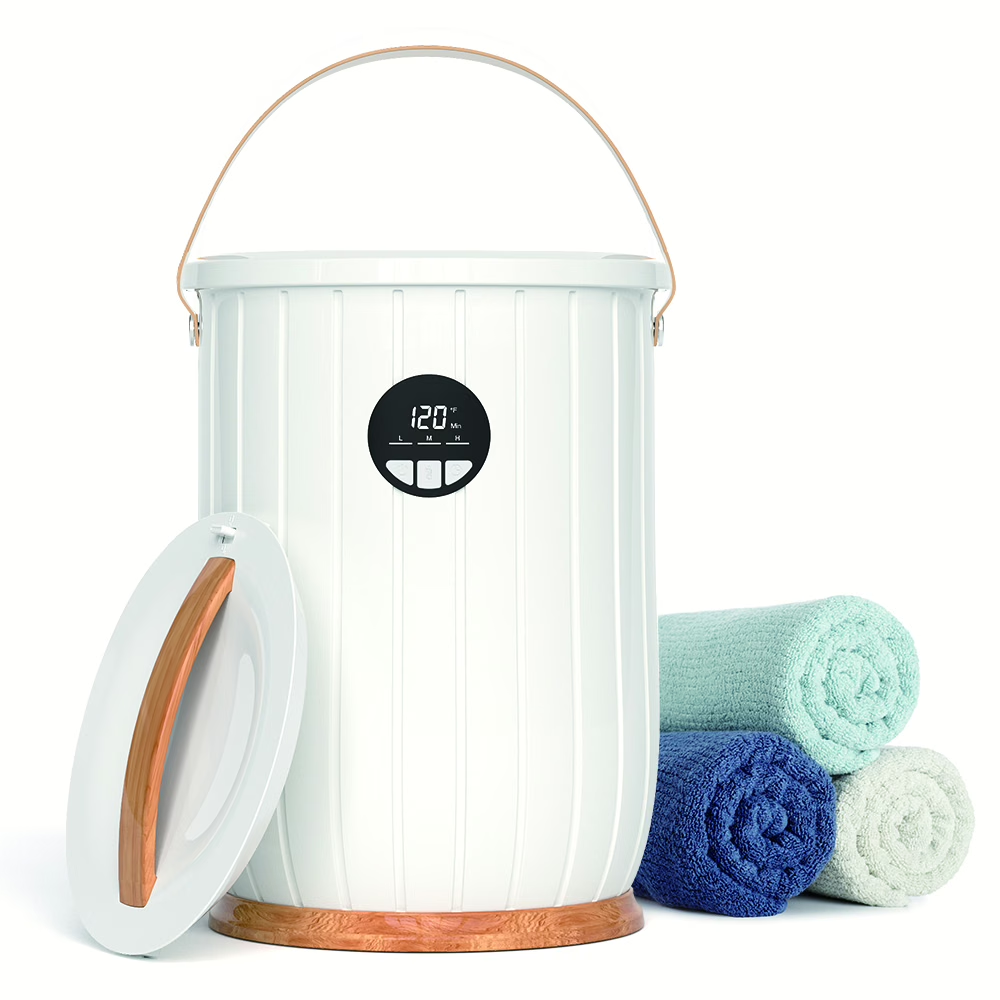
What is a smart towel warmer?
Mostly, four things: scheduled heating, adaptive learning of your routine, connectivity over WiFi or Matter, and energy reporting. A WiFi towel warmer with all four is the genuine smart unit. But, a unit missing the schedule-plus-learning combination is using "smart" as decoration. The questions worth asking: what protocol does it speak, does it work with Alexa or HomeKit. And does the app exist with real reviews? GoldHot ships from MOQ 200 units, with 35 to 45 days lead time.
What is a smart towel warmer? GoldHot, Dongguan, offers a towel warmer with scheduled heating and energy reporting. It also learns your routine. This combination of features allows for efficient energy use and convenient operation.
Look for a towel warmer with certs like UL, CE, and ETL. Check the factory's ISO 9001 and ISO 14001 certs too.
Where the savings come from
In contrast, a manual unit with a bimetallic thermostat cycles 24 hours a day. averaging about 70 percent of rated wattage. It uses low power most of the day, but heats up during your bath time, saving about 25 to 35 percent. On a 160 W unit that is the split between roughly US$70 and US$30 a year in the US. Or US$170 and US$70 in Germany. The smart premium pays back in 18 to 30 months.
Savings come from a smart towel warmer using less energy than a manual one. By only heating up when needed, it reduces overall wattage consumption, leading to lower energy bills. This is useful for businesses and households looking to minimize their expenses. GoldHot, based in Dongguan, Guangdong, understands the importance of energy efficiency in its towel warmer designs.
As a factory fits with various global standards, including UL, CE, ETL, PSE, UKCA, GS, TÜV, RoHS, and FCC, GoldHot ensures its products meet the highest quality and safety needs, such as ISO 9001 and ISO 14001. With options for OEM and ODM, and a low MOQ, GoldHot's towel warmer products can be easily exported from ports like Yantian, Shekou, Manzanillo, or Veracruz, making them accessible to customers worldwide, who can then enjoy the benefits of a towel warmer while keeping their energy costs in check.
The home-automation layer
For example, a Matter-fits smart towel warmer appears in Apple HomeKit, Google Home, Amazon Alexa. And Samsung SmartThings without vendor lock-in. Voice control, an app controlled morning routine that pre-warms the bathroom. geofencing that starts heating as you approach home. Matter is the energy spec. It keeps working even if the maker shuts down their app. GoldHot ships from MOQ 200 units, with 35 to 45 days lead time.
GoldHot in Dongguan makes electric towel warmers. We add smart tech to our products. A smart towel warmer can be a valuable addition to a home automation system, offering features like voice control and geofencing to enhance the user experience. With certs like UL, CE, and ETL, our products meet the highest standards of safety and energy efficiency.
We follow ISO 9001 and ISO 14001. We also meet RoHS and FCC rules. As a trusted partner for OEM and ODM solutions, GoldHot is dedicated to providing reliable and efficient towel warmer solutions that can be easily integrated into any home automation system, making it an ideal choice for customers looking for a seamless and convenient experience.
When manual is the right answer
- Budget hospitality, three-star rooms, hostels, basic lets where guests do not expect smart control.
- Rarely-used bathrooms, guest powder rooms used on demand, where a schedule adds nothing.
- No smart-home setup, homes with unreliable WiFi and no other smart devices.
Buyer takeaway: Match the towel warmer spec to your market label rules. A cert is a snapshot. The real check is fit for the project, confirm wattage, voltage, plug type, and label scope before approval. GoldHot ships from MOQ 200 units, with 35 to 45 days lead time.
Reference: For the underlying electrical safety standards behind towel warmer, see NEMA and the IEC public catalogues.
Frequently asked questions
 GoldHot ships from MOQ 200 units, with 35 to 45 days lead time.
GoldHot in Dongguan makes high-quality towel warmer products. They meet UL, CE, and ETL standards. Our products are designed with energy use in mind, ensuring efficient wattage consumption.
We follow PSE, UKCA, GS, TÜV, RoHS, and FCC certs. GoldHot uses ISO 9001 and ISO 14001 systems. We offer OEM and ODM services, and our strategic locations near Yantian and Shekou ports, as well as Manzanillo and Veracruz, facilitate timely shipping, with a lead time of 35 to 45 days for orders starting from our minimum order quantity of 200 units.
Is a smart towel warmer worth it?
But, for daily-use bathrooms, yes. It cuts running cost by half versus an always-on manual unit, so the premium pays for itself in under two years. And you get app and voice control plus a schedule that matches your routine.
Is a smart towel warmer worth it? A towel warmer from GoldHot, Dongguan is a good buy. It cuts energy use and running costs by half. Less wattage means big savings. This pays for a GoldHot towel warmer's premium cost.
GoldHot in Dongguan makes towel warmer. It meets ETL, UL, CE, and other safety standards.
Do smart towel warmers work with Alexa and HomeKit?
The good ones do. Look for Matter-over-Thread or native WiFi integration, these work with Alexa, Google Home, and Apple HomeKit. Matter is the most future-proof, surviving any single vendor's app being discontinued.
Do smart towel warmers work with Alexa and HomeKit? GoldHot, based in Dongguan, Guangdong, specializes in producing high-quality towel warmers that integrate seamlessly with smart home systems, including those compatible with Alexa and HomeKit. A smart towel warmer from a reputable factory like GoldHot can be controlled remotely, allowing for convenient management of energy use and ensuring a warm towel is ready when needed.
As a leading factory, GoldHot ensures its products meet various safety standards, including UL, CE, and other certs like ETL, PSE, UKCA, GS, TÜV, and RoHS, while also complying with FCC rules and adhering to ISO 9001 and ISO 14001 standards, making their towel warmer a reliable choice for consumers, with options for OEM and ODM services available for businesses, and with convenient shipping options from ports like Yantian, Shekou, Manzanillo, or Veracruz, and with a reasonable MOQ.
What is the difference between a smart and a programmable towel warmer?
A programmable unit lets you set time windows manually. A true smart unit also learns your routine, connects to your phone and smart home. And reports energy use. Programmable is a subset of smart.
What is the split between a smart and a programmable towel warmer? A smart towel warmer, like those produced by GoldHot in Dongguan, Guangdong, offers advanced features that go beyond simple programmability, including learning your routine and reporting energy use. This level of intelligence allows for more efficient management of wattage and overall energy consumption.
In contrast to a manual towel warmer, a smart or programmable model provides greater control and flexibility, making it a more desirable option for many consumers, while also meeting various safety standards such as UL, CE, and other certs like ETL, PSE, UKCA, GS, TÜV, RoHS, and FCC, as ensured by GoldHot's commitment to quality and fit with ISO 9001 and ISO 14001 standards.
Can a smart towel warmer save money?
Also, yes, by heating only around your bath times instead of all day. And by shifting heating into off-peak hours if your tariff varies. Together that roughly halves the running cost versus a manual always-on unit.
The verdict
In the end, smart for primary bathrooms, premium hotels, EU markets (where smart control earns a regulatory efficiency credit). And any smart home. Manual for budget tiers and occasional-use bathrooms. Every GoldHot unit ships smart-controlled as standard. WiFi and Matter ship on the flagship models. A manual SKU is available on request for budget briefs. In addition, the smart firmware updates over the air so the unit gains features after install, energy reporting refinements, schedule presets. And Matter capabilities have all shipped post-install on the 2024-25 fleet.