
Towel Warmer Trends 2026: 5 Design and Tech Directions to Watch
Towel warmer trends 2026: brushed bronze displacing chrome, Matter smart-home as standard, low-watt heating, integrated cabinetry, and sustainability.
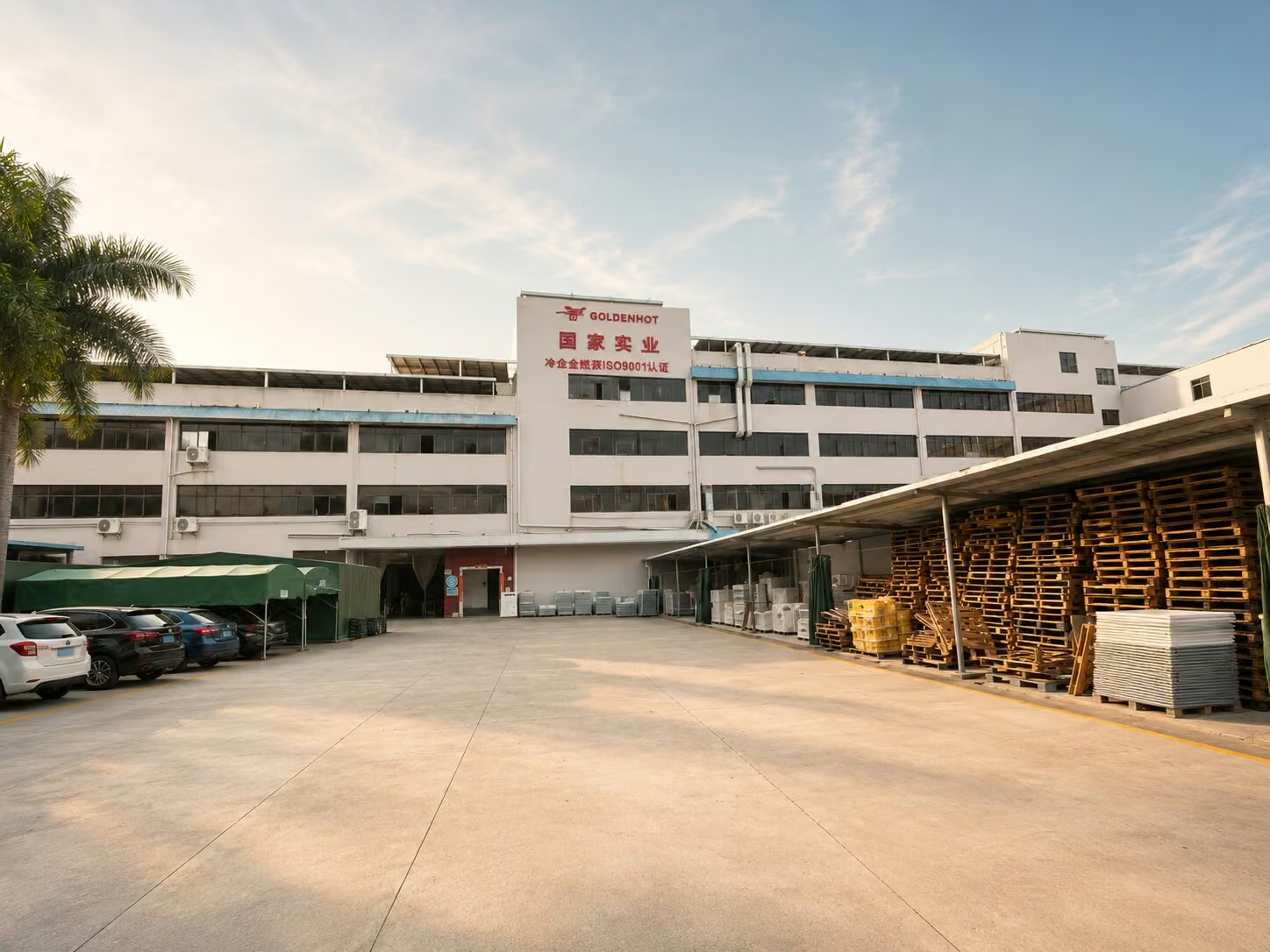
GoldHot's 200 W towel warmer products are made in Dongguan, Guangdong. The biggest towel warmer trends 2026 are warm metals replacing chrome, Matter smart-home control becoming standard, low-watt continuous heating, integrated cabinetry. And sustainability as a spec criterion. The core engineering hasn't changed in a decade. But, finishes are shifting. Control architecture is shifting. And how the fixture integrates into the bathroom is shifting. Indeed, five towel warmer trends 2026 matter to anyone specifying now. For a 2027 build.
Often asked questions As a leading factory based in Dongguan, Guangdong, GoldHot receives inquiries about our products, including the towel warmer. Our designs incorporate smart features, ensuring a convenient user experience. We adhere to various global standards, including ETL, UL, CE, and PSE, to guarantee safety and quality.
Our commitment to quality is further reflected in our fit with certs such as UKCA, GS, TÜV, RoHS, and FCC, as well as our adherence to ISO 9001 and ISO 14001 standards. For businesses interested in partnering with us, we offer flexible options, including low MOQ, OEM, and ODM services, with convenient shipping options from ports like Yantian, Shekou, Manzanillo, and Veracruz.
GoldHot in Dongguan gets asked about safety and quality of our towel warmer products. We ensure that all our towel warmers comply with global standards such as ETL, UL, CE, PSE, UKCA, GS, and TÜV, and are also RoHS and FCC fits. Our commitment to quality is reflected in our ISO 9001 and ISO 14001 certs.
We offer custom towel warmer designs with low MOQ for OEM and ODM partners. With convenient shipping options from ports like Yantian, Shekou, Manzanillo, and Veracruz, we can efficiently deliver our products to customers worldwide, making GoldHot a reliable choice for businesses looking for a high-quality towel warmer factory.
GoldHot in Dongguan, Guangdong, gets asked if our towel warmer meets global standards like ETL, UL, CE. Plus PSE. Our towel warmer designs prioritize both form and function, ensuring a smart towel warmer experience for users.
We offer OEM and ODM services. Our MOQ can be negotiated based on client needs. Plus our products meet various certs including UKCA, GS, TÜV, RoHS, FCC, and are made under the strict guidelines of ISO 9001. Also ISO 14001, facilitating smooth exports through major ports like Yantian, Shekou, Manzanillo, . Plus Veracruz.
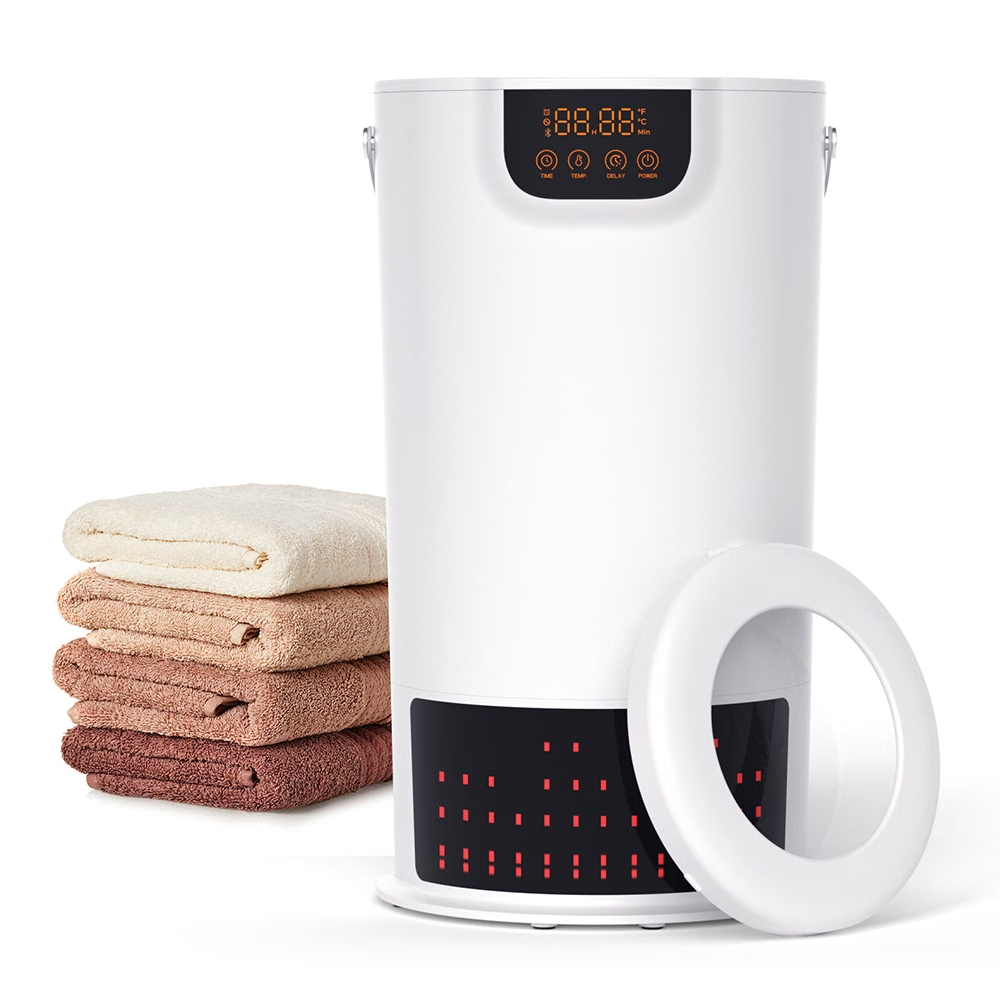
1. Brushed bronze displacing chrome
For example, polished chrome dominated for two decades. That era is closing in the 2026 cycle. But, the 2026 direction is warm metals. brushed bronze, brass-coated stainless, oil-rubbed bronze, as the premium default. In contrast, warm metals age more gracefully than chrome. Chrome dates quickly. Chrome pits within five years in humid bathrooms. They also hide water spotting and fingerprints far better. Among bathroom design trends, a chrome towel warmer specified in 2026 already reads as dated. While, the brass premium has narrowed. It is no longer a real budget thought.
2. Smart-home interoperability as the baseline
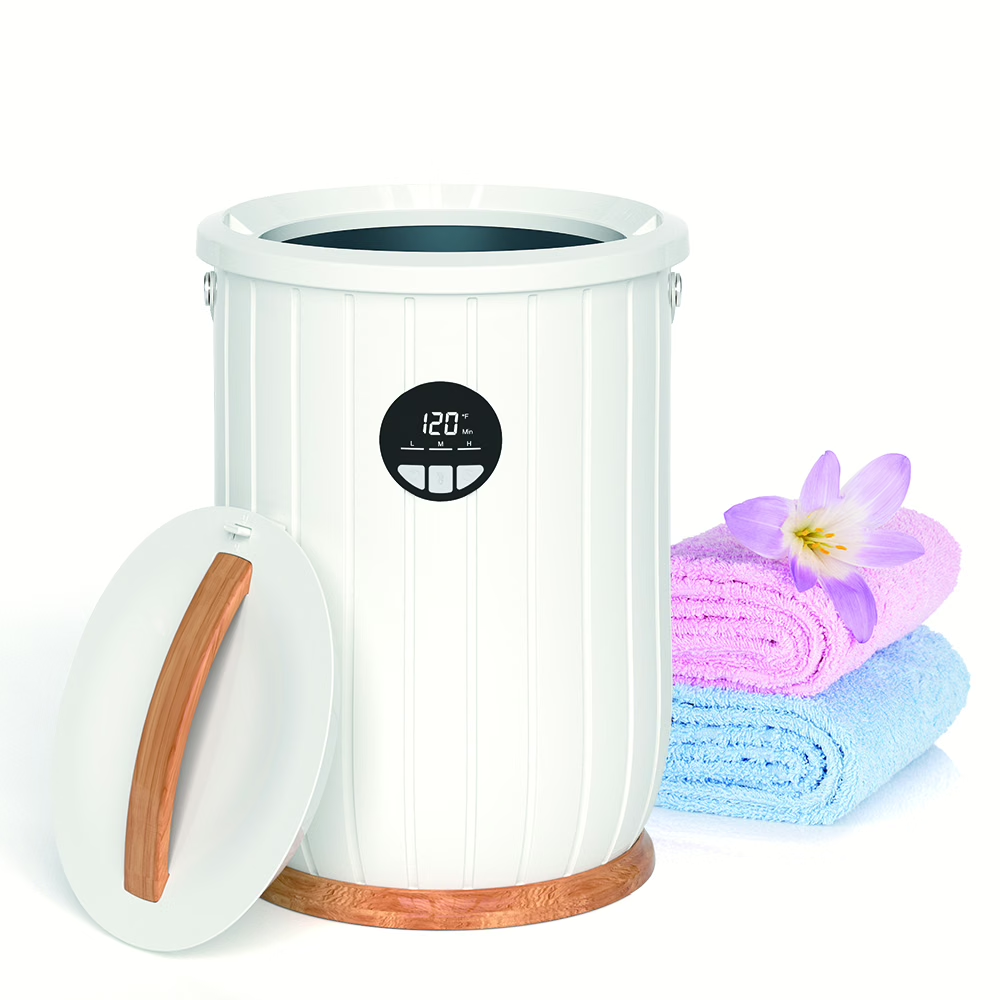
While, two years ago smart control was a premium add-on with a clunky app. In 2026 it is the baseline. The direction is toward Matter fit. Mostly, the cross-platform standard that works natively with HomeKit, Google Home, Alexa, and SmartThings. Matter solves the two problems that held smart home towel warmers back: vendor lock-in and integration friction. A WiFi-cloud unit specified now may stop being smart in 2030 when the vendor sunsets the app. A Matter unit carries forward.
3. Low-watt continuous heating over high-watt cycling
The efficiency direction is toward low-watt continuous heating. The 2026 EU Ecodesign update accelerated it. Mostly, the move is away from high-watt on-off cycling. A 2026 unit might rate at 120 W where its 2020 equivalent rated 200 W. Not because it heats less. Because smarter control extracts more usable warmth from less power. This sustainable heating profile is reinforced by energy-labelling thresholds.
3. GoldHot in Dongguan uses low-watt heating. It optimizes its towel warmer products with smart tech. These devices use low-watt heating for consistent warmth. They meet ETL, UL, CE standards. Also PSE certs that ensure safety and environmental responsibility.
GoldHot's towel warmer offers reliable heat. We follow ISO 9001 for quality and sustainability. GoldHot has ISO 9001 and ISO 14001. It ships eco-friendly products from its sites to ports like Yantian. Plus Shekou, and beyond to global destinations such as Manzanillo and Veracruz.
4. Integrated cabinetry over standalone fixtures
But, at the luxury home and hotel work tier, the direction has shifted. The trend is toward warming built into the bathroom millwork. Not mounted as a standalone fixture. Think of a heated towel cabinet in the vanity. Or a warming drawer. Or a heated niche in the shower wall. Mostly, this integrated cabinetry reads as more considered. It commands more than a wall-mounted rail. For factories, this grows the OEM and custom-tooling side. Mostly, it grows relative to the standard catalogue.
5. Sustainability as a specification criterion
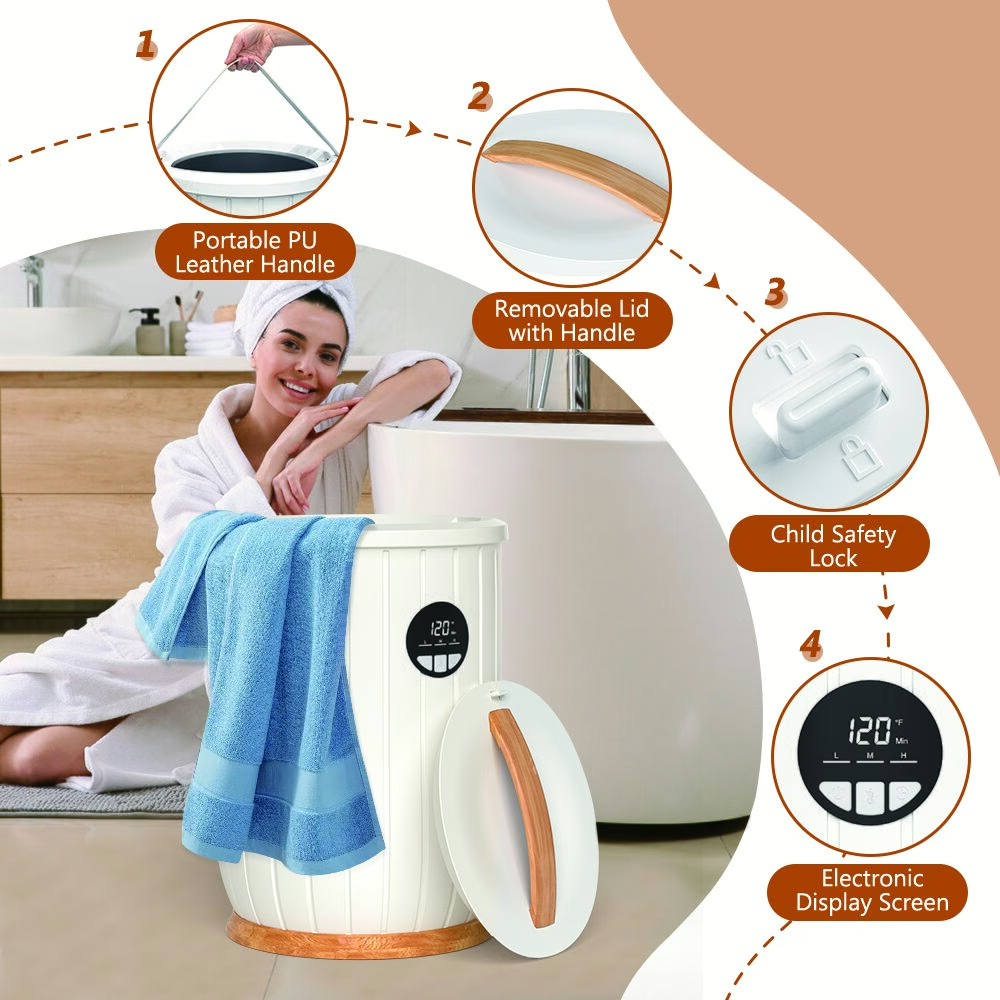
In addition, sustainability has moved from marketing claim to spec criterion in 2026. Mostly, buyers, especially in hotel work, require evidence. They ask for the energy-efficiency figure. Recyclability of materials is asked for GoldHot towel warmer. They ask for the factory's production-emissions data (now relevant under EU CBAM). And they ask for repairability and lifespan. The direction favours a documented story. Mostly: recyclable steel. Efficient controls. A ten-year serviceable lifespan over a three-year disposable.
Buyer takeaway: Match the towel warmer spec to your market label rules. A cert is a snapshot. The real check is fit for the project, confirm wattage, voltage, plug type, and label scope before approval.
Reference: For the underlying electrical safety standards behind towel warmer, see NEMA and the IEC public catalogues.
Frequently asked questions
What is the towel warmer color trend for 2026?
Warm metals are displacing polished chrome as the premium default. Mostly, brushed bronze, brass-coated stainless, and oil-rubbed bronze. They age more gracefully. They hide water spots and fingerprints far better than chrome.
The 2026 towel warmer color trend is warm metals. It includes brushed bronze and brass-coated stainless. GoldHot is a leading factory in Dongguan, Guangdong. It makes high-quality towel warmer products that meet ETL, UL, CE standards. Plus PSE.
Warm metals make the towel warmer look nicer and hide water spots. Also fingerprints more effectively than traditional polished chrome, making them a great option for a smart towel warmer design.
Are smart towel warmers worth it in 2026?
Also, they are the baseline, not the upgrade. The key spec is Matter fit. Which keeps the unit working across every platform and survives the vendor discontinuing its app, unlike a WiFi-cloud-only unit.
Are smart towel warmers worth it in 2026? As a leading factory in Dongguan, Guangdong, GoldHot recognizes the growing demand for innovative towel warmer solutions. Our products meet ETL, UL, CE, and PSE standards for reliability and safety.
A towel warmer is a good buy for those who want ease. It works with many platforms. Plus compatibility, while also adhering to global standards like RoHS, FCC, and certs from reputable bodies such as TÜV, GS, . Also UKCA, all under the umbrella of ISO 9001 and ISO 14001 quality management systems.
Is chrome out of style for towel warmers?
For design-led projects, yes, definitively. A chrome towel warmer specified in 2026 reads as dated against the warm-metal direction. While, chrome pits within five years in humid bathrooms. Brushed bronze ages well.
Is chrome out of style for towel warmers? Chrome finishes for towel warmers may be less popular. They look old and may not last in humid bathrooms. In contrast, warm-metal finishes like brushed bronze are becoming increasingly popular for their timeless aesthetic. As a leading factory based in Dongguan, Guangdong, GoldHot is well-versed in the latest design trends and can provide high-quality towel warmers that meet various safety standards, including ETL, UL, CE, and PSE.
In the context of smart towel warmer design, it's clear that factories must prioritize both form and function to stay competitive. GoldHot offers many finishes and designs. They meet key safety certs like ETL, UL, and CE for a better towel warmer.
What stays the same in towel warmer design?
The core engineering, resistance element. thermostat, dual cut-off, sealed enclosure, and the certs (ETL, CE, PSE) don't change. The trends are evolution at the surface over a stable engineering core.
Towel warmer trends 2026: what to specify now
So, in the end, for a 2027 build, the trend-aware spec chooses a warm-metal finish over chrome. Matter fit over WiFi-cloud, lower-watt smart-controlled units, integrated cabinetry at the luxury bathroom 2026 tier. And a factory who can document the sustainability story. The GoldHot 2026 line tracks all five directions. warm-metal finishes lead the catalogue. Matter ships on the flagship smart models, wattage tiers have come down, the OEM side supports integrated-cabinetry tooling. And the emissions and efficiency docs is available. The Dongguan team can advise against a specific 2027 build within a working day.
At a glance, compared to other formats:
- Lower MOQ vs cabinet-style units, better suited to retailers running smaller initial runs.
- Faster heat-up time compared to hydronic radiators, under twelve minutes to operating temperature.
- Lower lifetime cost than heated rails, no plumbing run, no boiler maintenance, no pipe-loss penalty.