
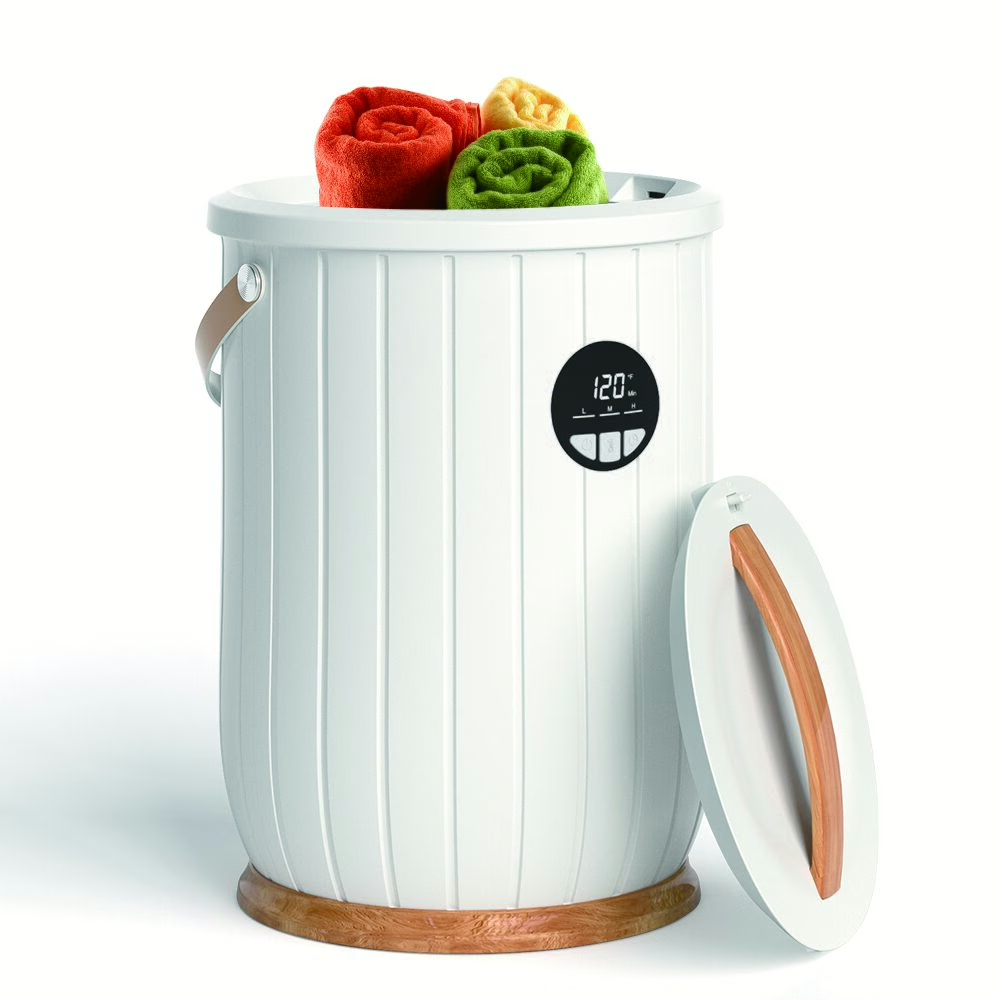
Bathroom Design Trends: Where the Towel Warmer Fits in 2026
Bathroom design towel warmer placement in 2026, how warm metals, wet-zone planning, integrated millwork, and quiet luxury shape the spec.
The 2026 towel warmer is now a planned part of the bathroom layout, like the vanity and shower. And the millwork. The fixture is no longer specified late in the project from a generic catalogue. It is placed early on the elevations alongside the warm-metal palette and the integrated cabinetry. This is what changed and how design-build firms are specifying it now, written for interior designers, architects. And design-build firms briefing the 2026 and 2027 cycles.
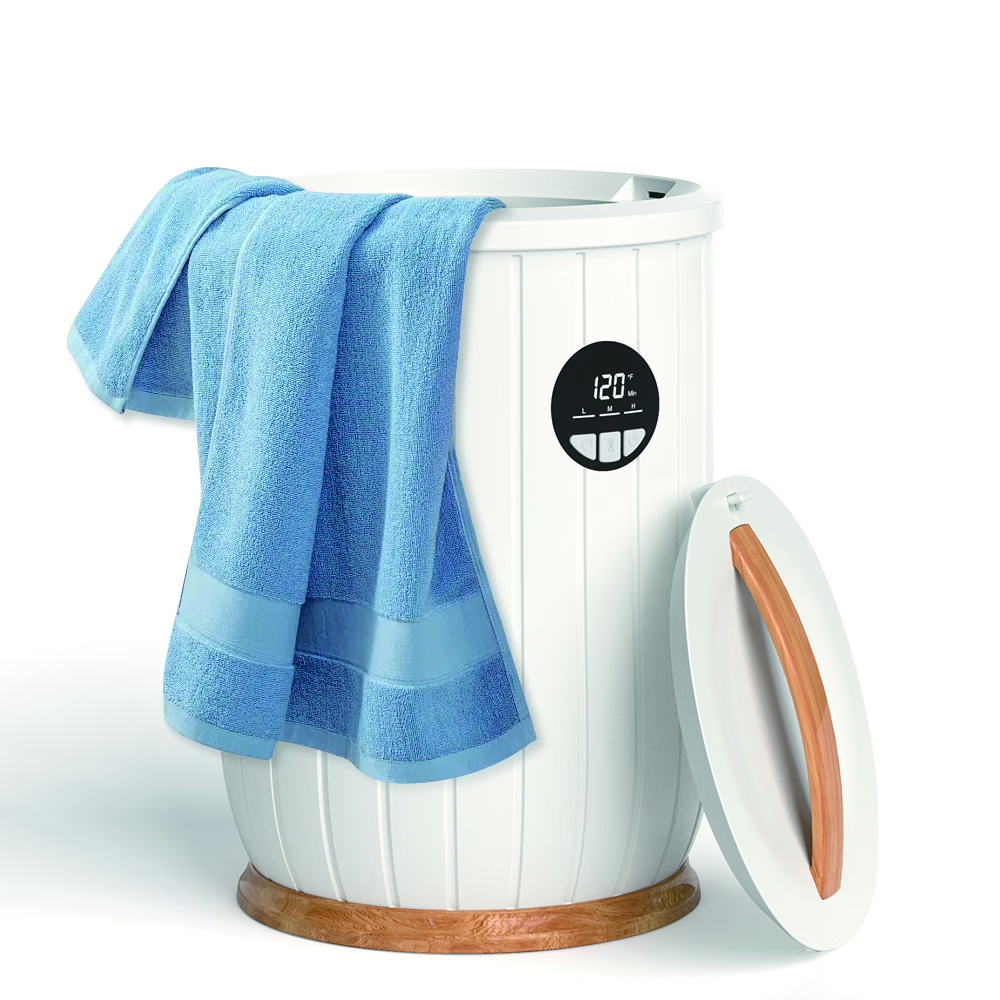
Compared to a hydronic heated towel rail, an towel warmer installs without plumbing and works year-round. that's the practical split for most installs.
From afterthought to planned element
For example, five years ago the towel warmer arrived on the punch list. Mostly, a chrome rail mounted to whichever wall the contractor could find a stud in. After the tile was set. In contrast, the 2026 design-build practice draws the unit on the elevation in schematic. The mounting wall is reinforced before tiling. The conduit run is roughed in with the wet-zone electrical. The finish is selected from the same palette as the taps and the door pull. The integration is the same standard expected of a recessed niche or a backlit mirror.
Warm metals reshape the palette decision
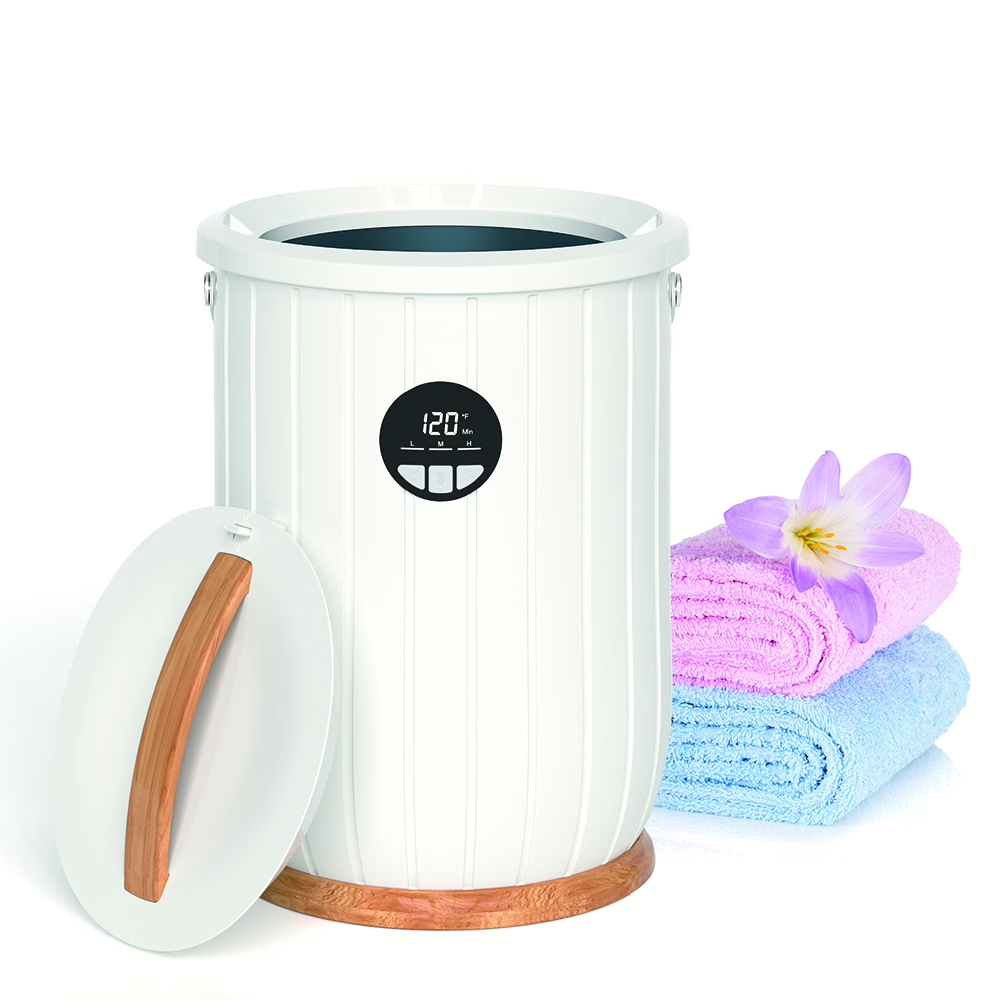
While, the warm-metal direction. brushed bronze, brass-coated stainless, oil-rubbed bronze, is no longer optional in design-led work. Mostly, the chrome era is closing. The towel warmer is now specified in the same finish as the taps and the shower hardware. In contrast, a chrome rail set against a brushed-bronze taps run reads as a sourcing miss. The catalogue depth across finishes determines whether the spec holds. The GoldHot 28-SKU range carries the four working finishes (brushed stainless, brushed bronze, matte black, brass-coated) across the catalogue. So the designer does not have to compromise on silhouette to land the finish.
Wet-zone planning and where the rail actually goes
The 2026 placement is more deliberate. It is not just near the shower. The primary rail sits within one arm's reach of where the guest steps out of the shower. usually wall-mounted at 1.1 to 1.3 metres from finished floor. With the towel hanging clear of the floor by 200 mm. While, in a primary suite with a freestanding tub. a second rail or a small heated cabinet sits within reach of the tub. In contrast, the placement that fails most often is the rail mounted on the back of the door or behind the toilet. both read as afterthoughts and neither lands the warm-towel moment in daily use.
Integrated millwork at the luxury tier
But, at the higher-end home and hotel work tier, the trend has moved past the wall-mounted rail entirely. Mostly, the warming function gets integrated into the bathroom millwork. A heated towel cabinet built into the vanity. A warming drawer below the towel niche. A pre-warmed slot inside the linen storage. In contrast, this integrated cabinetry reads as more considered and commands a meaningful price premium in the project's quote. For factories, this grows the OEM and custom-tooling side. Mostly, the GoldHot OEM line supports integrated heated-cabinet inserts tooled to the millwork drawings. With prototypes in 3 to 5 weeks and production in 25 to 35 days.
The quiet-luxury reading
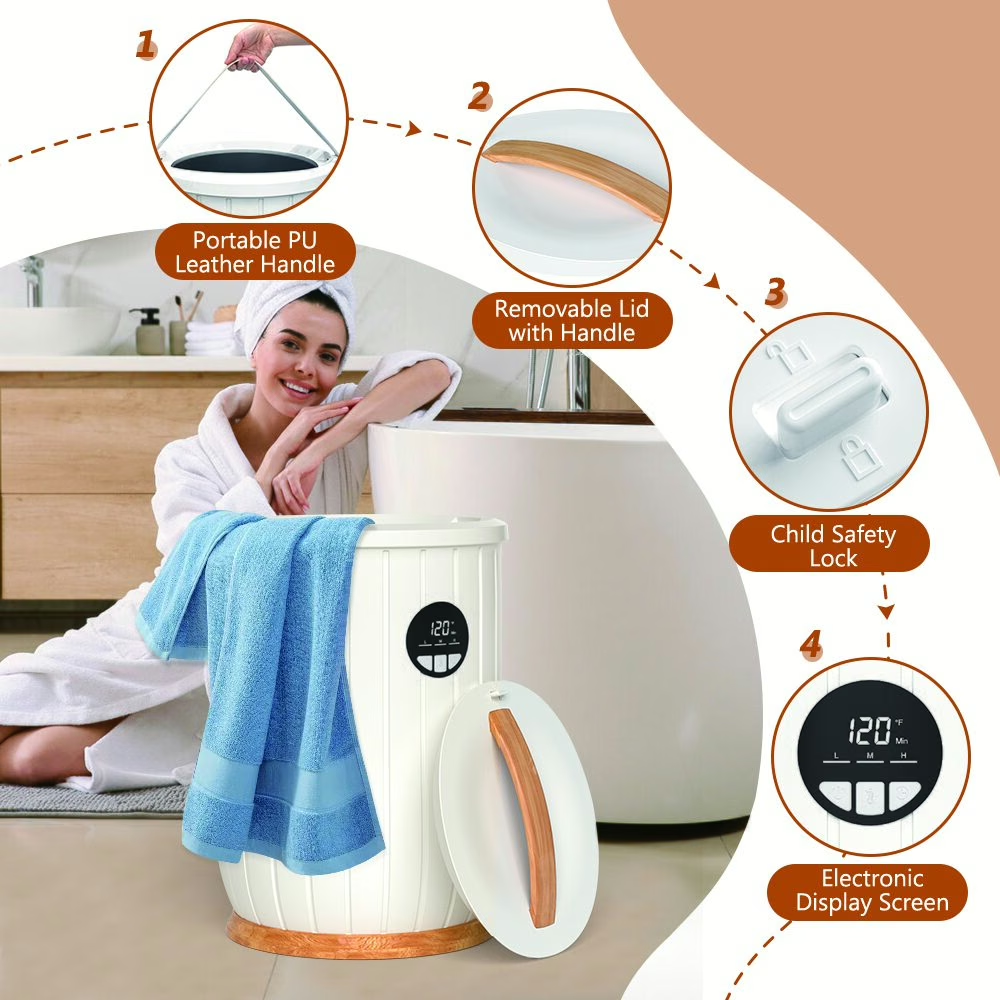
For example, the 2026 bathroom design conversation has moved firmly into the "quiet luxury" register. Mostly, materials over branding. Texture over polish. Integration over statement fixtures. The towel warmer fits this register precisely because it does its work invisibly. The rail is a quiet horizontal stroke against the tile field. The cabinet is just another panel in the vanity. The warmth is felt rather than seen. In contrast, the loud chrome rail with the visible LED display reads as a 2018 spec choice. The 2026 reading is matte finishes, recessed controls, no visible branding on the unit face. And the rail terminating cleanly into the wall without exposed fixings.
Specification details designers should call out
Mostly, the spec sheet a designer hands the contractor in 2026 calls out more than the silhouette and finish. It includes wattage, control and rough-in dimensions. It also covers wall and floor needs. And the cert stack for the project's jurisdiction. In contrast, the spec sheet that calls out only "chrome rail. 24 inches" leaves all the integration decisions to the contractor and produces the install that the designer then resents on the site walk.
Where the budget allocation has shifted
Also, in the end, the warm-towel detail has moved up the design-build priority order. A 2026 primary bath costs US$45, 000 to US$80, 000. It allocates US$280 to US$640 to the towel warmer. That is 0.7 to 1.2 percent of the bathroom budget for a fixture that delivers a disproportionate share of the daily-experience moment. In contrast, the comparable allocation in 2019 was nearer 0.4 percent and the fixture was specified from a generic catalogue. The 2026 designer treats the warm-towel moment as worth the budget. And the post-occupancy feedback consistently rewards the decision.
Buyer takeaway: Match the towel warmer spec to your market label rules. A cert is a snapshot. The real check is fit for the project, confirm wattage, voltage, plug type, and label scope before approval.
Reference: For the underlying electrical safety standards behind towel warmer, see NEMA and the IEC public catalogues.
Frequently asked questions
Where should a towel warmer go in a bathroom design?
Place the towel warmer near the shower or tub, about 1.1 to 1.3 metres from the floor. With the towel hanging clear of the floor by 200 mm. Avoid the back of the door or behind the toilet, both read as afterthoughts in daily use.
What finish should a towel warmer be in 2026?
Match the taps and shower hardware. The 2026 design direction favours warm metals, brushed bronze, brass-coated stainless, oil-rubbed bronze, over chrome. Matte black works in graphic-contrast schemes. Polished chrome reads as dated in design-led specs.
Should the towel warmer be integrated into the cabinetry?
So, at the luxury home and hotel work tier, increasingly yes. A built-in heated cabinet or warming drawer is more considered than a wall-mounted rail. It costs more. The OEM-tooled inserts integrate to the millwork drawings.
How early in the project should the towel warmer be specified?
At schematic, alongside the vanity, the shower glass, and the lighting plan. The mounting wall needs reinforcement before tiling and the conduit run roughs in alongside the wet-zone electrical. Specifying late forces compromises on placement and finish.
What does a designer-grade towel warmer cost at the wholesale tier?
US$72 to US$185 ex-works depending on silhouette and finish. Brass-coated and bronze finishes carry an 18 to 28 percent premium. Designers usually buy through a wholesale reseller at US$140 to US$280 per unit with the project margin and the rep commission embedded.
What GoldHot offers the design-build channel
In addition, in the end, the line is built for the design-led spec. Mostly, the 28-SKU catalogue spans compact rails through integrated cabinetry inserts. The four working finishes match the current warm-metal palette. Low-watt continuous heating and Matter-fits smart control are standard on the flagship range. The OEM side tools custom inserts to the millwork drawings. Certs cover ETL · UL · CE · FCC · PSE · UKCA across the 30 markets we ship into. MOQ is 200 units per SKU. Sample in 7 to 14 days. Production in 25 to 35 days. The Dongguan team can advise on a spec within a day. They use CAD to check the rail shape.
At a glance, compared to other formats:
- Lower MOQ vs cabinet-style units, better suited to retailers running smaller initial runs.
- Faster heat-up time compared to hydronic radiators, under twelve minutes to operating temperature.
- Lower lifetime cost than heated rails, no plumbing run, no boiler maintenance, no pipe-loss penalty.