
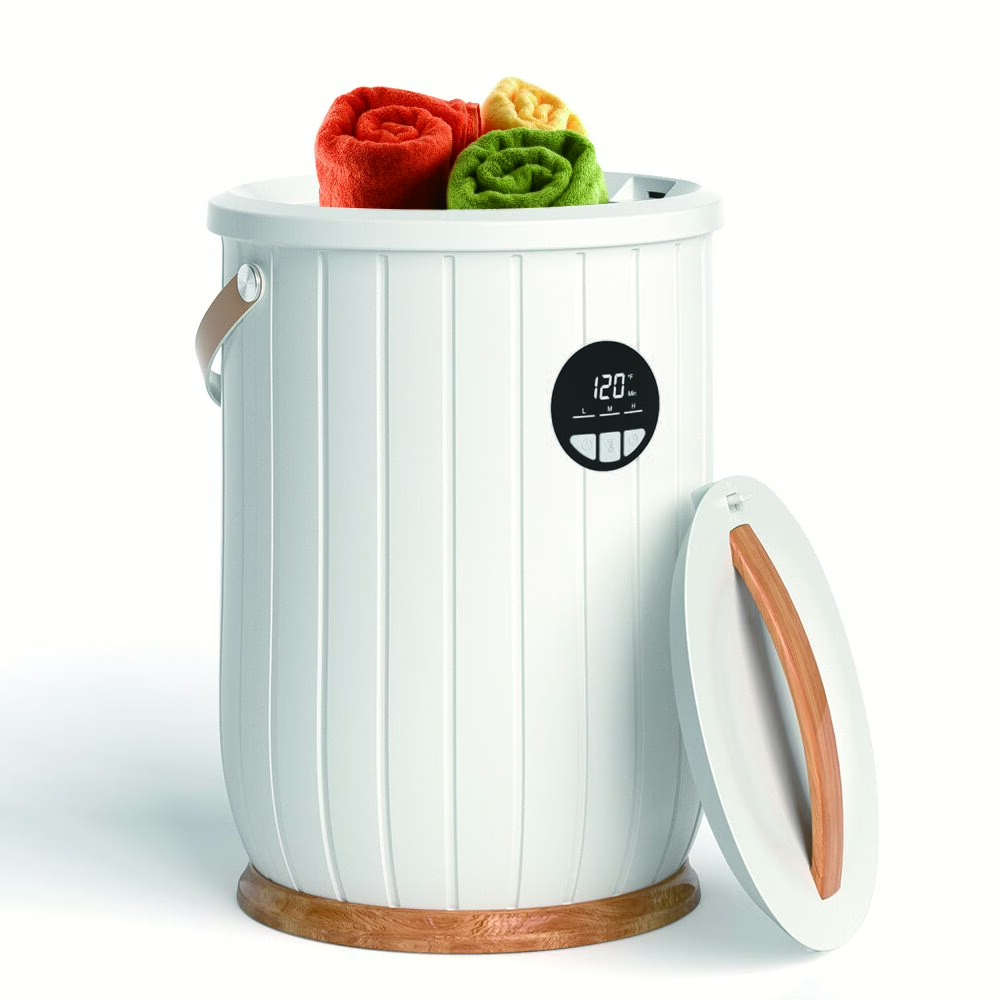
Was ist ein elektrischer Handtuchwärmer? Die Käufer-Guide 2026
Was ist ein elektrischer Handtuchwärmer?
<>
<>Das ist die kurze Antwort. Die nützliche Antwort umfasst drei Dinge: die fünf Formen, die Kategorie anbietet, die Zertifizierungen, die entscheiden, wo es verkauft werden kann, und die sieben Fragen, die entscheiden, welches in Ihrem Badezimmer gehört.
<2>Was ist ein elektrischer Handtuchwärmer genau?
<>Ein elektrischer Handtuchwärmer ist ein beheizter Bügel, Ständer oder Schrank, der durch einen internen elektrischen Heizelement angetrieben wird. Es wird auch als Heizhandtuchbügel (in Großbritannien und Australien) oder Heizhandtuchständer bezeichnet. Alle drei Namen beschreiben das gleiche Gerät.
<>Es unterscheidet sich von einem hydronischen Handtuchwärmer in einer wesentlichen Weise. Ein hydronischer Einheit ist in Ihr Heizsystem eingebunden und erwärmt nur, wenn das Zentralheizung läuft. Ein elektrischer Handtuchwärmer ist unabhängig. Es erwärmt auf Anforderung, nach einem Zeitplan oder kontinuierlich. In jeder Saison. In jedem Badezimmer. Ohne Wasserleitung.
<>Diese Unabhängigkeit ist der Grund, warum elektrisch die neue Standardwahl für Badezimmer ist. In Nordamerika, Asien-Pazifik und zunehmend in Europa. Wenn Ihr Badezimmer nicht bereits mit Heizleitungen in der Wand ausgestattet ist, ist elektrisch die einfachere Lösung.
<2>Die fünf Silhouetten, die man kennen sollte
<>Das Katalog listet Modelle nach Code. Aber die Form entscheidet, wie das Badezimmer sich anfühlt. Fünf Formate decken etwa 95 Prozent der weltweit gelieferten Artikel ab.
<2>Was ist drinnen ein elektrischer Handtuchwärmer <>Bessere Einheiten fügen drei Dinge hinzu, die die billigen Einheiten vermeiden. Erstens ein doppelter thermischer Abschaltmechanismus, ein Backup, das den Stromkreis killt, wenn das Gerät überhitzt. Zweitens smart-gesteuerte Elektronik, die das Heizen plant. Smart-Gesteuert reduziert den Energieverbrauch um die Hälfte. Drittens ein IPX4 oder besserem Wasserzutrittswert. Dieser Wert überlebt Badezimmer-Spritzer und Dampf. <2>Wie heiß wird es und wie viel Strom verbraucht wird <>Gleichzeitig zielt die Oberflächentemperatur normalerweise auf 50 bis 55°C. Das ist warm genug, dass das Handtuch offensichtlich erwärmt und trocken ist. Aber nicht so heiß, dass der Kontakt mit der Stange unangenehm ist. Gute Einheiten lassen Sie dies anpassen; einfache Einheiten setzen es auf ein Fabrikmaß ein. <2>Zertifizierungen, die entscheiden, wo es verkauft werden kann <2>Die sieben Fragen, bevor Sie kaufen <>Die einzige Regel, die man befolgen sollte: Kaufen Sie ein zertifiziertes Gerät, nicht das billigste, das keine Marke hat. Ein 400 US-Dollar zertifiziertes Gerät kann zehn Jahre Arbeit leisten. Im Gegensatz dazu kann ein 80 US-Dollar billiges Gerät nur drei Jahre leisten. Und dazu kommt noch ein Servicehäufigkeit. <2>Häufig gestellte Fragen <3>Wie viel Strom verbraucht ein elektrischer Handtuchwärmer? <3>Wie lange dauert es, bis ein elektrischer Handtuchwärmer auf die Betriebstemperatur kommt? <3>Kann man einen elektrischen Handtuchwärmer den ganzen Tag über eingeschaltet lassen? <3>Was ist der Unterschied zwischen einem elektrischen und einem hydronischen Handtuchwärmer? <3>Heizen elektrische Handtuchwärmer nur die Handtücher oder trocknen sie auch? <2>Wo das Sie liegt <>Für ein Zuhause ist ein smart-gesteuerter Bügel mit 100 bis 160 Watt für die meisten Fälle ausreichend. Für ein Hotel ist der Bügel in den Standardzimmern. Der Schrank in den Suiten. Dieses Konfigurationsmuster verbessert die Bewertungen der Gäste stillschweigend mehr als jede andere Amenität für den Preis. Die GoldHot-Elektrohandtuchwärmerlinie umfasst alle fünf Silhouetten. Plus zwölf globale Zertifizierungen. Und Leistungstier von 60 bis 400 Watt. Die gleiche Linie wird unter zwölf Marken, einschließlich unserer, geliefert. <>Die richtige Silhouette hängt von Ihrer Wand, Ihrem täglichen Handtuchzähler und ob der Wärmer als ruhige Nutzlichkeit oder als Designelement gedacht ist.
<>Die Mechanik ist einfach. Insbesondere ein mineralisierter Heizelement läuft durch die Stahlrohrleitung. Ein Thermostat regelt die Oberflächentemperatur. Die Wärme der Stahl verteilt sich gleichmäßig entlang der Stange.
<>Zum Beispiel verbrauchen die meisten Heim-Handtuchwärmer zwischen 60 und 200 Watt. Handtuchwärmer für Spas verbrauchen 150 bis 400 Watt. Die Zahl auf der Rückseite ist der Spitzenverbrauch bei voller Leistung. Ein smart-gesteuerter Einheit verbraucht jedoch durchschnittlich viel weniger über den Tag hinweg, etwa 25 bis 35 Prozent der Nennleistung.
<>Außerdem kann man ein Handtuchwärmer in den meisten entwickelten Märkten nicht rechtswirksam verkaufen, ohne die richtige Sicherheitszertifizierung. Die vier Hauptzertifizierungen:
<>Wenn ein Lieferant die zugrunde liegenden Prüfberichte für Ihr Markt nicht vorlegen kann, ist die Zertifizierung auf der Verpackung dekorativ. Nicht nur Fotos der Marken. Die Berichte selbst. Fordern Sie die Berichte ein.
<>Ob Sie für ein Zuhause, ein Hotel oder einen Großauftrag kaufen, beantworten Sie diese sieben Fragen:
<2>Also, ist ein elektrischer Handtuchwärmer wertvoll?
<>Für die meisten Haushalte und Hotels, ja, der smarte Handtuchwärmer zahlt sich schnell zurück. Die tägliche Wärme, die Handtuchhygiene und die geringe Feuchtigkeitshilfe addieren sich über Tausende von Badezimmermomenten. Ebenso der Resalewert. Ein smart-gesteuerter Einheit kostet etwa 30 bis 95 US-Dollar pro Jahr in den meisten Märkten, weniger als ein einzelner Streaming-Abonnement. Der Handtuchwärmerkosten über zehn Jahre sind gering im Vergleich zu Tausenden von warmen Handtuchmomenten.
<3>Sind elektrische Handtuchwärmer sicher?
<>Ja, ein ordnungsgemäß zertifizierter elektrischer Handtuchwärmer gehört zu den sichersten Stromnetzgeräten in einem Haushalt. Fordern Sie nach ETL-Zertifizierung, UL-Zertifizierung oder CE-Zertifizierung, IPX4-Wasserwertigkeit und doppeltem thermischen Abschaltmechanismus. Installieren Sie es auf einem GFCI- oder RCD-geschützten Stromkreis. Die Gefahr kommt von billigen, nicht zertifizierten Geräten und falscher Installation, nicht von der Kategorie selbst.
<>Ein smart-gesteuerter 160-Watt-Einheit verbraucht etwa 1 kWh pro Tag. Das entspricht etwa 30 bis 95 US-Dollar pro Jahr, je nach lokalem Strompreis. Daher ist das unter einer Standard-Lampe, die den ganzen Tag über eingeschaltet ist. Ein immer eingeschaltetes Gerät ohne smart-gesteuerte Leistung kostet etwa doppelt so viel. Daher zahlt sich die smart-gesteuerte Leistung innerhalb von zwei Jahren selbst aus.
<>In der Regel erreicht ein elektrischer Handtuchwärmer die Betriebstemperatur in 10 bis 30 Minuten von der Kälte. Ein kleiner Bügel wärmt sich schneller (10 bis 15 Minuten); ein großer Schrank braucht länger (30 bis 45 Minuten). Ein smart-gesteuerter Einheit wärmt sich auf einem Zeitplan vor. Daher ist das Handtuch bereit, bevor Sie es benötigen. Ohne Wartezeit.
<>Ja, sie sind für kontinuierliche Betriebszeit und den geringen Stromverbrauch konzipiert. Ein smart-gesteuerter Einheit auf einem Zeitplan ist jedoch besser. Es reduziert den Energieverbrauch um 50 bis 60 Prozent. Ohne Verlust an Komfort.
<>Ein elektrischer Handtuchwärmer hat seinen eigenen internen Heizelement. Es wird in einen Stecker gesteckt. Insbesondere: unabhängig von Ihrem Zentralheizung, warm in jeder Saison, keine Wasserleitung erforderlich. Ein hydronischer Handtuchwärmer ist in Ihr Heizsystem eingebunden und erwärmt nur, wenn die Zentralheizung läuft. Elektrisch ist einfacher zu installieren. Es funktioniert das ganze Jahr über. Im Gegensatz dazu ist hydronisch nur sinnvoll, wo Heizleitungen bereits durch das Badezimmer laufen.
<>Beides. Ein elektrischer Handtuchwärmer erwärmt das Handtuch. Und es treibt das Wasser aus dem Handtuch zwischen den Gebrauch. Dies hält die Handtücher trocken. Es reduziert die Mildew- und Bakterienbildung. Und es verlängert die verwendbare Lebensdauer des Handtuchs zwischen der Waschung. In einem kleinen Badezimmer liefert es auch einen geringen Betrag an Supplemental-Wärme.
<>Schließlich ist ein elektrischer Handtuchwärmer 2026 kein Luxusartikel mehr. In jedem Badezimmer, das in den letzten zehn Jahren gebaut wurde, steht es zwischen einem beheizten Spiegel und einem smarten Duschkopf auf der Spezifikationsliste. Die Fragen sind, welche Silhouette, welche Leistung, welche Zertifizierung und welcher Hersteller dahintersteht.