
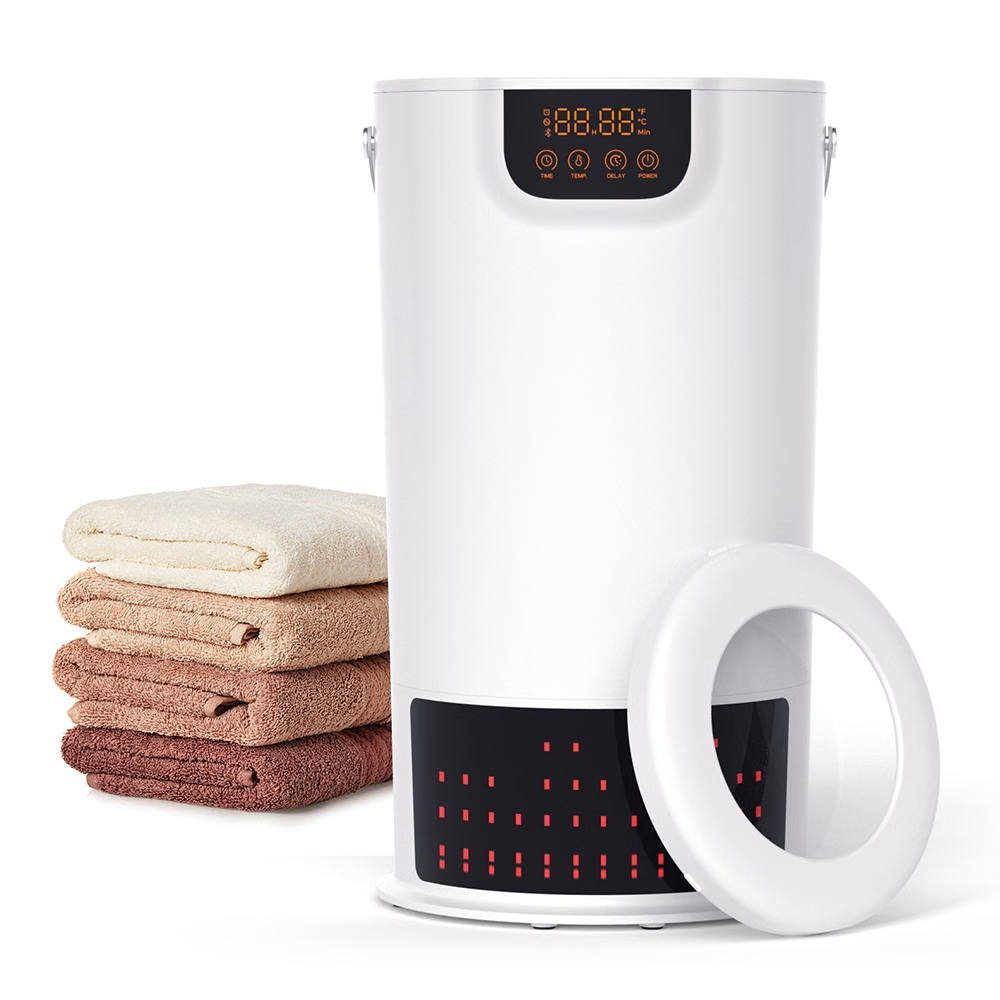
Towel Warmer with UV Sterilization: How It Works, Where You Need It
Towel warmer UV sterilization explained, UV-C wavelength, cycle time, where medical and spa buyers need it, and the certifications that document it.
A towel warmer uses a 254 nm UV-C lamp to kill germs. It runs 15 to 30 minutes between heat cycles. Which warms but does not sterilise. Mostly, the UV is the sterilisation layer; the heat is the comfort layer. Indeed, for medical clinics, premium spas. And post-COVID-era hygiene-led buyers, the towel warmer UV sterilization function has moved from optional to expected. Here is how it works, and where it earns its premium.
Compared to a hydronic heated towel rail, an towel warmer installs without plumbing and works year-round. that's the practical split for most installs.
The mechanism: UV-C at 254 nm
For example, the UV inside a sterilising towel cabinet is not the same UV that tans skin. Mostly, it is short-wavelength UV-C at around 254 nanometres. the band that disrupts microbial DNA and RNA, preventing replication. A 30-minute UV-C cycle cuts bacteria by 99.0 to 99.9 percent. It also inactivates common viruses. The lamp is enclosed and interlocked. the door must be closed and the cycle must not run with a person reaching in. Indeed, that interlock is part of the safety cert. And the data sheet should state the lamp wattage, UV-C dose, and exposure time explicitly.
What the UV cycle does and does not do
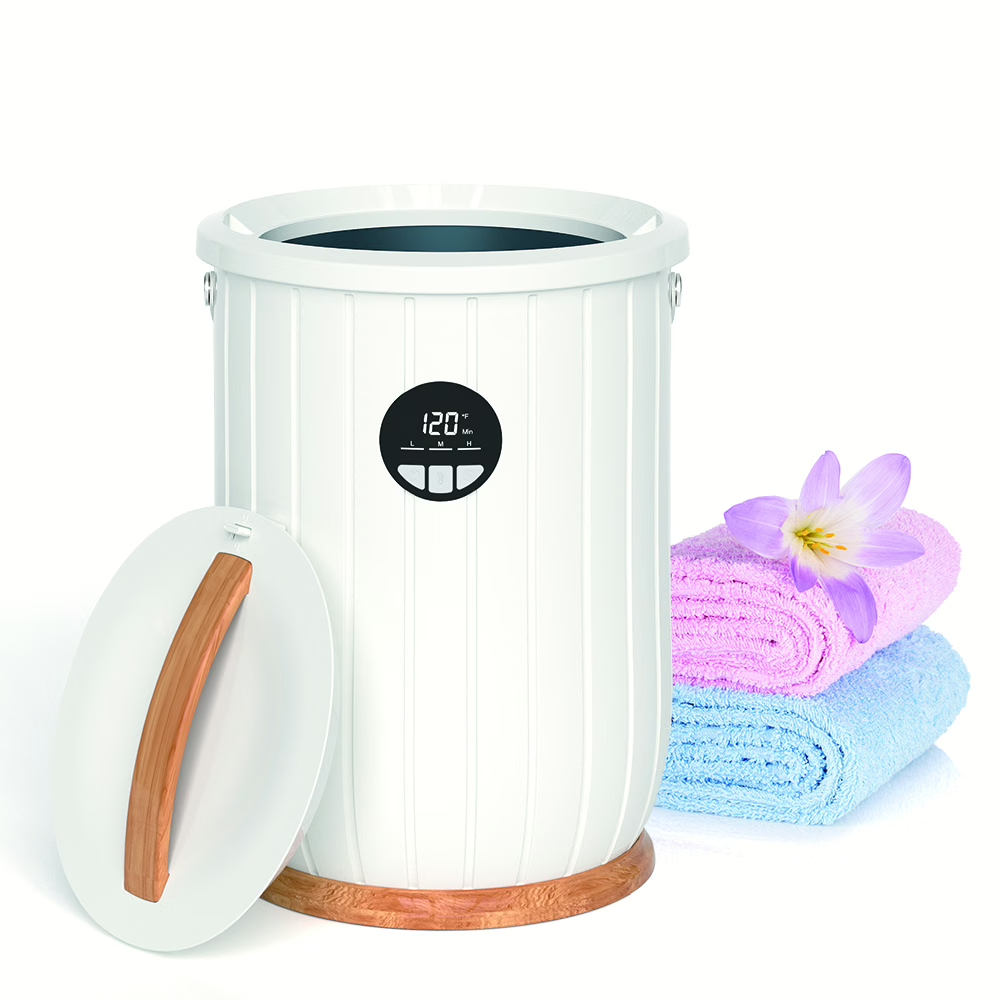
Mostly, the UV cycle does:
- Reduce surface bacterial load on the towel and the cabinet interior.
- Inactivate viral particles on exposed surfaces, including coronaviruses and influenza.
- Suppress mildew and odour in cabinets between uses, especially in humid bathrooms.
- Reassure the guest and the auditor, the visible cycle reads as care.
But, what the UV cycle does not do:
- Penetrate folded towel layers, UV-C is surface-only, so towels must be unfolded for full effect.
- Substitute for laundering, UV reduces, but commercial wash is still required.
- Sterilise indefinitely, bacteria recolonise once the cabinet opens, so the cycle is repeated between uses.
Cycle timing and integration
While, the UV cycle runs separately from the heat cycle for two reasons. First, UV-C lamps degrade at high heat. So they cycle when the cabinet is at upkeep heat rather than peak heat. Second, the 15 to 30-minute UV cycle is timed to fit between guest or patient appointments. Mostly, the typical sequence is: load, heat to 50-55°C through-core, hold, UV cycle 20 minutes, hold at heat. Indeed, the cabinet door interlock disables the UV the moment it opens, protecting the operator.
Ozone-free is the 2026 standard
In contrast, older UV-C lamps produced ozone as a byproduct. an more steriliser but a respiratory irritant in enclosed spaces. The 2026 standard uses ozone-free UV-C. It filters out the 185 nm wavelength. Mostly, every modern medical-grade and premium-spa-grade cabinet should specify ozone-free. Buyers should verify the lamp spec on the data sheet, not the marketing copy.
Ozone-free is the 2026 standard. GoldHot in Dongguan prioritizes safety and efficacy for its towel warmer. The company adheres to stringent standards, such as ETL, UL, CE, and PSE, to ensure fit with global rules. By utilizing ozone-free UV-C technology, GoldHot's products minimize potential health risks associated with ozone emissions, making them suitable for various applications.
GoldHot uses ozone-free UV-C tech. We meet RoHS, FCC, ISO 9001 and ISO 14001 standards. We have a low MOQ for OEM and ODM orders and comply with GS, TÜV, UKCA, and ETL certs.
Where towel warmer UV sterilization is genuinely required
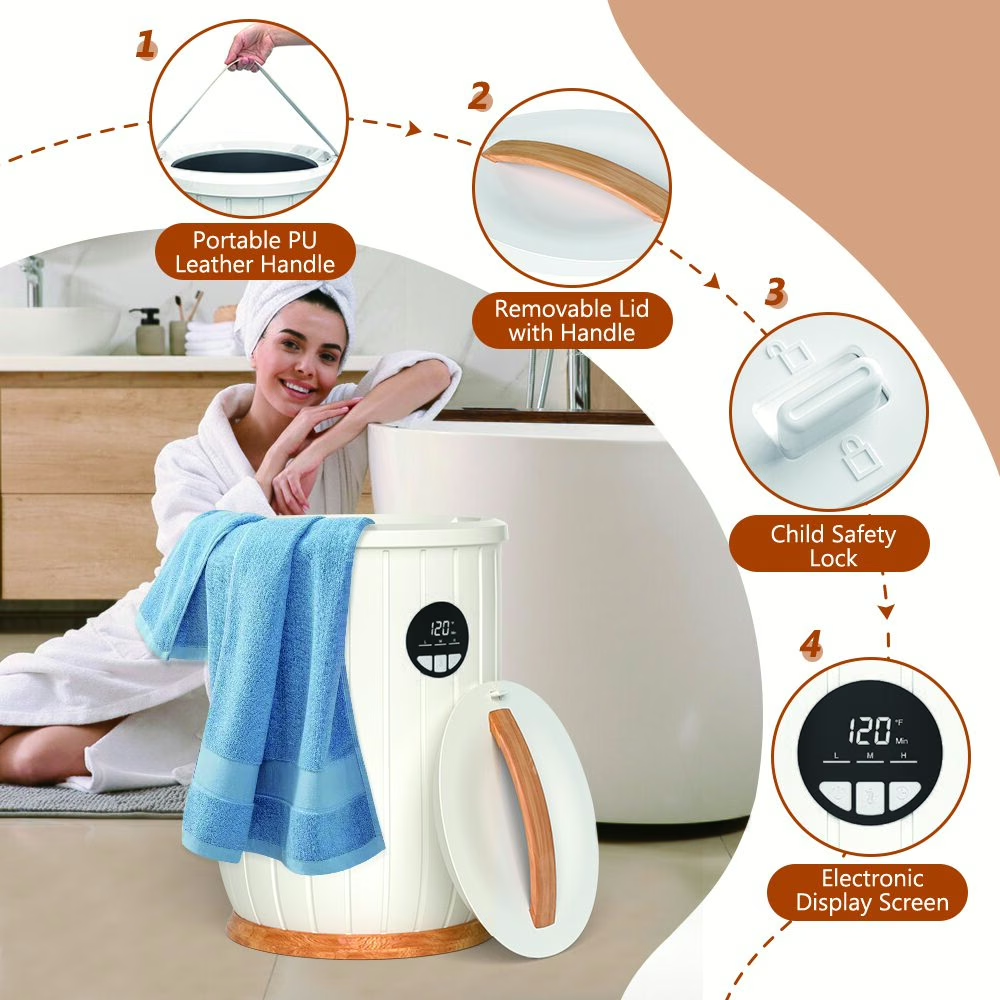
Mostly, the towel warmer UV sterilization function earns its premium in five contexts:
- Medical and dental clinics, infection control protocols require documented surface sterilisation between patients.
- Day spas and treatment rooms, esthetician practice and skin treatments use towels in repeated cycles between clients; UV is the standard hygiene layer.
- Premium hotels post-2020, hygiene visibility is now a guest expectation, especially in spa lounges and treatment areas.
- Salons handling skin and hair services, towels contact skin and contaminated hair products; UV reduces cross-contamination risk.
- Eldercare and assisted-living, immune-compromised users benefit from the additional hygiene layer.
Where it is overkill
But, in standard home bathrooms and most three to four-star hotel guest bathrooms, the UV layer is overspecified. Mostly, the towel sees one user, gets used once or twice a day, and goes to commercial laundering. The bacterial load risk does not justify the cost premium or the cycle complexity. In contrast, a heat-only rail or cabinet meets the use case. Indeed, the UV cabinet is a commercial and medical spec, not a home one.
In home and low-end hotel bathrooms, a towel warmer with UV sterilization is overkill. GoldHot, based in Dongguan, Guangdong, understands that in these cases, a simpler heat-only solution is sufficient. The bacterial load risk is relatively low, and the cost premium for the UV feature is not justified.
A basic towel warmer is a more practical choice. It meets user needs and has ETL, UL, CE, and PSE certs.
What it costs
For example, the UV-C option adds about 12 to 18 percent to a commercial hot towel cabinet's per-unit price. Mostly, a 24-towel commercial cabinet runs US$520 to US$780 without UV; the UV-C version runs US$580 to US$920. The lamp itself lasts roughly 8, 000 to 10, 000 hours, about 3 to 5 years of typical cycling. Replacement lamps are a upkeep line item but readily available. The interlock and timer electronics outlast the lamp.
Certification considerations
While, a towel warmer with UV sterilization carries the same primary safety certs as the non-UV version. ETL or UL for North America, CE for the EU, PSE diamond for Japan, RCM for Australia. The UV-C lamp is covered under electrical safety. An FDA listing is not needed for a towel warmer. Which the UV cabinet is not claiming to be). For medical and clinical buyers, specify a cabinet whose data sheet documents the UV-C wavelength, lamp wattage, cycle time. And the test result for log reduction against a named organism, E. coli or S. aureus.
Buyer takeaway: Match the towel warmer spec to your market label rules. A cert is a snapshot. The real check is fit for the project, confirm wattage, voltage, plug type, and label scope before approval.
Reference: For the underlying electrical safety standards behind towel warmer, see NEMA and the IEC public catalogues.
Frequently asked questions
Does towel warmer UV sterilization work?
A UV-C cabinet at 254 nm reduces bacterial load by 99.0 to 99.9 percent. It runs 15 to 30 minutes on unfolded towels. But, it does not penetrate folded layers, so towel placement matters, and it does not substitute for laundering.
Is UV-C in a towel warmer safe?
Yes, when the cabinet is door-interlocked so the lamp shuts off the moment the door opens. Mostly, modern ozone-free UV-C lamps avoid the respiratory irritation that older units could produce. The exposure to the operator is zero in normal use.
Who needs a towel warmer with UV sterilization?
Medical and dental clinics, day spas and treatment rooms, premium hotels in spa areas, salons handling skin services. And eldercare sites. For home users and standard hotel guest bathrooms, the UV layer is overspecified.
What is the difference between heat and UV in a towel cabinet?
Also, heat is the comfort layer. towels warmed through to 50 to 55°C core heat so they feel warm against skin. Mostly, UV is a separate hygiene layer. UV-C light at 254 nm reducing microbial load on exposed surfaces. The two cycles run sequentially, not simultaneously, because UV-C lamps degrade at high heat.
How long does the UV lamp last?
About 8, 000 to 10, 000 hours, or 3 to 5 years of typical commercial cycling. Replacement lamps are a upkeep line item rather than a full-unit replacement. The cabinet electronics outlast multiple lamp generations.
Does UV sterilization replace washing towels?
No. The UV cycle reduces surface load between uses but does not clean. Commercial laundering remains the primary hygiene step; UV is the more layer between launderings.
What GoldHot ships with UV
So, the GoldHot commercial spa and medical cabinet line includes a towel warmer UV sterilization option across the 18, 24. We have 36-towel platforms with ozone-free lamps and a 20-minute cycle. The cycle is adjustable from 15 to 30 minutes. Mostly, the cabinets carry ETL, UL, CE, FCC, PSE diamond. And UKCA certs, with CB Scheme available for buyers expanding into more markets. While, the data sheet documents the UV-C wavelength, lamp wattage, cycle time. And tested log reduction against E. coli, not the marketing copy. The Dongguan team sets up a cabinet to fit daily needs. They work with buyers on hygiene and protocol. We need 200 units at least. Samples take 7 to 14 days. Production takes 25 to 35 days.