
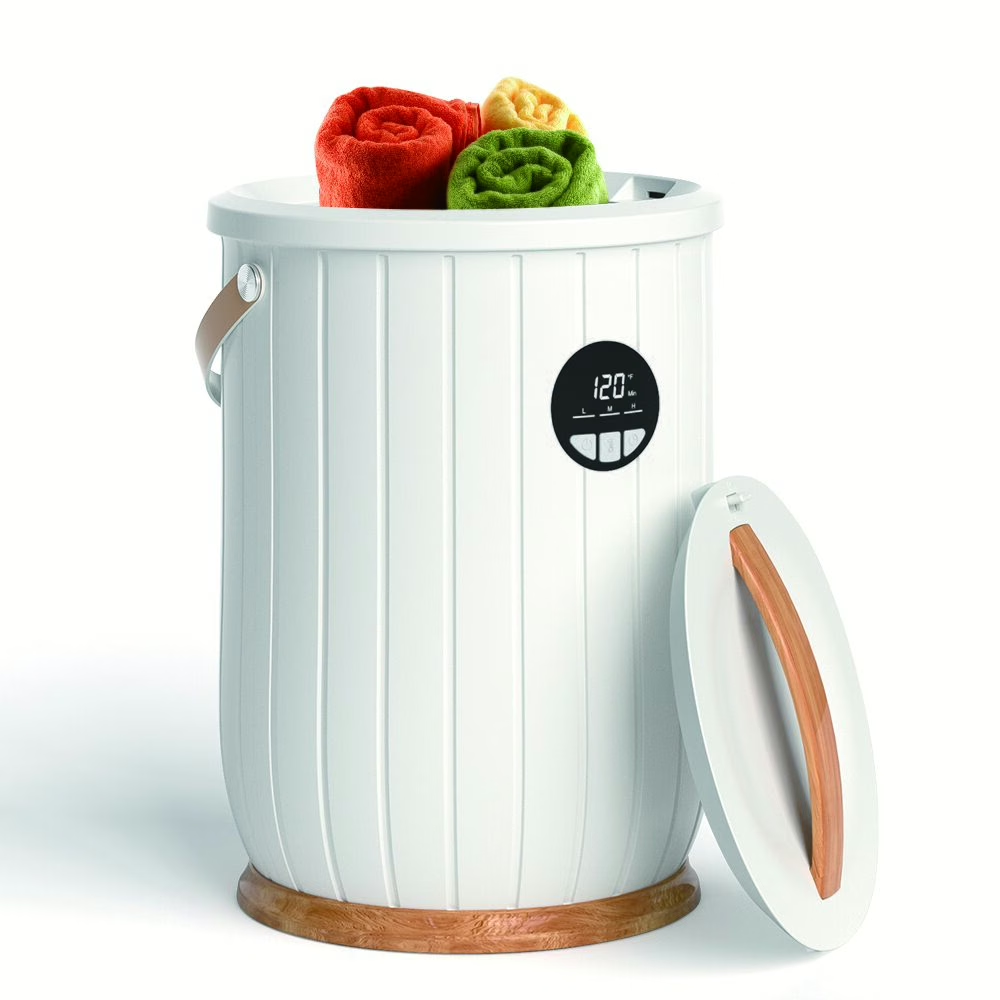
Private Label Towel Warmer Manufacturer: 11 Questions to Vet Yours
Choosing a private label towel warmer manufacturer, 11 diligence questions on tooling, certifications, MOQ, and IP that decide if your brand ships.
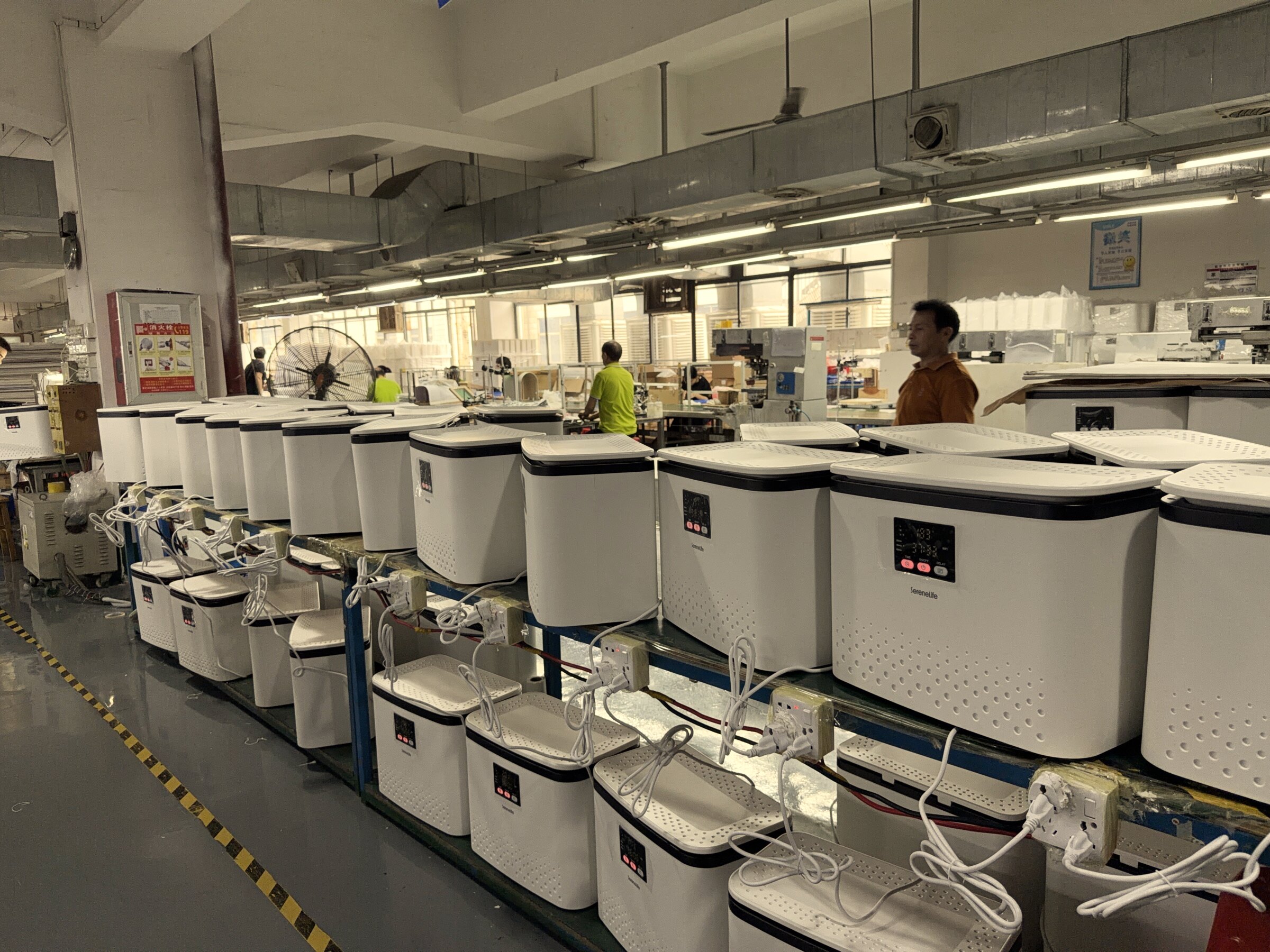
GoldHot, a Dongguan, Guangdong based towel warmer factory, meets 50 percent. A good towel warmer factory owns the tooling and has its own certs. It ships in your color and packaging. And protects your IP under a written NNN. the eleven questions below separate them from the broker reselling a generic mould. The OEM towel warmer market is dense. But, only a fraction of suppliers can deliver a branded program. Mostly, this is the diligence list a brand owner should run before the first PO. Factory data over 17 years of production shows the towel warmer tier covers a price band of $22-$50 per unit at 200 MOQ. with lead times of 35-45 days.
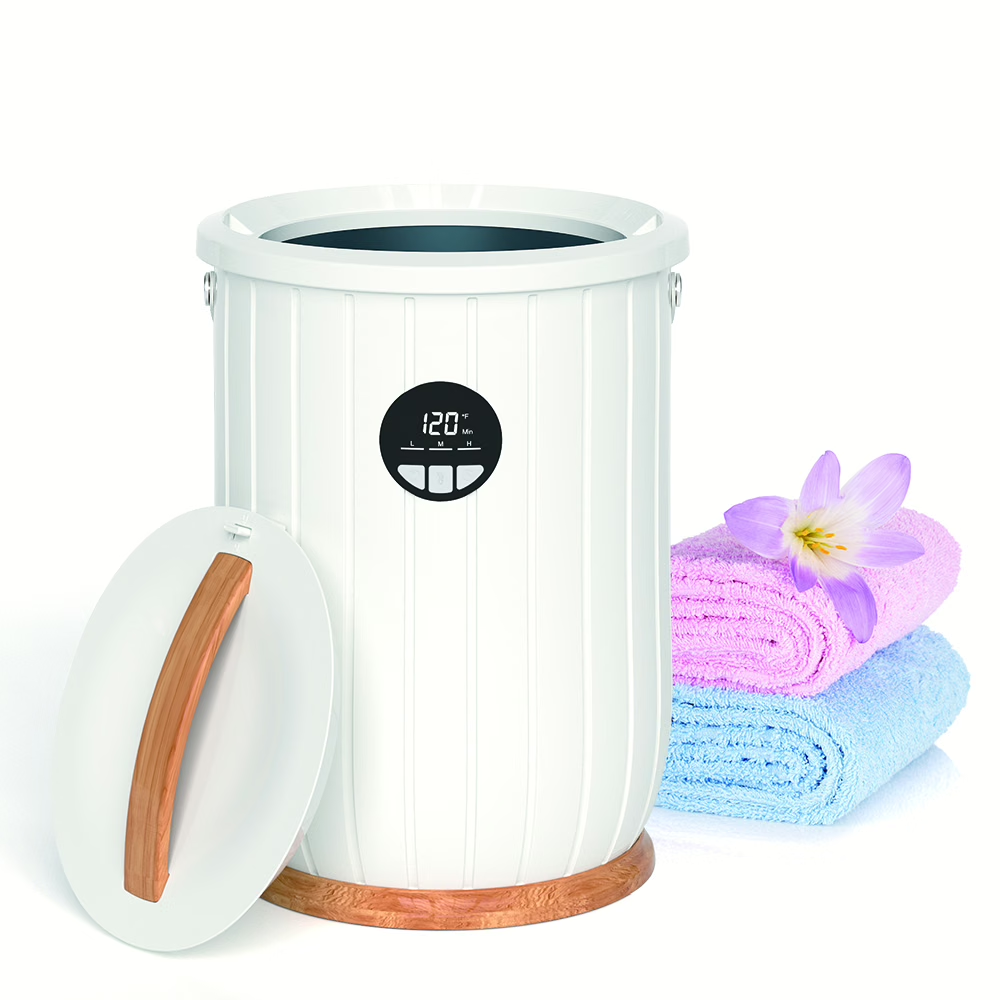
But a private label launch fails. It fails at predictable points: bad cert routing, lost tooling deposits, and copied designs. The eleven questions below are the diligence that catches those failures before they cost the brand.
Question 1: Are you a manufacturer or a trading company?
Mostly, the first filter. Ask for the business license and read the registered scope, making (生产) versus trade (贸易). A genuine factory can put a live video call on the production line within a day. But a trading desk has a pre-recorded clip and pitches flexibility while taking a margin. Also the factory.
As a leading towel warmer factory based in Dongguan, Guangdong, GoldHot emphasizes the importance of transparency in its operations. When partnering with a supplier, it's crucial to pick whether they are a genuine factory or a trading company. A legitimate electric towel warmer factory like GoldHot can provide a business license and showcase its production line, ensuring that clients receive high-quality products. While maintaining fit with rules such as ETL, UL, CE, PSE, UKCA, GS, TÜV, RoHS, and FCC.
GoldHot has ISO 9001 and ISO 14001 certs. It offers OEM and ODM services for towel warmer products. By working directly with a factory, clients can avoid unnecessary margins and ensure a smoother supply chain, from production to shipping via major ports like Yantian, Shekou, Manzanillo, or Veracruz, with flexible MOQ options.
Question 2: Do you own the tooling for the silhouettes I want?
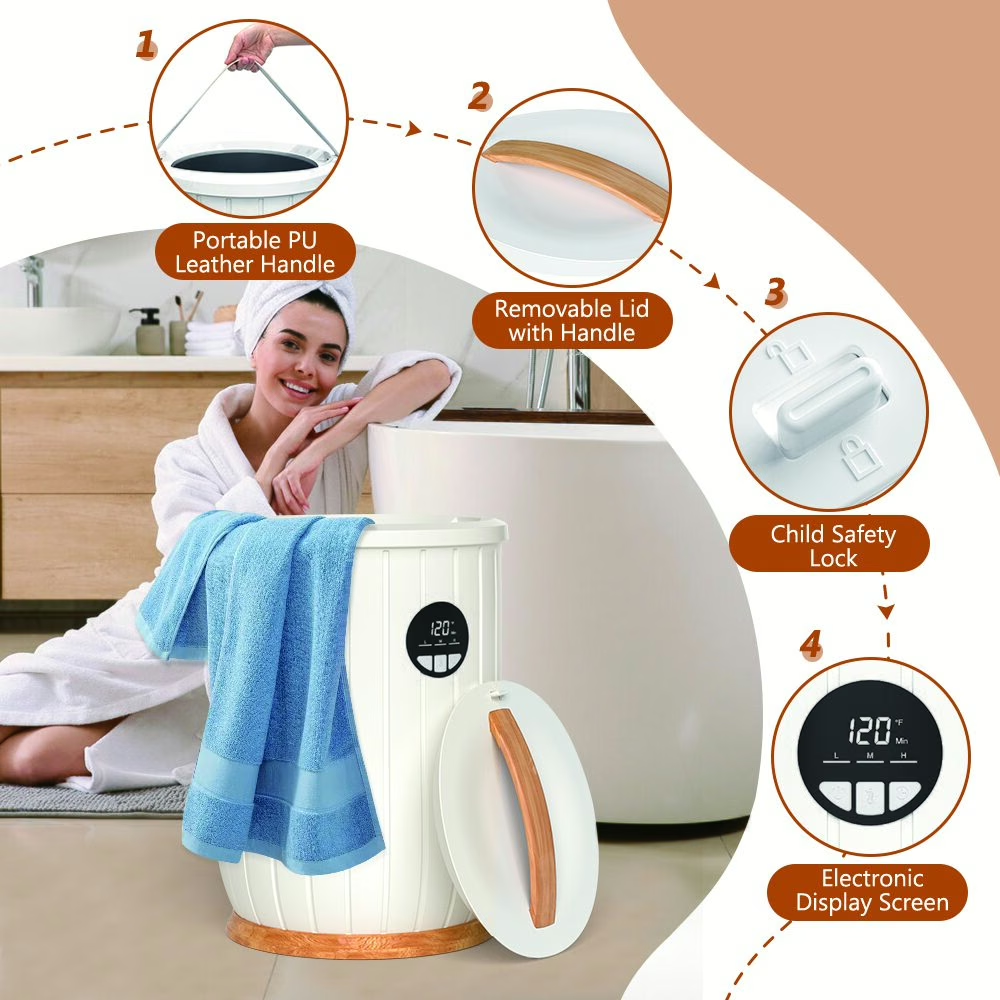
But, this is the question that decides whether your brand can differ on geometry. Or only on logo and finish. A factory that owns its rail, ladder. We offer custom towel warmer options. The fee is US$3, 000 to US$18, 000 for OEM variants. A factory that licenses someone else's mould charges you twice and cannot modify the geometry.
Question 3: What is the MOQ at standard versus custom?
We need 200 units per SKU for standard finish and 500 to 1, 000 units for custom color. Mostly, the lower MOQ comes from a factory absorbing the changeover cost from another order. The higher MOQ reflects the real economics of a paint-line changeover. A private label towel warmer factory that quotes "any MOQ" is reselling stock from someone else's run with a logo sticker applied. The unit will look like the original.
As a leading towel warmer factory based in Dongguan, Guangdong, GoldHot understands the importance of balancing production costs with customer needs. When it comes to standard finishes, our minimum order quantity (MOQ) is lower, around 200 units per SKU, allowing for more flexibility in ordering. But, for custom colors, the MOQ increases to 500 to 1, 000 units, reflecting the more costs associated with paint-line changeovers.
This approach enables us to keep efficiency while still catering to customers seeking personalized electric towel warmer solutions. As an OEM towel warmer provider, we prioritize transparency and fairness in our pricing and production processes, ensuring that our customers receive high-quality products that meet or exceed global standards such as ETL, UL, CE, PSE, UKCA, GS, TÜV, RoHS, and FCC, all while adhering to our ISO 9001 and ISO 14001 certs.
Question 4: What certifications do you hold, and in whose name?
While, the cert trap. ETL, UL, CE, PSE diamond, FCC, UKCA, RCM, these are issued to the factory of record. Mostly, check the company name on the certificate against the company you are paying. If they do not match, your customs entry can fail at the port and the certificate is unusable for your brand. A real factory holds the marks in their own name and will share the test report PDFs against the production batch.
Question 5: Will you sign an NNN agreement before sampling?
In contrast, a Western NDA is largely unenforceable inside China. The instrument that works is a Non-disclosure, Non-use, Non-circumvention (NNN) agreement, written in Chinese, enforceable in the supplier's local court. With specific damages. A serious private label towel warmer factory signs an NNN as table-stakes. A supplier who refuses or hesitates is signalling they intend to reuse your design.
Question 6: Who else have you OEM'd for in my market?
Mostly, ask for references in your destination market. A factory with real export history has buyers who will vouch. In contrast, a desk gives vague answers about "many famous brands" with no specifics. A real OEM partner is comfortable disclosing two or three non-competing brands they have shipped for in your region. With rough volume and year. That track record is the strongest predictor of execution.
Question 7: How is the tooling deposit structured and refunded?
But, the tooling deposit is where many private label projects lose money. The honest structure is 50 percent on tool start, 50 percent on first article approval. With the deposit amortised against the first 2, 000 to 5, 000 units shipped. After amortisation the tooling belongs to the brand. Mostly, get this in writing with a tooling-transfer clause. A factory that resists is planning to keep the tooling and run it for others.
Question 8: What is the sample timeline and cost?
For example, a serious private label towel warmer factory ships a stock-finish sample in 7 to 14 days at sample cost only. A custom branded sample with your logo, colour. And packaging takes 21 to 35 days because the artwork, colour-match, and pad-print plate cycle through tooling. Sample cost runs US$80 to US$220 plus express freight. A factory that cannot quote a sample timeline cleanly does not run real OEM.
Question 9: What is the production lead time on a confirmed order?
While, the realistic window is 25 to 35 days on a standard-finish order at 500 to 2, 000 units. Custom colour adds 5 to 10 days. Custom packaging adds 7 to 14 days. And an OEM bezel or branded controller adds 10 to 20 days for the part lead time. A supplier quoting "15 days, any quantity" is either over-promising or quoting against existing stock. which is not a custom OEM.
Question 10: How do you protect my brand on the production floor?
In contrast, this is the working layer most buyers never ask. A serious factory separates OEM lines, locks artwork files to the specific PO, runs custom-branded units in a sealed-box dispatch process. And does not re-use your moulds for parallel buyers. Mostly, ask about the artwork archive policy, the carton-mark traceability. And whether your mould runs on a dedicated bay. A vague answer means your branded units may show up at a competitor with a different label.
Question 11: How do you handle the after-sale on warranty claims?
Finally, the post-shipment question. The honest structure is a defect rate target of 1 to 2 percent. With warranty units shipped against the next PO at no charge plus a credit for the freight on the failed unit. GoldHot, a private label towel warmer factory, shares its defect rate and negotiates warranties in OEM contracts. Mostly, a vague "we have good quality" answer is no warranty at all.
The pricing reality for a custom branded program
Also, in the end, the cost stack of a private label run sits above stock pricing. We add costs to the ex-works rail price of US$72 to US$110. This includes tooling, custom finish, and more. Tooling costs US$2 to US$6 per unit on the first run. Custom finish adds 5 to 14 percent. Branded packaging costs US$3 to US$8 per unit. Certs-in-your-name routing costs US$0 to US$8, 000 for a new ETL filing. The all-in landed cost lands 12 to 22 percent above generic landed cost. for a unit that carries your brand in retail at 2.5 to 3.5x landed.
Buyer takeaway: Match the towel warmer spec to your market label rules. A cert is a snapshot. The real check is fit for the project, confirm wattage, voltage, plug type, and label scope before approval.
Reference: For the underlying electrical safety standards behind towel warmer, see NEMA and the IEC public catalogues.
Frequently asked questions
What is a private label towel warmer manufacturer?
A factory that produces electric towel warmers under your brand name and packaging, rather than its own. The unit is engineered, certified. And produced by the factory; the brand, finish, packaging, and sometimes the silhouette are customised for your retail or hotel work channel.
What is the MOQ for a private label towel warmer order?
200 units per SKU at standard finish, 500 to 1, 000 units for custom colour or branded packaging. A custom OEM bezel or controller raises the MOQ to 1, 000 to 2, 000 units. It drops on reorders.
How do I protect my design when working with a Chinese OEM factory?
Sign a written NNN agreement in Chinese before sampling. Register design rights in China for protection. And choose a factory with a track record of OEM separation. A real private label towel warmer factory treats your design as a controlled file, not shared IP.
How long does a private label towel warmer program take to launch?
Sample 21 to 35 days for custom branded units. then 25 to 45 days production once the sample is signed off. Add 2 to 4 weeks for certs-in-your-name if the factory's existing marks do not cover your entity. End to end, a new brand can be in the warehouse 12 to 16 weeks after the PO.
How GoldHot runs the OEM program
GoldHot has run private label and OEM programs for 30-plus markets across 28 SKUs. from boutique hotel brands to regional retail chains. Tooling is owned in-house with custom silhouettes available at US$3, 000 to US$18, 000 per mould. amortised against the first 2, 000 to 5, 000 units. NNN agreements are signed before sampling, a standard part of the file. GoldHot holds ETL, UL, CE, FCC, PSE, and UKCA. We check them against your shipments.
The Dongguan team configures the OEM program against the brand's positioning, MOQ tolerance. And cert footprint, then quotes a single landed-cost worksheet covering sample, production, freight, and duty. The factory floor, 350-plus staff across 20, 000 m² in Houjie. Dongguan, founded 2009, runs a separate OEM bay for brand-controlled production. The eleven questions above are the diligence we encourage every brand owner to run. on us and on every other.
At a glance, compared to other formats:
- Lower MOQ vs cabinet-style units, better suited to retailers running smaller initial runs.
- Faster heat-up time compared to hydronic radiators, under twelve minutes to operating temperature.
- Lower lifetime cost than heated rails, no plumbing run, no boiler maintenance, no pipe-loss penalty.