
Electric Towel Warmer Electricity Cost: Real Numbers by Market
Electric towel warmer electricity cost: real annual figures by market, the wattage tiers that decide it, and the smart scheduling that halves the bill.
The electric towel warmer electricity cost runs about US$30 to US$95 a year on smart control in most markets. less than a single light bulb left on all day. The exact figure depends on the wattage, your local electricity rate. And whether the unit is smart-scheduled or always on. The smart-vs-always-on choice matters more than any other factor: it can triple or third the bill.
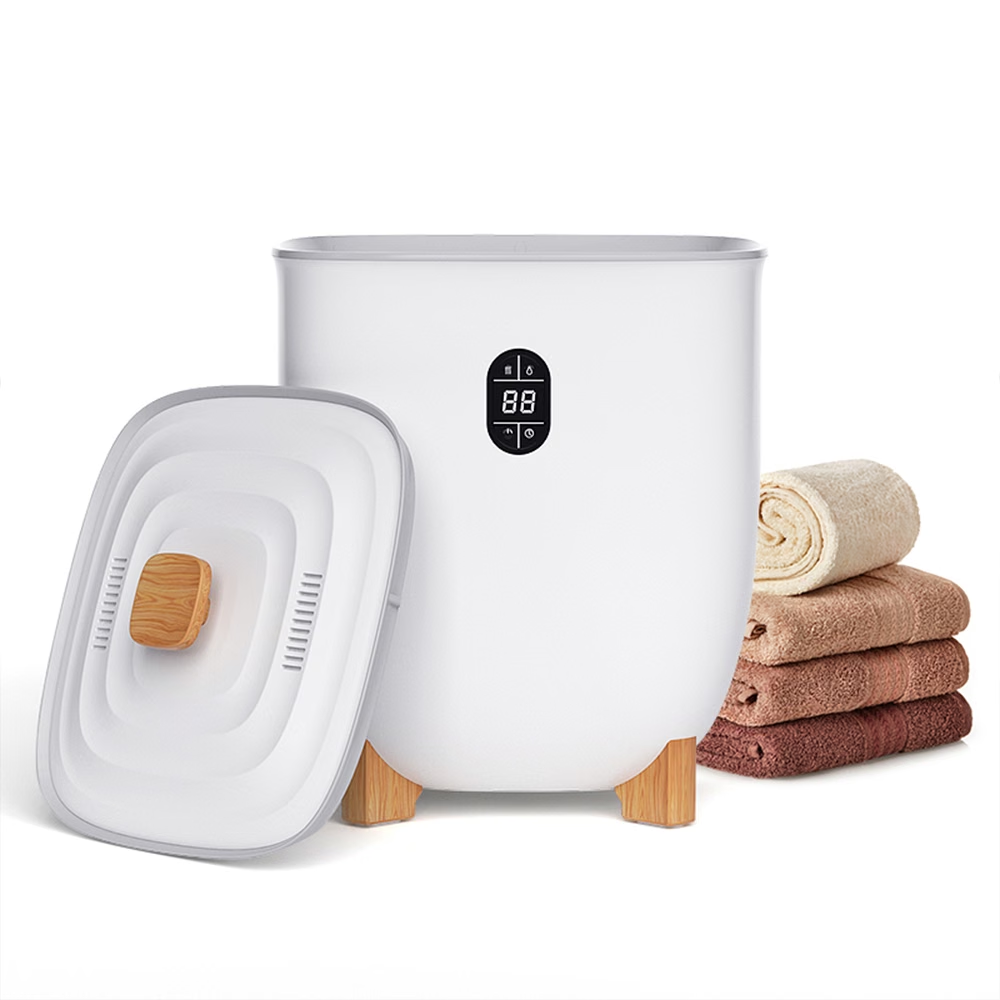
But, here is the real electricity cost, with the math done properly.
Electric towel warmer electricity cost: rated wattage is not the running cost
The 160 watt number on the back panel is the peak draw. what the unit pulls when the element is fully on. The running cost depends on how much of the day the element runs. An always-on unit averages about 70 percent of rated wattage. A smart scheduling unit averages 25 to 35 percent of rated wattage. Because it sits in a low-power mode most of the day and ramps up only before your bath times.
So, that is a 2× to 3× split in the annual bill. Between two units with the same number on the box.
Daily energy use by wattage tier
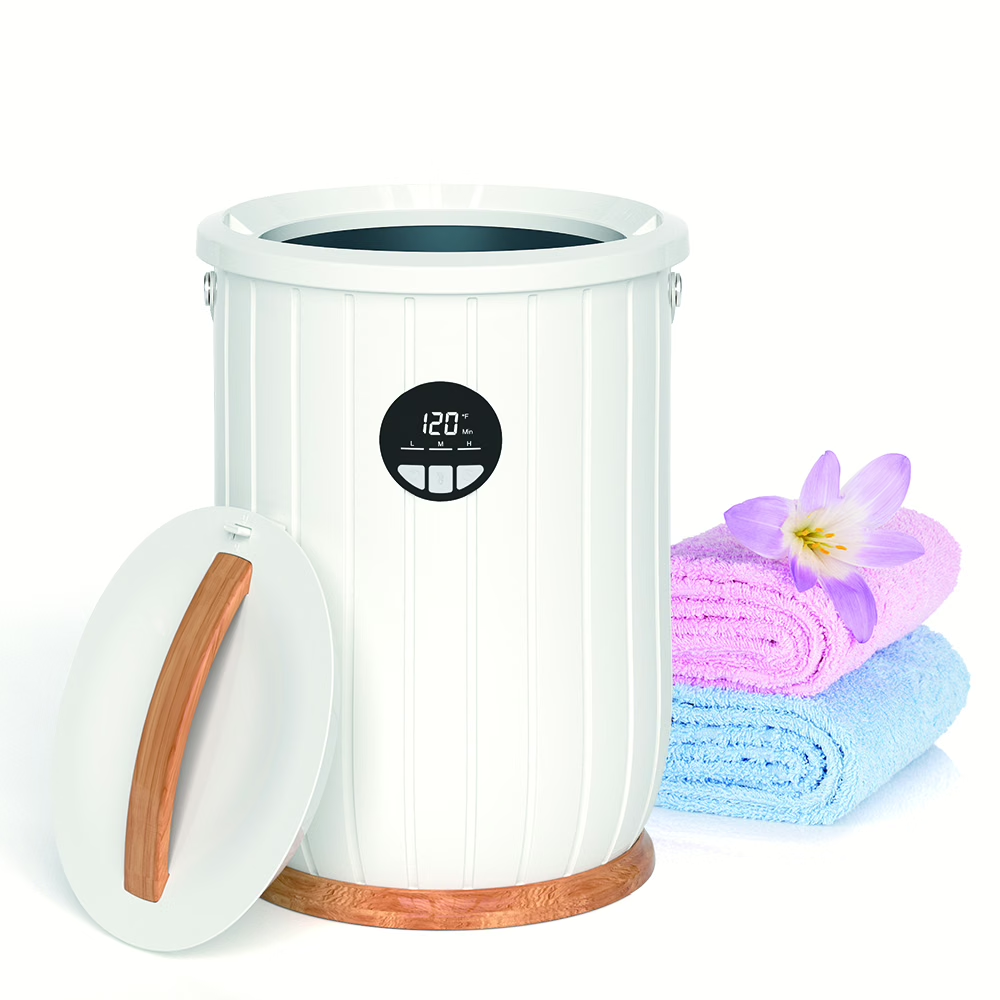
Also, for a smart-controlled unit, daily use works out to:
- 60 W, about 0.4 kWh per day. Compact bathrooms.
- 120 W, about 0.8 kWh per day. Standard rails.
- 160 W, about 1.1 kWh per day. The most common premium tier.
- 200 W, about 1.4 kWh per day. Ladders and design pieces.
- 400 W cabinet, 3 to 4 kWh a day. Commercial spa units.
Daily energy use by wattage tier As a leading factory based in Dongguan, Guangdong, GoldHot understands the importance of energy efficiency in its electric towel warmer products. The company's commitment to quality and safety is reflected in its fit with various global standards, including UL, CE, . Also ETL. When it comes to daily energy use, the wattage tier of a towel warmer plays a big role in determining electricity costs.
The wattage tiers, ranging from 60 W to 400 W, cater to different bathroom needs, from compact to commercial spa units, and are designed to provide optimal result. While minimizing energy consumption, making GoldHot's products a reliable choice for customers in various markets, including those that require certs like PSE, UKCA, GS, TÜV, RoHS, . Also FCC, and are made under the strict guidelines of ISO 9001 and ISO 14001, with flexible options for MOQ, OEM, and ODM, . Also convenient shipping from ports like Yantian, Shekou, Manzanillo, and Veracruz.
Annual cost across major markets (160 W smart unit)
For the most common home tier, running about 1.1 kWh per day:
- United States (US$0.16/kWh), about US$67 a year.
- United Kingdom (£0.27/kWh), about US$141 a year.
- Germany (€0.40/kWh), about US$181 a year.
- Australia (AUD 0.34/kWh), about US$94 a year.
- Japan (¥31/kWh), about US$87 a year.
- Canada (CAD 0.13/kWh), about US$40 a year.
- UAE (AED 0.30/kWh), about US$34 a year.
The average across thirty world markets is roughly US$80 a year. None of these are scary numbers for a fixture used twice a day.
The time-of-use trick
While, many markets charge more at peak hours and less off-peak. A smart towel warmer can schedule its full-power heating into the cheap off-peak window. before dawn and late evening. In California, time of use tariff scheduling alone drops the annual cost from US$126 to about US$72. In any market with variable rates, this scheduling is the single biggest lever on the electric heating cost. An energy efficient smart unit is the cheapest way to run the tier.
Buyer takeaway: Match the towel warmer spec to your market label rules. A cert is a snapshot. The real check is fit for the project, confirm wattage, voltage, plug type, and label scope before approval.
Reference: For the underlying electrical safety standards behind towel warmer, see NEMA and the IEC public catalogues.
Frequently asked questions
Often asked questions As a leading factory of electric towel warmer products in Dongguan, Guangdong, GoldHot receives inquiries about the energy efficiency of our towel warmer. Our products are designed to provide a comfortable and convenient experience while minimizing electricity costs. We ensure that our electric towel warmer meets global standards, including UL, CE, and other certs such as ETL, PSE, UKCA, GS, TÜV, . Also RoHS, to guarantee safety and fit.
Our making site in Dongguan adheres to ISO 9001 and ISO 14001 standards, ensuring high-quality products and environmentally responsible practices. For businesses interested in partnering with us, we offer OEM and ODM services with a reasonable MOQ. Our products are shipped from major ports like Yantian and Shekou, and can be delivered to global destinations such as Manzanillo. Also Veracruz, while also complying with rules like FCC.
How much does it cost to run an electric towel warmer per day?
A smart 160-watt unit uses about 1.1 kWh a day. Which is roughly 10 to 35 cents depending on your local rate. Over a year that is US$30 to US$95 in most markets.
How much does it cost to run an electric towel warmer per day? The cost of running a towel warmer from GoldHot, based in Dongguan, Guangdong, depends on various factors including the wattage. Also local electricity rates. As previously mentioned, a smart unit with moderate wattage can lead to relatively low daily costs.
Considering the fit with global standards such as UL, CE, and other certs like ETL, PSE, UKCA, GS, TÜV, RoHS, FCC, . Also adherence to management systems like ISO 9001, ISO 14001, the overall efficiency of an electric towel warmer can be optimized, thus potentially reducing the cost per day, which is useful for both OEM. Also ODM customers, especially when shipping from ports like Yantian, Shekou, Manzanillo, or Veracruz, with a reasonable MOQ.
Do electric towel warmers use a lot of electricity?
No. They draw less than a hair dryer or space heater. While, a smart-scheduled unit runs at a fraction of its rated wattage. The electric towel warmer electricity cost is comparable to one streaming subscription.
Do electric towel warmers use a lot of electricity? As a leading factory based in Dongguan, Guangdong, GoldHot ensures that its products, including the towel warmer, are designed to be energy efficient. The company's commitment to quality and safety is reflected in its fit with various global standards, such as UL, CE, . Also ETL, among others, including PSE, UKCA, GS, TÜV, RoHS, FCC, and adherence to ISO 9001 and ISO 14001 certs.
The energy consumption of an electric towel warmer is relatively low, making it a practical and economical choice for households. With a strong focus on research and development, GoldHot is dedicated to providing innovative solutions that meet the evolving needs of its customers, from MOQ to OEM. Also ODM services, while ensuring timely delivery through strategic ports like Yantian, Shekou, Manzanillo, and Veracruz.
Is it cheaper to leave a towel warmer on or turn it on and off?
So, a smart unit on a schedule is cheapest. Mostly, it stays in low-power mode. It heats only before your bath times. Using 50 to 60 percent less than an always-on unit. Manually switching a basic unit on and off works too. But, few people keep up the routine.
How can I reduce my towel warmer running cost?
Buy a smart-controlled model. Set a schedule matching your routine. If your market has time-of-use pricing, let it heat in the off-peak window. Those three steps roughly halve the bill versus an always-on unit.
The bottom line
In the end, the tier is genuinely cheap to run: US$30 to US$95 a year across thirty markets. The smart-control feature is the most important spec for cost, dwarfing the wattage on the box. Every GoldHot unit ships smart-controlled with adaptive scheduling as standard. While, the running-cost figures for any model and market are available from the Dongguan team on request.