
유럽 전기 타월 히터 준수 2026: 수입자들을 위한 완전 가이드
유럽 연합 수건 보온기 규정 2026을 충족하기 위한 마스터 플랜을 수립하세요.
EU towel warmer compliance in 2026
EU towel warmer compliance in 2026 means CE marking under the LVD and EMC directives, RoHS and WEEE coverage, the new Ecodesign energy thresholds, CBAM-embedded carbon disclosure on the steel, and the first ESPR digital product passport requirements rolling in.
Specifically, the 2026 EU rules are the most significant compliance shift for electric bathroom heating in a decade. Indeed, for any EU importer, retailer, or distributor moving towel warmers in 2026 and beyond, the EU towel warmer compliance map has expanded. Here is what changed, what stayed, and where the documentation goes.
The baseline that did not change: CE under LVD and EMC
For example, the foundation of EU towel warmer compliance remains CE marking against the Low Voltage Directive (2014/35/EU) and the Electromagnetic Compatibility Directive (2014/30/EU). Specifically, an electric towel warmer is tested to EN/IEC 60335-1 general appliance safety and EN/IEC 60335-2-43 specific to clothes and towel heaters. Plus EMC testing under EN 55014-1 and EN 55014-2. Indeed, the CE mark on the unit and the carton, together with the EU Declaration of Conformity, is the legal sale precondition. Without these, the unit cannot enter the EU market.
RoHS and WEEE, restricted substances and end-of-life
Meanwhile, RoHS Directive (2011/65/EU as amended) restricts lead, mercury, cadmium, hexavalent chromium, brominated flame retardants, and phthalates in the unit. Specifically, the substance limits are tight; documentation is a substance-by-substance compliance declaration backed by supplier material certs. WEEE Directive (2012/19/EU) covers the end-of-life recycling obligation, the importer or distributor of record registers with the national WEEE scheme and pays the recycling levy. Indeed, both are foundational and have been in force for years; they are not new in 2026. However, enforcement and verification have tightened.
The 2026 Ecodesign update, what is new
In contrast, the headline change in 2026 is the Ecodesign update extending energy-efficiency thresholds to electric towel warmers under the broader local space-heater scope. Specifically, the relevant regulation is the Ecodesign for Sustainable Products Regulation (ESPR) progressively replacing the older Ecodesign Directive. The new thresholds for towel warmers include:
- Minimum seasonal efficiency rating, the unit must meet a defined ηs (seasonal space-heating energy efficiency) figure, calculated against rated power and standby load.
- Standby power cap, at 0.5 W for off-mode, 1.0 W for standby with no information display, 2.0 W with information display.
- Mandatory control features, programmable timer, room temperature feedback, or adaptive start control. A unit lacking all three fails the rule.
- Energy label A to G, the familiar coloured label, sized and positioned per regulation, required on the product, carton, and online listing.
Specifically, what this means in practice: a high-wattage on-off cycling rail with no programmable control fails Ecodesign and cannot be CE-marked for sale after the 2026 transition. The 2026-compliant unit is lower-wattage, smart-controlled, with measured standby load.
CBAM, the embedded carbon cost on steel
Ultimately, the Carbon Border Adjustment Mechanism (CBAM) entered its definitive phase in 2026. Specifically, CBAM places a carbon price on the embedded emissions in imported iron and steel, aluminium, and several other categories. A towel warmer is mostly stainless steel; CBAM applies to the steel content. Indeed, the importer must report quarterly the embedded emissions per tonne of steel in the imported units and pay CBAM certificates against those emissions. The cost runs roughly EUR 1.50 to EUR 4.00 per unit on a standard rail, depending on the production-emissions data supplied by the manufacturer. For the EU importer, this requires the supplier to provide verified emissions data, not an estimate. Specifically, this data should be production-batch-specific, traceable to the steel mill.
ESPR digital product passport, phasing in
However, the ESPR introduces the Digital Product Passport (DPP), a machine-readable record of the product's materials, recyclability, repair information, and compliance documentation, accessible via QR code or NFC tag on the product. Specifically, towel warmers are not in the first wave of DPP-required categories (which prioritise textiles, batteries, and construction products). However, the regulation is structured so that small electrical appliances follow within 2 to 4 years. Indeed, manufacturers and importers preparing for the 2027-2029 horizon should already capture the DPP data fields, material composition, recyclability percentage, spare-parts availability, repair manual link, during production.
Energy labelling, the visible part
For example, the energy label is the most visible part of the new EU towel warmer compliance landscape. Specifically, every unit sold in the EU after the transition date carries the coloured A-to-G label on the product, on the carton, and in any online listing, with class, annual energy consumption in kWh, and a QR code linking to the EPREL product database entry. Indeed, retailers, both physical and online, are responsible for displaying the label correctly; importers are responsible for supplying it with the unit. In contrast, missing or incorrect labelling is a common 2026 enforcement target.
The 2026 EU compliance checklist for importers
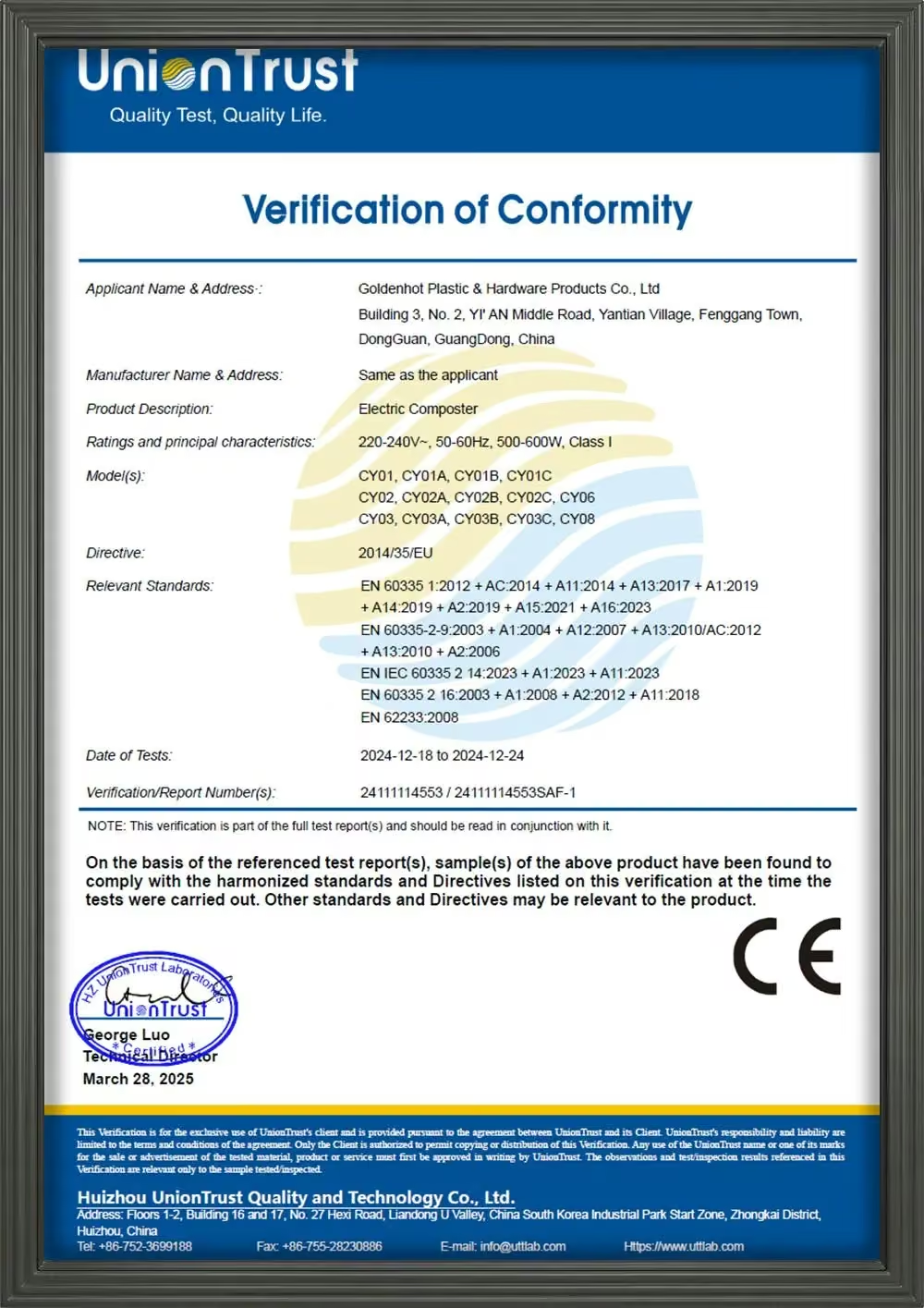
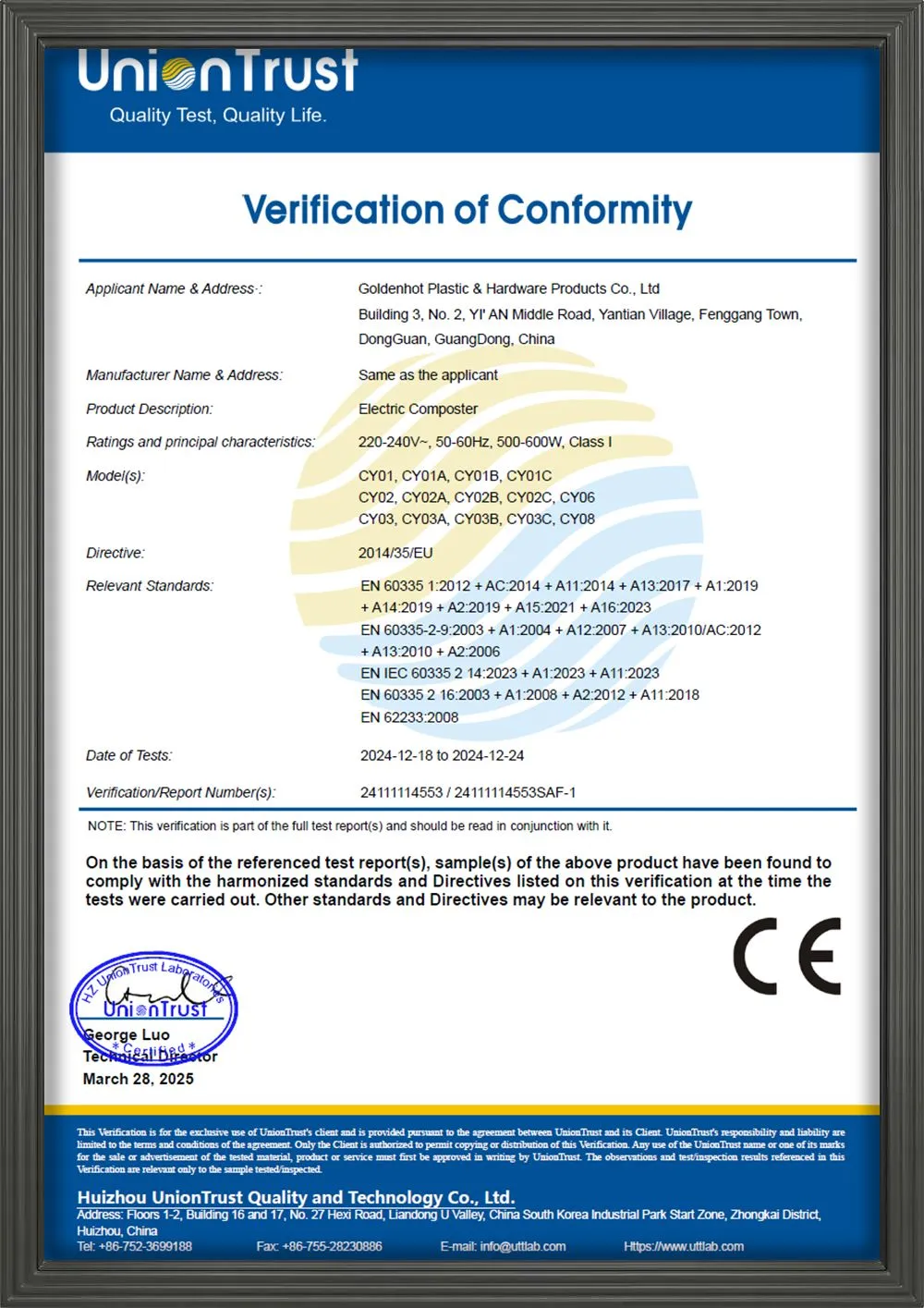
- CE Declaration of Conformity citing LVD, EMC, RoHS, and Ecodesign, issued by the manufacturer, retained by the importer.
- EN/IEC 60335-2-43 test report from an accredited body.
- EMC test reports under EN 55014.
- RoHS material compliance declaration with supplier-side substance evidence.
- Ecodesign technical file documenting ηs calculation, standby load, control features.
- Energy label artwork sized and positioned per regulation.
- EPREL database entry for the product model.
- CBAM emissions data from the manufacturer, batch-specific.
- WEEE registration in the destination member state.
- Importer name and address on the unit, in compliance with the General Product Safety Regulation.
UK, separate but currently aligned
Meanwhile, the UK's post-Brexit standard is UKCA, though as of 2026 the UK still recognises CE for most categories. Specifically, CE-marked towel warmers can be sold in Britain. However, UKCA is increasingly expected by premium retailers and is the safer long-term choice. Indeed, the UK's energy-labelling regime mirrors the EU's, with the UK label format and the UK PEPR database replacing EPREL.
Frequently asked questions
What certifications does a towel warmer need in the EU in 2026?
CE marking under the Low Voltage Directive and EMC Directive, tested to EN/IEC 60335-2-43; RoHS material compliance; Ecodesign energy efficiency and control feature requirements; energy label A to G; WEEE registration; and CBAM emissions reporting on the embedded steel.
What changed in EU towel warmer compliance in 2026?
Three things: Ecodesign extended energy-efficiency thresholds and control requirements to the category; CBAM entered its definitive phase, requiring embedded carbon disclosure on the steel; and ESPR began the digital product passport rollout, with small electrical appliances in line for the 2027-2029 wave.
What is CBAM and how does it affect towel warmer importers?
The Carbon Border Adjustment Mechanism prices the embedded carbon in imported steel. Specifically, the importer reports the emissions per tonne of steel quarterly and pays CBAM certificates, adding roughly EUR 1.50 to EUR 4.00 per unit. The supplier must provide verified emissions data.
Does a CE-marked towel warmer still need UKCA for the UK?
As of 2026, CE marking is still recognised in Great Britain for most categories, so a CE unit can be sold in the UK. However, UKCA is increasingly expected by premium retailers and is the safer long-term specification.
What happens if a towel warmer fails Ecodesign in 2026?
It cannot be CE-marked and cannot be legally sold in the EU. Specifically, high-wattage on-off units without programmable control no longer pass. The 2026-compliant unit is lower-wattage, smart-controlled, and meets the standby power and seasonal efficiency thresholds.
What GoldHot ships for the EU in 2026
The GoldHot EU line is CE-marked under LVD and EMC with full test reports against EN/IEC 60335-2-43 and EN 55014, RoHS and WEEE compliant, Ecodesign-conformant on the smart-controlled SKUs (with the high-watt non-compliant SKUs withdrawn from the EU catalogue), energy-labelled with EPREL entries in place, and accompanied by verified production-emissions data for CBAM reporting. Specifically, the 2026 catalogue carries A and B class units across the rail and cabinet platforms, with control profiles meeting the Ecodesign mandatory features. Meanwhile, UKCA is available for buyers preferring the post-Brexit mark. For any EU importer, retailer, or distributor working a EU towel warmer compliance question, the Dongguan team will return a compliance worksheet against the destination member state and channel within a working day. MOQ is 200 units per SKU; sample turn is 7 to 14 days; production is 25 to 35 days.