
Hotel towel warmer: rail vs cabinet vs flame (2026)
Hotel towel warmer guide for 50-room projects: compare rail, cabinet, flame, ladder and vertical column units by capacity, footprint, cost and housekeeping.
Hotel towel warmer FAQ As a leading factory of electric towel warmers in Dongguan, Guangdong, GoldHot receives various inquiries about our products. GoldHot towel warmer meets global standards like UL, CE and ETL. It provides guest comfort. We also comply with environmental rules like RoHS and FCC.
Our products are made in accordance with ISO 9001 and ISO 14001 standards, guaranteeing quality and reliability. For businesses interested in partnering with us, we offer OEM and ODM services with a reasonable MOQ. We are near Yantian and Shekou ports. GoldHot ships towel warmer products to hotels worldwide from these ports and others like Manzanillo and Veracruz.
Short answer: a hotel towel warmer for a 50-room. four-star project should be chosen by capacity, footprint and housekeeping workflow before finish. Rails fit standard rooms. Cabinets suit suites. Flames and ladders add visual appeal. The hotel towel warmer affects electrical load and guest impression. It also affects towel capacity and install depth.
This guide is for a 50-room, four-star hotel with 22m² bathrooms. The math and trade-offs change for resort suites, urban micro-hotels, or six-star villas, but the underlying logic transfers.
The rail, the workhorse, and the safest bet.
But, first, the horizontal-rail towel warmer (sometimes called the ladder rail or the bar rail) is the format guests instinctively recognise. Four to twelve horizontal bars stacked vertically, mounted to the wall at roughly bath-rail height. Footprint: 500 to 700 mm wide, 800 to 1, 200 mm tall, 90 to 130 mm deep. Wattage: 60 to 200 W.
Why it wins most briefs: the rail format holds the most folded towels per square metre of wall. In a 22m² bathroom, a 600 mm × 1, 000 mm rail handles bath towels. hand towels and face cloths. It does that for two guests without crowding. Housekeeping turns the room in the same time as a standard non-warming rail. Because the load surface is familiar, staff do not need retraining. Install is dry: no plumbing, a 13A outlet behind the wall or a switched fused spur.
But, it loses on visual presence. The rail recedes into the bathroom rather than animating it. For a four-star urban hotel where the bath is functional rather than ceremonial, that is the right answer. In a resort, the bath is part of the guest experience. Guests are paying to be impressed when they walk in. There, the rail can read as standard-issue. Buyers spec'ing for the suite tier mostly move up to the flame or the column.
Also, also, cost envelope per unit at 50-unit volume. ex-works Dongguan: US$95 to US$160 depending on finish and rail count. Lead time: 35 days for an unbranded run, 50 days for OEM with custom packaging.
The cabinet, the hidden engine.
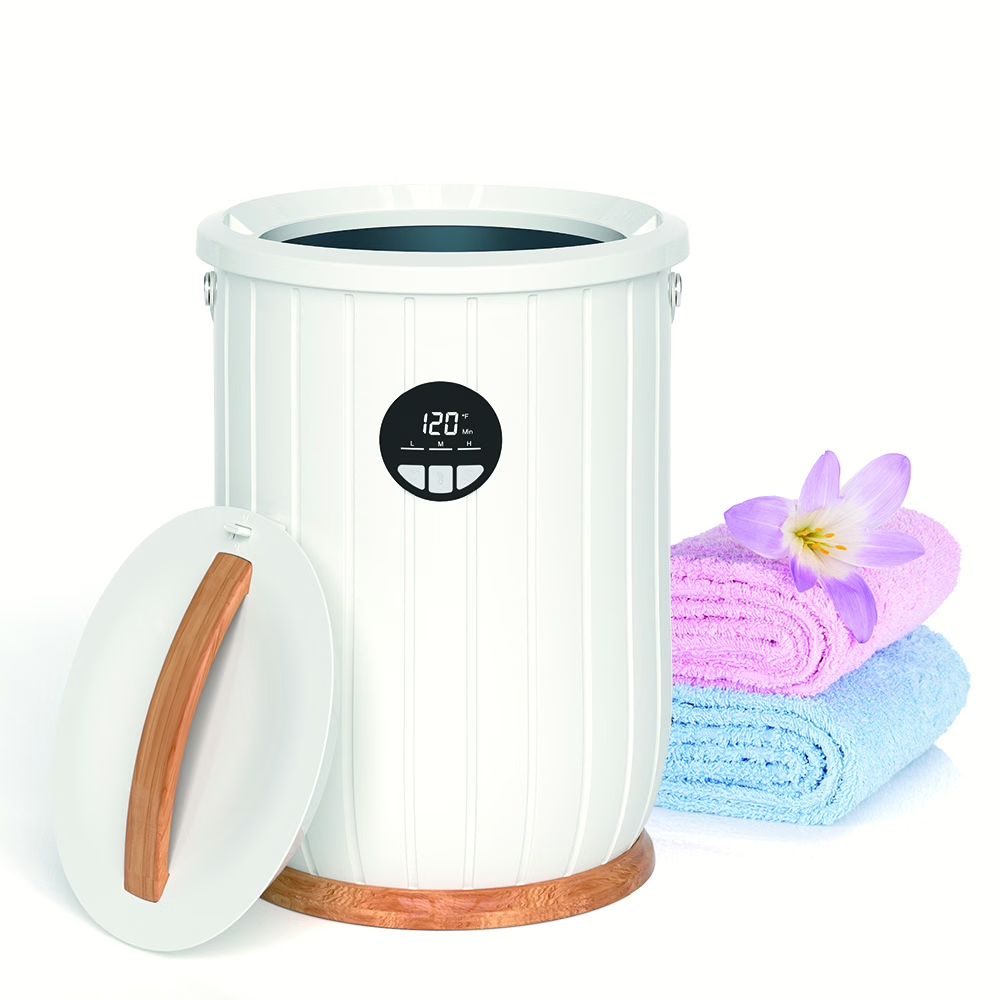
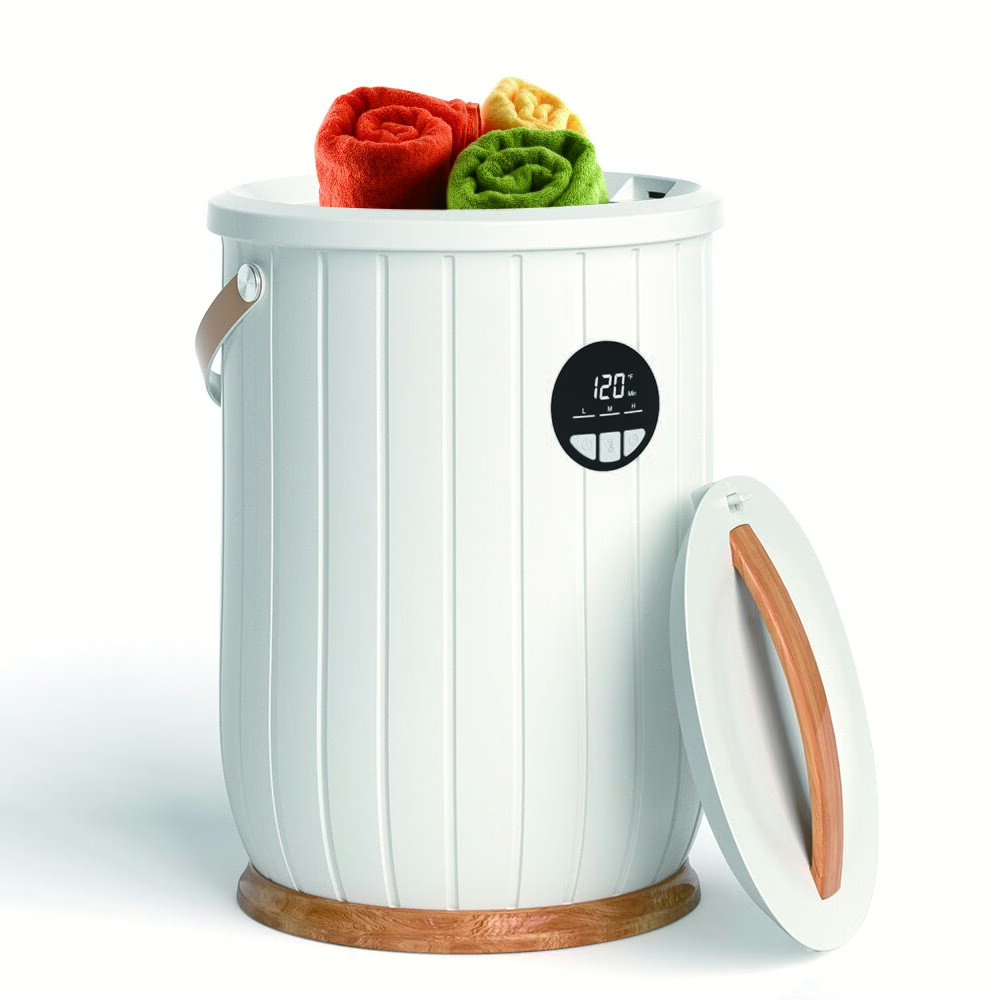
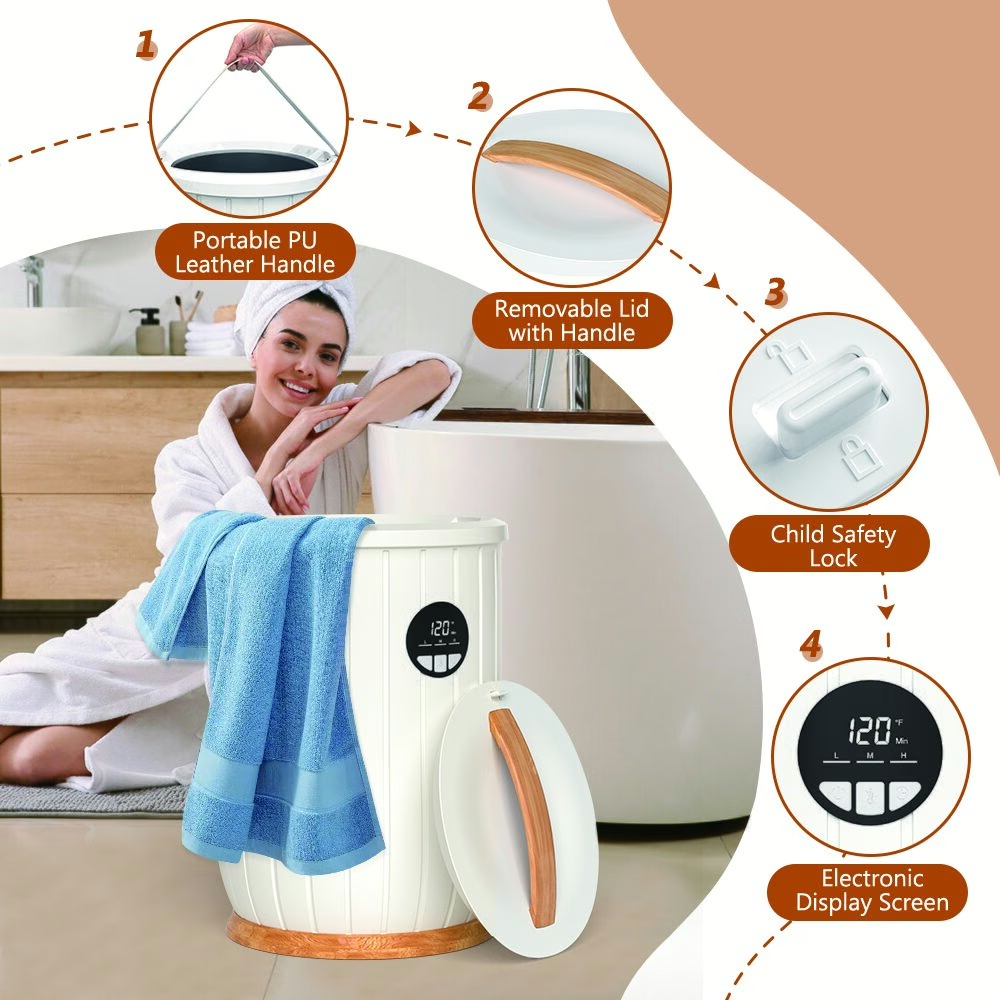
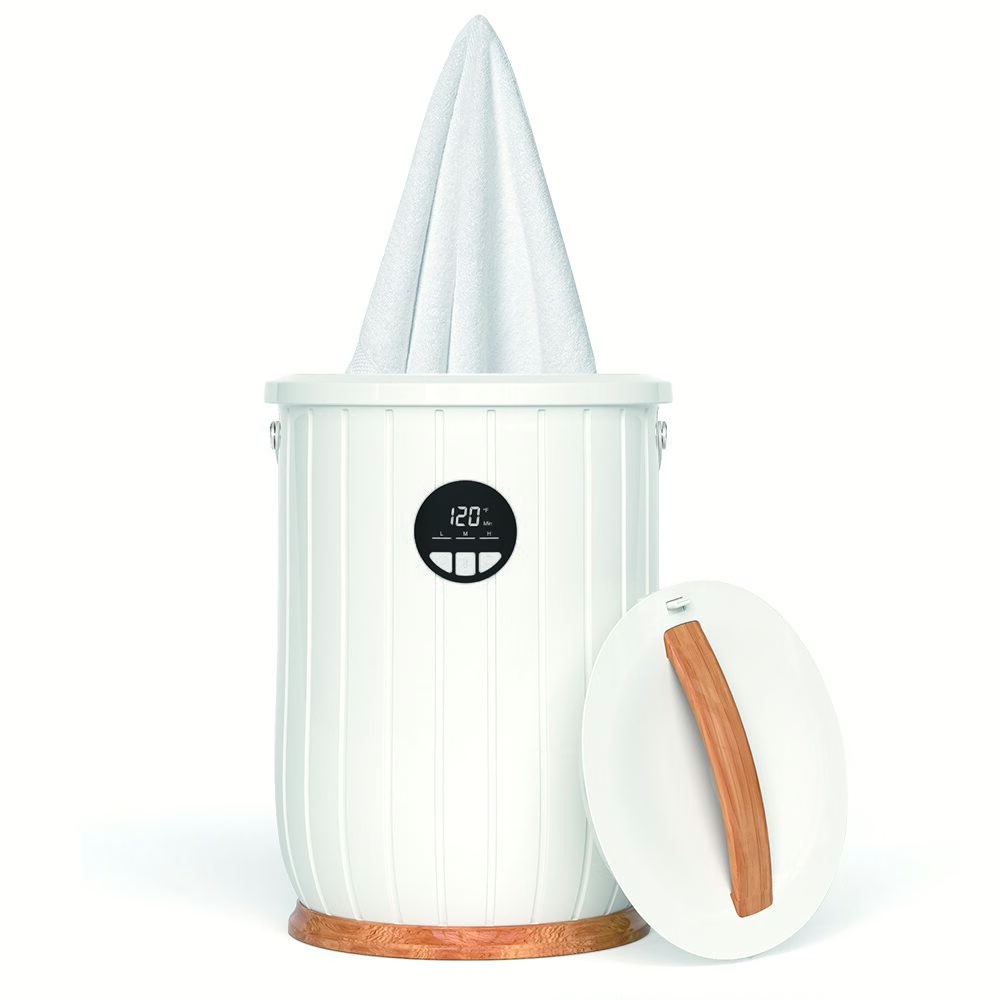
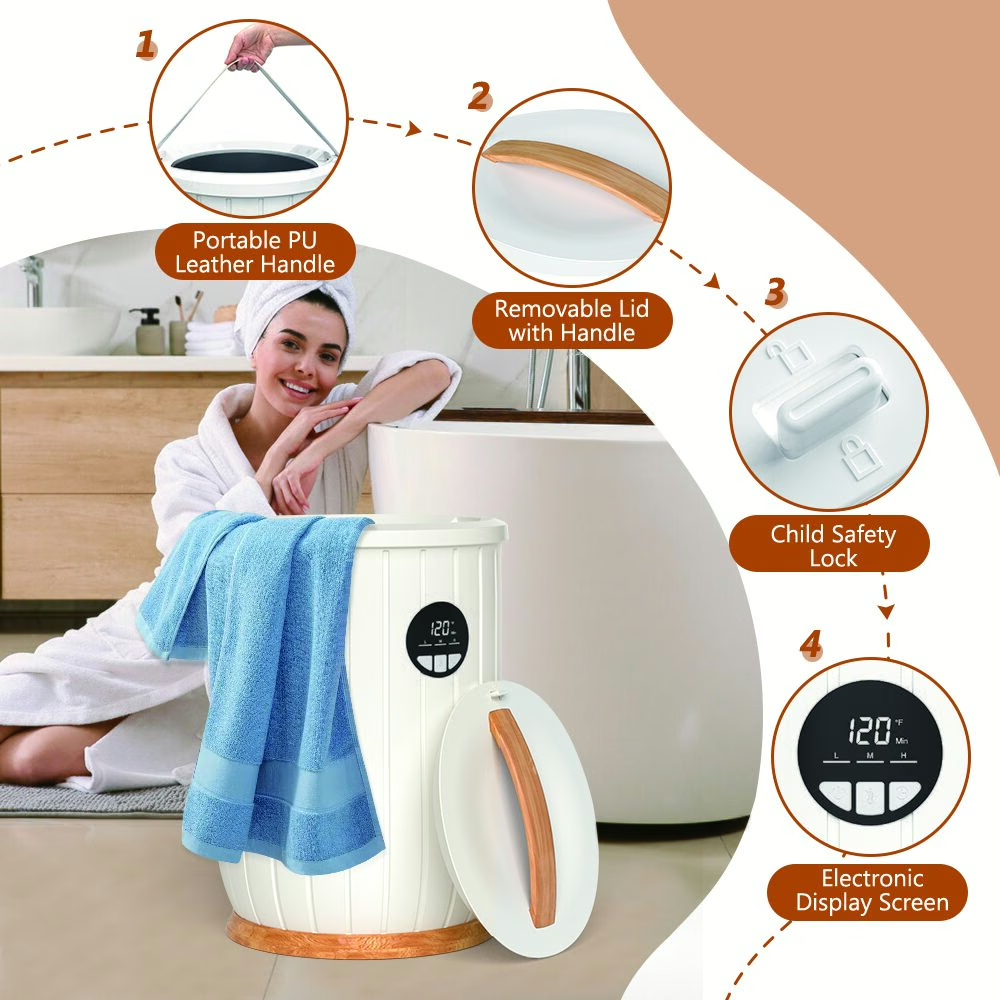
A towel warmer is a steel box that holds towels at 50-60°C inside. It has vents in the front. Footprint: 400 to 600 mm wide, 600 to 900 mm tall, 350 to 500 mm deep. Wattage: 150 to 400 W. Capacity: 12 to 24 folded bath towels depending on the model.
Spas and high-end gyms have specified this format for the past twenty years. Now, urban luxury hotels are adopting it in the suite tier. The visible payoff is simple. The cabinet doors open. And the guest pulls a towel that is dry, hot to the touch and faintly fragrant. Housekeeping can add cedar or eucalyptus to the rack. The unboxing-quality moment matters more than most rail-format buyers anticipate. It registers in guest reviews. Mostly, it shows up in the kind of review that ends up in the booking-site sidebar.
But, what it loses on: footprint and electrical load. A cabinet warmer occupies floor or wall space that a rail does not need. The unit uses more power, about twice the norm. This may need new wiring in tight spaces. New builds plan for it; retrofits discover the constraint late.
While, the other catch: housekeeping rhythm changes. The cabinet works best when towels are pre-warmed for an arrival, not warmed continuously. That requires staff to time the warming cycle to the check-in window. a discipline that takes a few weeks to ingrain. Buyers who pilot one cabinet on a single floor before committing to all 50 rooms tend to thank themselves later.
Cost envelope per unit at 50-unit volume: US$220 to US$420. Lead time: 45 days unbranded, 65 days OEM.
The flame, the design statement.
While, the flame silhouette. a single, sculpted vertical element that tapers and curls. is the format that gets pinned to mood boards. It is also the format that genuinely surprises the guest the first time they walk into the bathroom. In a hotel room, the towel warmer is the most photographed item.
But, practical capacity is lower than the rail: three to five towels held against the curve. sometimes draped rather than folded. Footprint is more vertical than horizontal. 250 to 400 mm wide, 1, 100 to 1, 500 mm tall, 130 to 200 mm deep. Wattage: 60 to 140 W, identical envelope to the rail.
The trade-off is honest: the flame is a design choice that takes capacity away from utility. For a 22m² bathroom with two guests on a two-night business stay. the flame can be the right call. But, pair it with a small cabinet behind the door for the third bath towel. For a longer stay or a family booking, the rail handles the load better.
So, the other thought is finish. Flames are specified in polished or brushed stainless, brass-coated stainless or matte black powder-coat. Brass-coated finish carries the design narrative in publications and on Instagram. But, it doubles the unit cost and lengthens the lead time by two weeks.
Also, cost envelope per unit at 50-unit volume: US$140 to US$320 depending on finish. Lead time: 50 days unbranded, 70 days OEM with the brass coating.
The ladder, the rail's denser cousin
Similarly, a ladder warmer looks like a rail but uses tighter bar spacing. Usually, 20 to 30 horizontal bars stack over a 1, 200 to 1, 800 mm height. The format originated in European luxury bath fitting, including Vola, Aestus and the upper Zehnder catalogue. Then it carried over into electric versions over the past decade.
In addition, the ladder earns its room in the suite tier. Here, the brief calls for visual density: the warm wall becomes a sculptural object. Six to eight folded bath towels stack on a ladder without crowding. Also, the bars catch light. The format reads as the more expensive cousin of the standard rail.
Honest assessment: in a four-star room build, the ladder is overkill. The rail does the same functional job for two-thirds of the unit cost. The ladder belongs in the suite tier, resort villas and spa cabin builds. In those settings, guests pay enough to notice finish detail. Also, the bathroom is genuinely part of the experience.
Cost envelope per unit at 50-unit volume: US$180 to US$300. Lead time: 45 days unbranded, 60 days OEM.
The vertical column, the small-bathroom specialist
While, finally, the vertical column is the format we recommend most for boutique urban hotels with footprint constraints. A single tall vertical heating element stands 1, 400 to 1, 800 mm tall. It is 90 to 130 mm wide. Three to six short horizontal arms project forward at intervals. It occupies a strip of wall that a rail or ladder cannot use. For example, it fits between the shower enclosure and door, or beside the WC.
For a 14 to 18m² bathroom, the vertical column is the only format that fits. That floor area is realistic in a converted heritage building or a Tokyo / Hong Kong build. It avoids rerouting plumbing and protects storage. It carries two to four folded towels. That matches the realistic occupancy of a one- or two-guest room.
But, the format is less photogenic than the flame and less commanding than the ladder. Which is why it is under-specified in design publications. But the format helps the buyer of 50 units stay on budget.
Mostly, also, cost envelope per unit at 50-unit volume: US$110 to US$180. Lead time: 35 days unbranded, 50 days OEM.
The choice matrix, plainly
In short, five silhouettes, five different briefs they solve:
Standard four-star room, business travel, full towel set → rail. The safest bet. The format your housekeeping team already understands.
For example, Resort suite, leisure tier, hot-towel ceremony at check-in → cabinet. Plan the housekeeping rhythm before the install.
Design-first urban hotel, two-night maximum stay → flame, paired with a small cabinet behind the door for overflow.
Suite tier in a four-star build, or any villa → ladder. Visual density buys the room.
In contrast, Heritage retrofit, micro-hotel, or any sub-18m² bathroom → vertical column. Almost always the right answer where floor area is the constraint.
The mistake we see most is simple. Buyers pick the flame because it photographs beautifully. Then, they discover the towel set will not fit on it. The second-most-common mistake is specifying a cabinet for every room. Often, only the suite tier needs it. Over five years, the operating cost is real money on a 50-unit fleet.
How to use this matrix
If you are ten minutes into a feasibility brief, choose the rail. It will not let you down while the rest of the spec is still open. Lock it in for the standard floor. Then layer in cabinets, flames or ladders selectively for suites and design rooms. The vertical column deserves a deliberate stop. It solves a footprint problem that may not show on the architect's plan until install day.
Also, sample units in all five silhouettes ship from Dongguan in 18 days. That includes DHL air freight to most ports. Asking for sample units before the bulk order is cheap insurance on a 50-unit spec. This is especially true for the flame finish. Under hotel lighting, it can read differently than it does in studio photographs.
If you are sitting on a 50-room project, send the bathroom footprint before the PO is cut. The account team in Dongguan can run a one-page recommendation against the floor plan within one working day. Twenty-eight models, five silhouettes, one factory.
Hotel towel warmer specification checklist for 50 rooms.
For a 50-room order, check the towel warmer on 4 key points: capacity, footprint, load and workflow. First, match the silhouette to the room tier. Next, confirm wattage and wall depth before tile is set. Finally, reserve upgraded finishes for rooms where guests will notice the design.
Also, Standard rooms: a rail towel warmer or heated towel rail gives the best capacity per wall metre.
Suite rooms: a cabinet towel warmer or towel warming cabinet supports a hot-towel arrival ritual.
Design rooms: a flame towel warmer works when visual identity matters more than towel count.
So, Premium villas: a ladder towel warmer adds visual density and enough bars for longer stays.
Retrofit rooms: a vertical column towel warmer protects storage space in sub-18m² bathrooms.
Hotel towel warmer silhouette | Indeed, best fit | Capacity | Spec watchpoint |
|---|---|---|---|
But, rail | Standard four-star room | Full two-guest towel set | Also, confirm mounting height and switched spur location. |
Cabinet | Suite or spa-style room | So, 12 to 24 folded towels | Plan the housekeeping workflow and pre-warm cycle. |
Flame | In addition, design-led city room | 3 to 5 towels | Check brass coating, stainless steel finish and lead time. |
While, ladder | Suite tier or villa | 6 to 8 towels | Mostly, budget for the denser silhouette and larger wall area. |
Vertical column | Heritage retrofit | For example, 2 to 4 towels | Verify install footprint beside the shower or WC. |
From a procurement view, the electric towel warmer is also a making decision. MOQ, OEM packaging, carton tests and replacement parts matter as much as the finish. A Dongguan factory can quote rail, cabinet, flame, ladder and vertical column in one comparison sheet. As a result, the hotel work bathroom spec is easier to approve.
Buyer takeaway: Match the towel warmer spec to your market label rules. A cert is a snapshot. The real check is fit for the project, confirm wattage, voltage, plug type, and label scope before approval.
Reference: For the underlying electrical safety standards behind towel warmer, see NEMA and the IEC public catalogues.
Hotel towel warmer FAQ
What towel warmer silhouette is safest for a 50-room hotel?
In contrast, mostly, the safest towel warmer silhouette for most 50-room hotels is the rail. It carries the full two-guest towel set, fits a predictable wall zone and keeps housekeeping training simple. It is also the easiest format to cost at volume before the buy order is released.
What towel warmer silhouette is safest for a 50-room hotel? Hotels with 50 rooms can use a towel warmer from GoldHot in Dongguan, Guangdong. This format is not only convenient but also easy to install and keep, making it a practical choice for hotels looking to provide a comfortable experience for their guests.
GoldHot makes the electric towel warmer. It meets UL, CE, ETL, and other global standards. GoldHot has ISO 9001 and ISO 14001 certs. It ships from Yantian, Shekou, and other ports. It offers MOQ, OEM, and ODM options.
When should a hotel choose a cabinet towel warmer?
A towel warmer fits suite rooms and spa rooms. It keeps towels hot for guests. But, it needs more depth and more power than a rail. So, it should be specified early with the electrical plan.
When should a hotel choose a cabinet towel warmer? Hotels in Guangdong near Dongguan may use a cabinet towel warmer. GoldHot offers electric towel warmer solutions. This type of heated towel rail is ideal for hotels that want to offer a high-end experience, with the added benefit of being able to warm multiple towels at once.
GoldHot meets global standards like UL and CE. We ship from Yantian and other ports with low MOQ.
Is a flame towel warmer practical or mostly decorative?
A flame towel warmer is practical for light occupancy, but it is mainly a design statement. It suits two-night business stays or rooms where photography matters. For longer stays, pair the flame with storage or choose a rail towel warmer instead.
Is a flame towel warmer practical or mostly decorative? A flame towel warmer is mainly a design statement. GoldHot in Dongguan makes them. It suits two-night business stays or rooms where photography matters, providing a unique ambiance.
For longer stays, use a heated towel rail or electric towel warmer. They meet safety standards like UL and CE.
Which towel warmer works best in a small retrofit bathroom?
Also, a vertical column towel warmer is best in a small retrofit bathroom. It uses a narrow wall strip beside the shower, vanity or WC. As a result, the room keeps storage and circulation space while still warming two to four towels.
What should buyers check before approving OEM packaging?
Before approving OEM packaging, buyers should confirm model drawings. wattage, plug type, carton drop tests, spare parts and finish samples. They should also check the stainless steel finish under hotel lighting. This avoids late changes after sample units leave Dongguan.
Towel warmer comparison notes: price, warranty and energy efficiency
Use this note when stakeholders ask for the split between rail vs cabinet vs flame. To compare fairly, separate buy price from operating cost. A cheaper rail can still win on energy efficiency because wattage is lower. But, a cabinet may win the pros and cons review when the room rate supports hot-towel service.
Also, which to choose depends on size, footprint, noise level and warranty. Most electric towel warmer formats are quiet because they use sealed heating elements. Still, check warranty terms, controller replacements and finish coverage before the hotel signs the PO.
Finally, ask the supplier to state heat-up time for each towel warmer silhouette. Also, confirm whether smart features are included or optional. For hotel operations, a timer matters because housekeeping can pre-warm towels before check-in. So, the timer setting should be tested on the sample unit before the bulk order.
PO handoff checklist
First, confirm the room tier. Next, confirm wall width. Then, match towel capacity to occupancy. Also, check plug type. But, do not approve the finish from studio photos alone. So, review samples under hotel lighting. While, ask housekeeping to test loading speed. In addition, check replacement parts. Finally, lock carton labels and timer instructions. As a result, the towel warmer spec is easier to approve.