
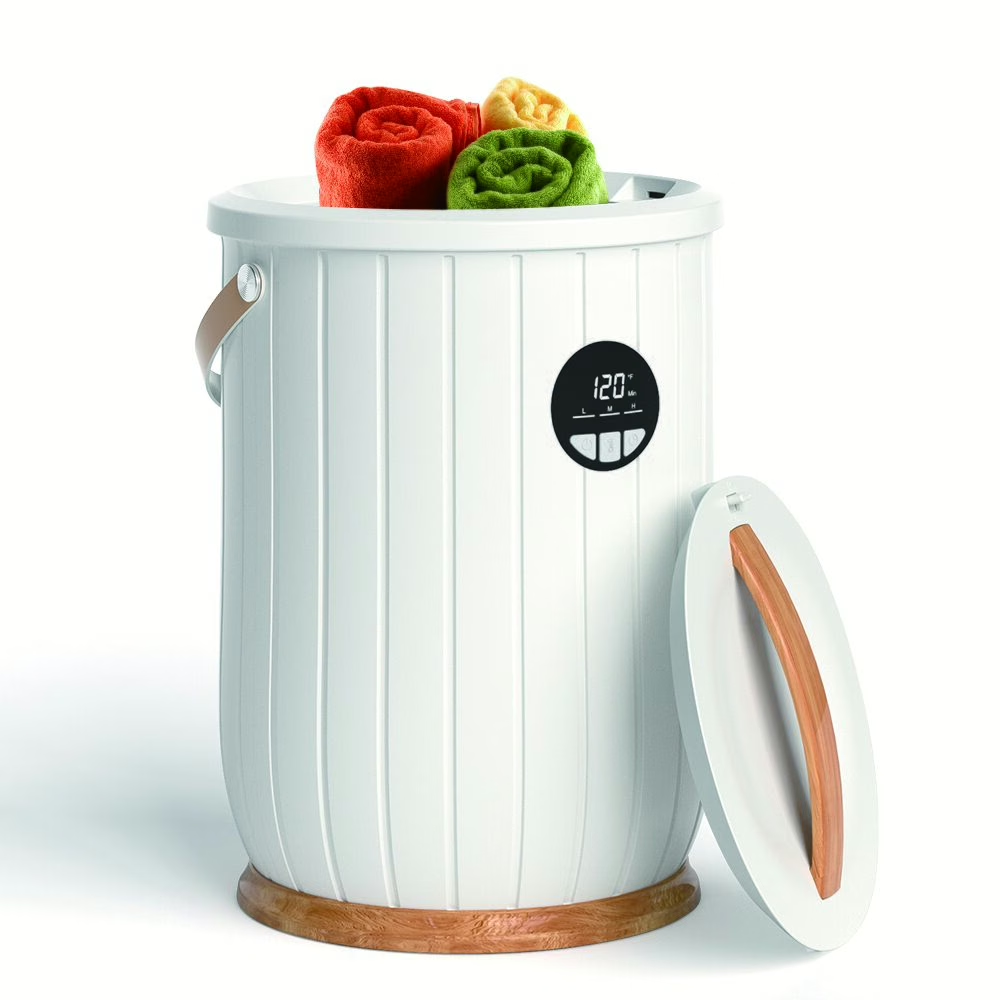
Towel Warmer Energy Rating: A vs B vs C, What the Labels Really Mean
Towel warmer energy rating compared, what A, B, and C mean under the 2026 EU Ecodesign label, the real watt-hour cost, and the specs that move the rating.
Under the 2026 EU Ecodesign update an A-class towel warmer consumes roughly half the annual energy of a C-class unit at the same setpoint. and the split comes from insulation. controller intelligence. And standby power, not the heating element wattage. The energy label looks like a one-letter summary. But, the engineering behind the letter is what a sustainability officer or EU importer should be checking against the spec sheet. Here is what the towel warmer energy rating actually measures and how to read it.
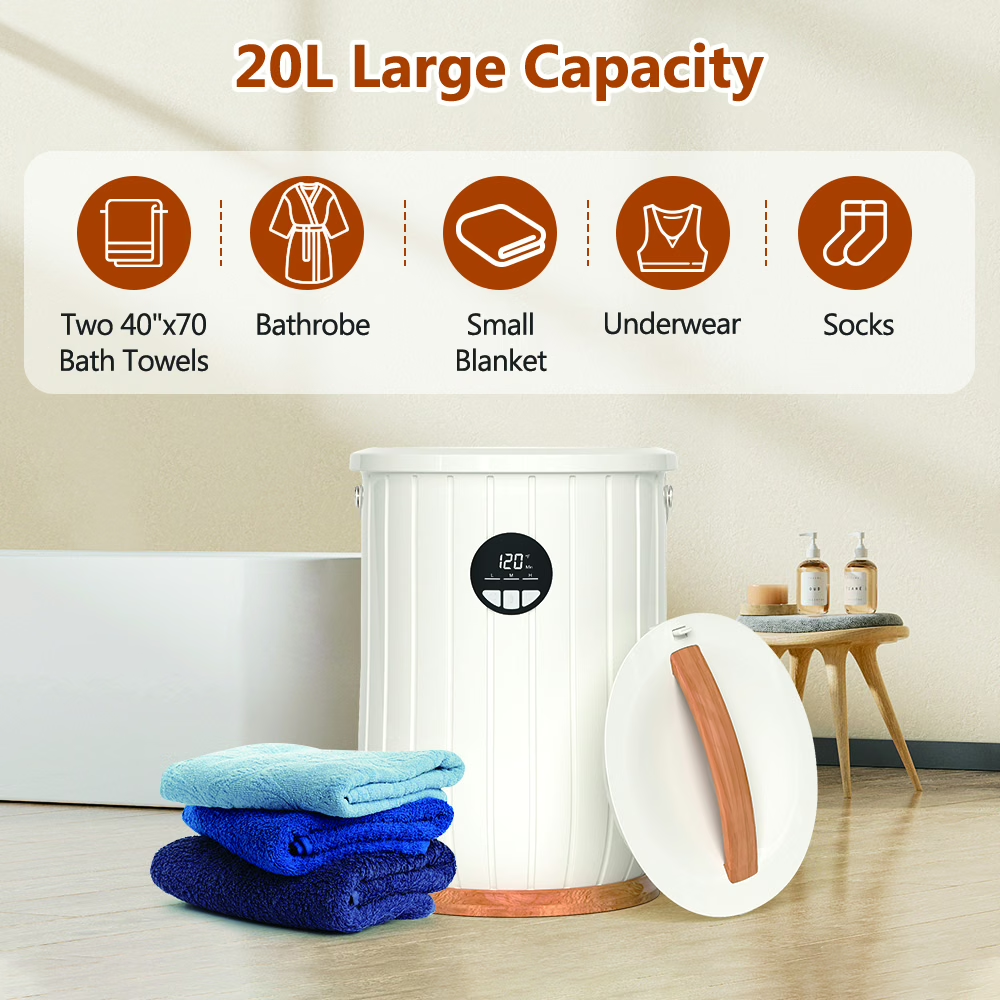
But, the 2026 Ecodesign update added energy-labelling thresholds for small heating appliances. With the towel warmer energy rating folded into a tier alongside heated mirrors and bathroom panel heaters. The label maps to a measured annual energy consumption per unit at standardised use. not to the nameplate wattage on the unit.
What the towel warmer energy rating actually measures
Mostly, the rating sits on an A to G scale. With A representing the lowest measured annual kWh consumption under the standard duty cycle. The test protocol simulates an eight-hour-per-day operation across heat-up, hold, and standby phases at a reference ambient. In contrast, the nameplate wattage is the peak draw of the heating element. The wattage matters for circuit sizing. The energy rating matters for the lifetime cost and carbon footprint. They are not the same number.
A vs B vs C: the measured kWh range
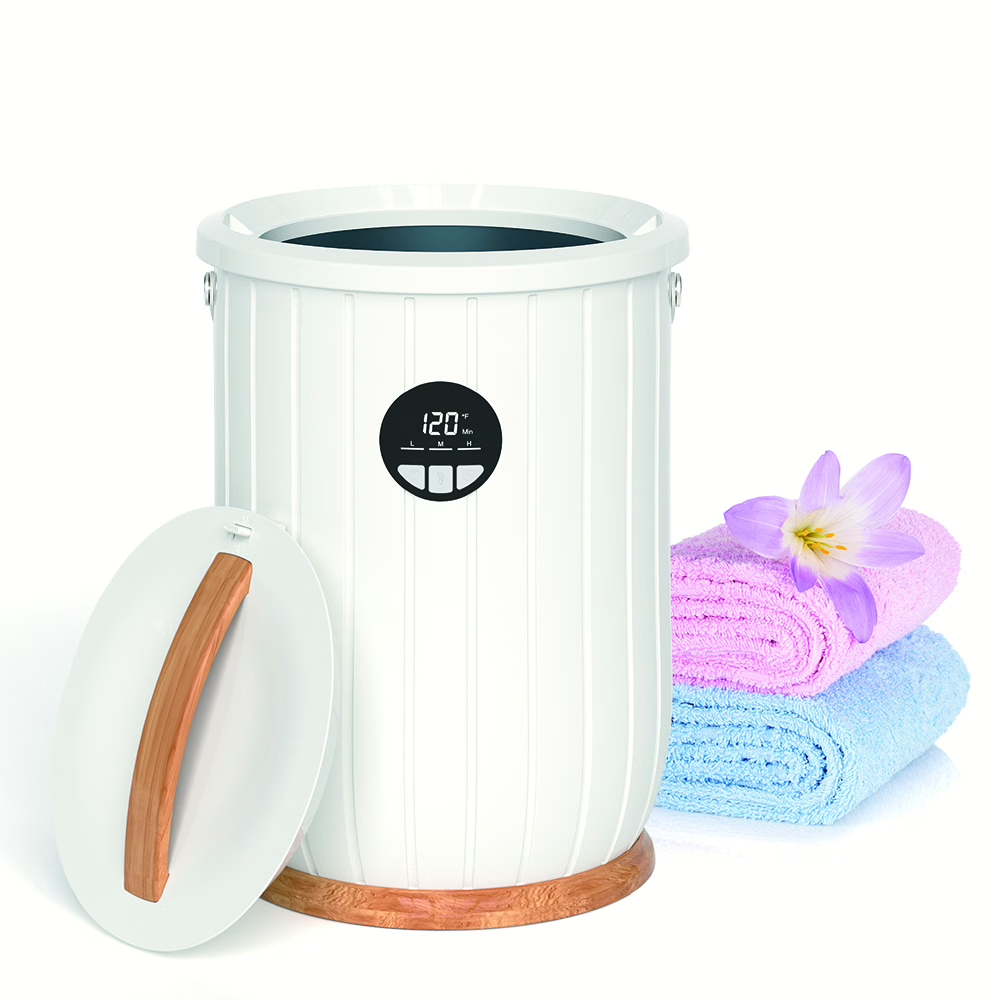
A 600 × 1, 000 mm rail at 140 W uses about this much power per year.
- A class, 95 to 140 kWh per year. Achieved with smart thermostat, low-power standby (under 0.5 W), and 12 to 18 mm thermal-mass tubing that holds heat between cycles.
- B class, 145 to 195 kWh per year. A simple programmable thermostat, 1 to 2 W standby, and adequate but unoptimised thermal mass.
- C class, 200 to 280 kWh per year. Manual on/off only, 3 to 6 W standby (often from a power-LED that stays on), and thin tubing that cools fast and reheats often.
- D-G class, above 280 kWh per year. Mostly older units, oversized for the room, or with malfunctioning thermostats.
At €0.30 per kWh, a towel warmer's 10-year cost is about €330 to €420. C class at €600 to €840. The 10-year cost gap is €280 to €510 per unit. For a hotel running 200 rooms with a unit per bathroom. the gap scales to €56, 000 to €102, 000 over the depreciation cycle.
Three specs that move the towel warmer energy rating
Spec 1: Standby power draw
But, the largest single driver of the rating is standby. A unit with a power LED, a network module. And a touchscreen on warm-standby draws 3 to 6 W continuously, 26 to 53 kWh per year before any heating. In contrast, an A-class unit uses a low-power microcontroller, dims the LED to under 0.1 W. And puts the wireless module to deep sleep between commands. Mostly, standby alone can shift a unit from C to B without changing the heating element.
Spec 2: Controller intelligence and scheduling
It uses a simple thermostat that swings ±4 to 6°C. This wastes about 30 percent energy. In contrast, a PID-controlled smart unit on a learning schedule pre-heats only ahead of the typical use window and holds tightly at setpoint with short on-times. The kWh saving from intelligent scheduling alone is 35 to 55 percent for a typical bathroom. the single biggest lever in the rating.
Spec 3: Thermal mass and insulation
In contrast, the third lever is the physical design. Thicker tubing holds heat longer. It cuts the duty cycle by 15 to 25 percent. For bucket cabinets, the interior insulation thickness directly drives the standby loss. 30 mm of rock-wool plus an air gap holds 60 percent better than 15 mm of foil. Mostly, the unit that looks identical externally can be a B or a D depending on what is between the walls.
What sustainability officers should ask for
For example, the spec sheet question is not "what is the wattage?", that is a sizing question. The sustainability question is: what is the measured annual kWh consumption under EN 50564 or the equivalent Ecodesign protocol. With the test report PDF, against this specific SKU? A factory that cannot provide the test report cannot legally place an A or B label. So the absence of the document is the absence of the rating, regardless of what the brochure shows.
Embodied carbon, the spec beyond the label
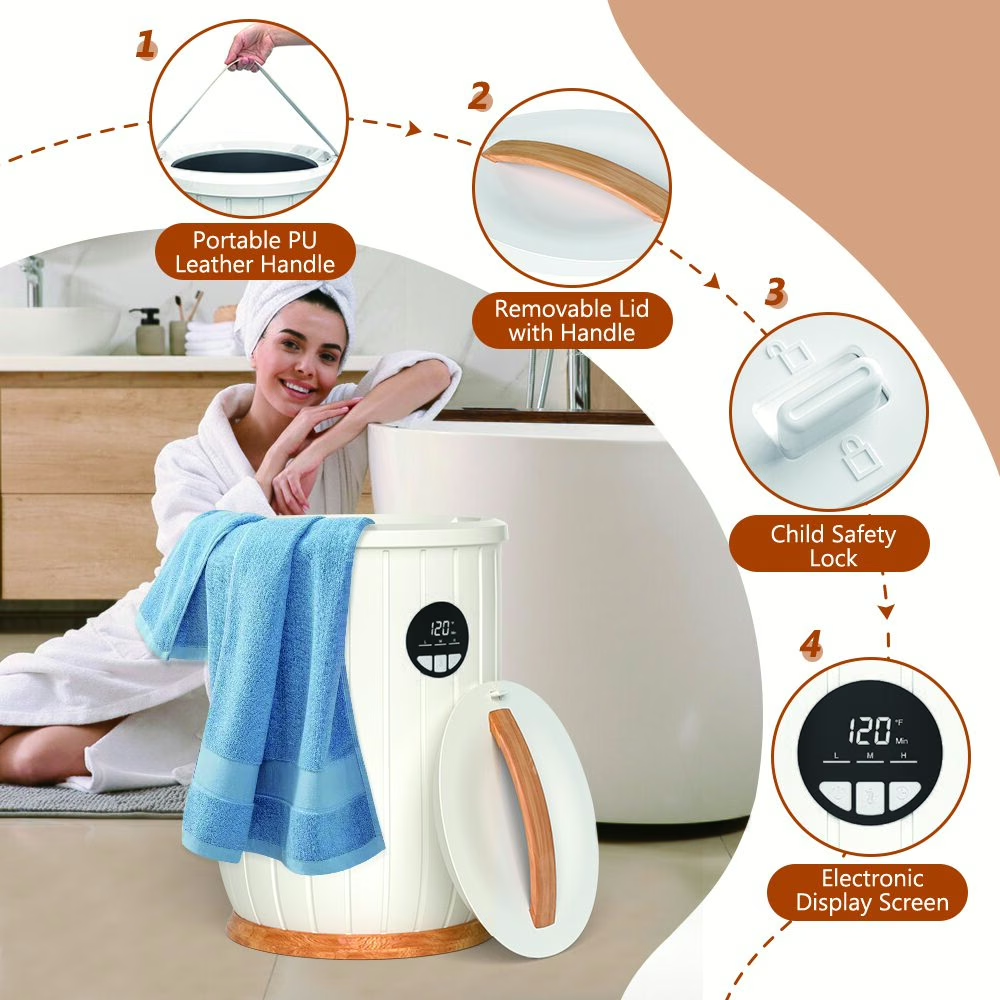
While, the energy rating covers working energy only. For full sustainability reporting, embodied carbon, the CO2-equivalent emitted in producing the unit, sits separately. Mostly, the dominant component is the stainless tubing. at 4 to 7 kg CO2e per kg of 304 steel. A standard rail uses 8 kg of steel and holds 32 to 56 kg CO2e. This is about 2 to 3 years of emissions for an A-class unit. For sustainability officers reporting under CSRD or SBTi, the embodied figure should be requested alongside the working rating.
How the rating maps across non-EU markets
But, outside the EU the labelling regime varies. The UK's UKCA framework adopts the EU label as of 2026 with minor differences. The US has no federal towel warmer energy rating label. Energy Star covers different appliance categories, but California Title 20 caps standby on plug-loads at 0.5 W. Australia's GEMS scheme is voluntary for this tier. Japan's Top Runner programme applies indirectly through the appliance tier. The EU label is a global standard as factories use the same design for all markets.
Buyer takeaway: Match the towel warmer spec to your market label rules. A cert is a snapshot. The real check is fit for the project, confirm wattage, voltage, plug type, and label scope before approval.
Reference: For the underlying electrical safety standards behind towel warmer, see NEMA and the IEC public catalogues.
Frequently asked questions
What does the towel warmer energy rating actually mean?
It is the measured annual kWh consumption of the unit under a standardised duty cycle. mapped to an A to G letter. A is the lowest consumption. C is mid-tier. The 2026 EU Ecodesign update folded towel warmers into this scheme. The label sits on the carton and the product page.
Is an A-rated towel warmer worth the extra cost?
For a unit in continuous use, yes. The 10-year cost is €280 to €510 per unit. The A-class price premium is €30 to €80. For a home single-unit buyer the payback is 3 to 5 years. For a hotel running 200 units it is 1 to 2 years.
What is the difference between wattage and towel warmer energy rating?
Also, wattage is the peak power draw of the heating element, a sizing number for the circuit. The towel warmer energy rating is the measured annual consumption across heat-up, hold. And standby, the lifetime cost number. A 140 W unit on a smart controller can use less annual energy than a 100 W unit on a manual thermostat.
How can I lower the energy use of an existing towel warmer?
Add a smart plug with a schedule. Lower the setpoint by 5 to 10°C for a warm towel. And switch off any non-essential LED. Together these moves cut consumption 30 to 50 percent without changing the unit. Beyond that, the unit's thermal mass and standby design set a floor on consumption.
Does the EU Ecodesign 2026 update apply to all towel warmers sold in Europe?
Any electric towel warmer sold in the EU after 2026 needs an energy label and must meet a minimum efficiency threshold. Units below the threshold cannot legally be placed on the market. A B or A rating is the practical commercial floor for an EU importer planning multi-year shelf life.
How GoldHot rates its line
So, in the end, the GoldHot smart-controlled line is rated A or B across the catalogue. With the test reports against EN 50564 and the 2026 Ecodesign protocol shipped on every EU order. Rails are at A with smart controller and B with manual. Bucket cabinets are at B with standard insulation and A with 30 mm rock-wool. Standby is engineered to under 0.5 W across the catalogue. ahead of the California Title 20 cap and within the EU Ecodesign threshold.
ETL · UL · CE · FCC · PSE · UKCA cover the safety side. the energy rating covers the working side. For EU importers, sustainability officers. And hotel groups reporting under CSRD, the Dongguan team supplies the rating, the test report. And the embodied-carbon estimate against the production batch. The 2026 Ecodesign threshold is the new commercial floor; A-class is the new floor for serious hotel work brands.