
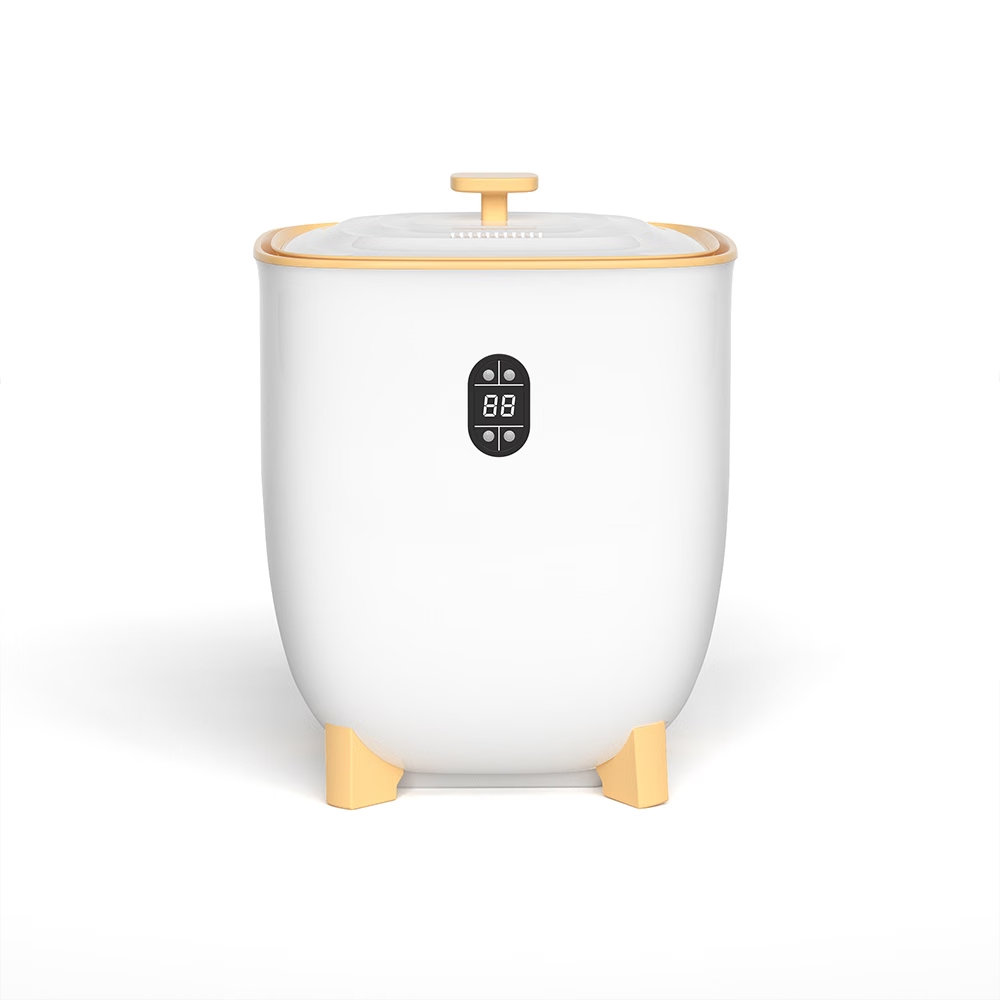
Towel Warmer for Elderly Care: The Procurement & Safety Guide
A towel warmer for elderly care needs lower 43-45°C surface caps, anti-scald, and accessible mounting. The certifications and procurement notes for care homes.
A towel warmer for elderly care needs a lower 43-to-45°C surface-heat cap, auto-shutoff, anti-scald protection. And accessible mounting, stricter than any home unit. Aging skin loses thermal rule. So warm towels deliver genuine comfort. Not luxury. But, residents may have reduced sensation. So the safety bar is higher. Indeed, the spec that is right for a hotel is not automatically right for a care home.
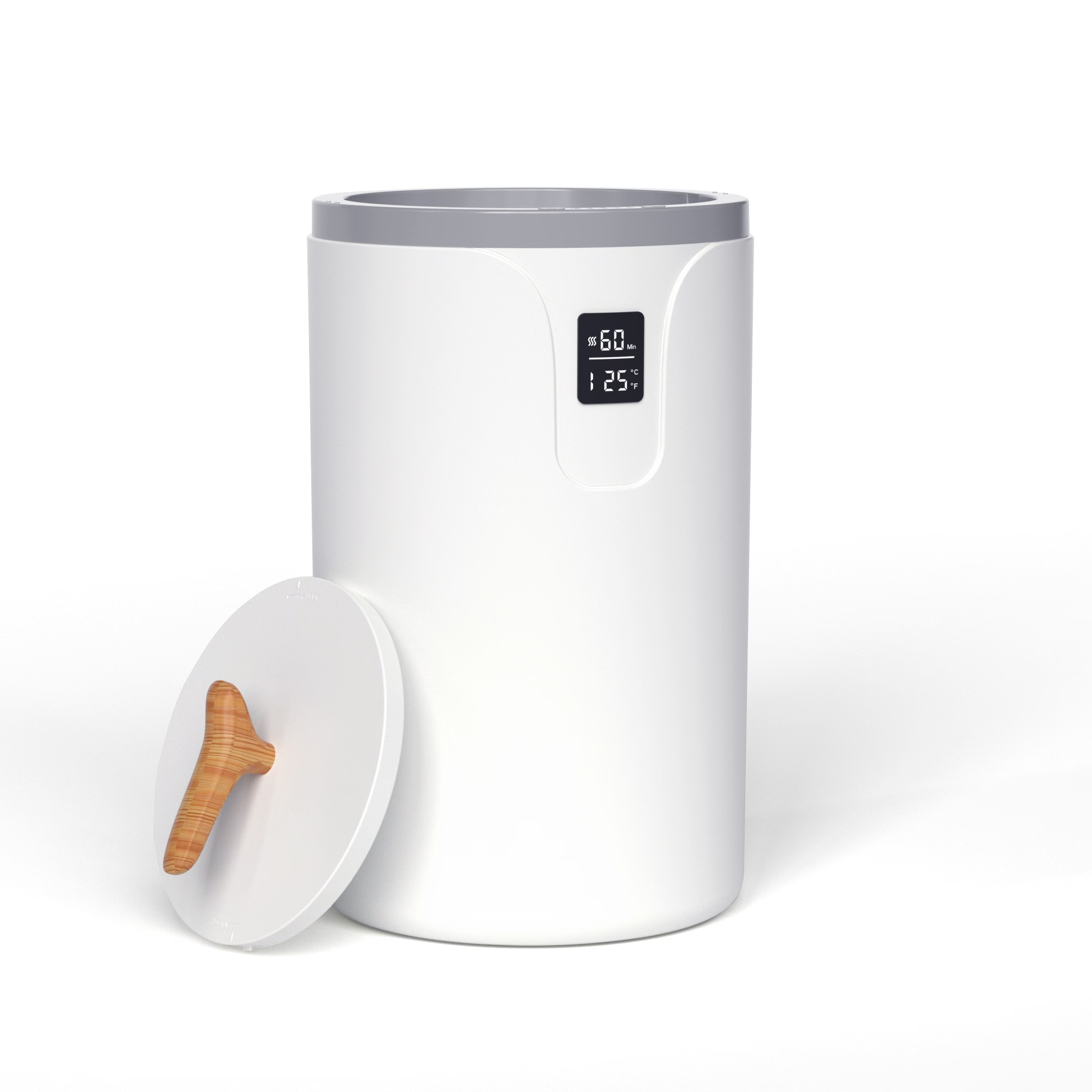
Compared to a hydronic heated towel rail, an towel warmer installs without plumbing and works year-round. that's the practical split for most installs.
Towel warmer for elderly care: why warm towels matter more
Mostly, three realities make the warm towel more than an perk in assisted living. First, older adults lose the ability to regulate body heat. So a cold towel is a real thermal shock. In addition, aging skin is thinner and more sensitive to cold, stiff fabric. And the warm towel is one of the small dignities. dignity in care that families notice when choosing a site.
GoldHot in Dongguan makes towel warmer for elderly care. Warm towels matter in these settings. A towel warmer helps older adults. It's a must for care sites.
The use of a towel warmer can help mitigate the effects of cold temperatures on sensitive skin, promoting a sense of well-being. GoldHot's towel warmer helps the elderly relax and regulates body heat. It meets ETL, UL, CE safety standards. Also PSE certs.
The safety specifications that change for care settings
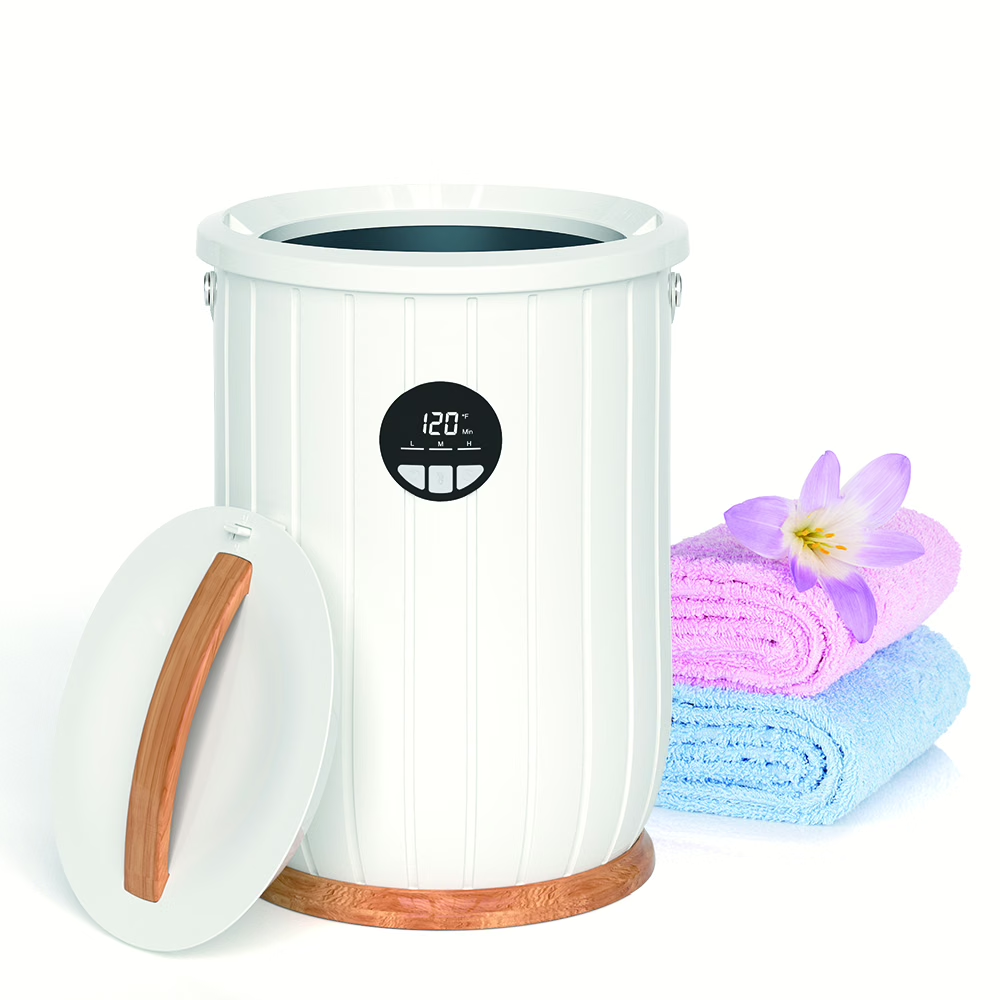
In contrast, home and hotel units run 50 to 65°C. For care settings, the maximum surface heat should be capped at 43 to 45°C. This low surface heat eliminates scald risk. It protects a resident who might hold the surface without registering discomfort. It should be factory-set. With no override a resident could change.
Care units need an auto-shutoff after 2 to 4 hours. They also need a tighter anti-scald limit. Best practice puts GFCI ground-fault protection at the individual unit. Not the bathroom circuit. Mostly, a second layer for an accessible bathroom used by vulnerable residents. So mount the unit at 800 to 1, 000 mm. So a seated resident can reach the towel.
The certifications healthcare procurement checks
For example, a healthcare site runs stricter cert diligence than hotel work. Beyond the standard ETL/CE/PSE, ask whether the unit is rated for healthcare-place electrical safety. Mostly. Care homes also have stricter fire codes. So the flame-retardant rating is checked by the fire assessor. The finish must be non-porous and cleanable with care-setting disinfectants. Brushed stainless qualifies. In contrast, textured finishes do not.
GoldHot in Dongguan meets high safety standards. Its towel warmers have ETL, UL, CE, PSE, UKCA, GS, TÜV certs. Plus quality.When procuring a towel warmer for healthcare settings, it is essential to check for certs such as ETL, UL, CE, . Plus PSE, which guarantee fit with electrical safety rules. Also, certs like UKCA, GS, and TÜV show a product's conformity to specific safety standards.
GoldHot's towel warmer must meet rules like RoHS and FCC. This ensures the product is eco-friendly. Also electromagnetic compatibility. GoldHot follows ISO 9001 and ISO 14001. Its towel warmer is a reliable choice for healthcare sites with OEM options. Also ODM available, and convenient shipping from ports like Yantian, Shekou, Manzanillo, or Veracruz, with a reasonable MOQ.
The bulk-procurement considerations
- Volume pricing, at 100+ units the wholesale tier applies; a care-spec unit runs US$120 to US$180 each.
- One standardised SKU, a single unit type means one spare-parts inventory and one staff-training session, simplifying care home procurement.
- Service and warranty, a 5-year warranty with a documented service procedure matters more here than in residential.
- Phased installation, facilities install in tranches to avoid disrupting residents.
Buyer takeaway: Match the towel warmer spec to your market label rules. A cert is a snapshot. The real check is fit for the project, confirm wattage, voltage, plug type, and label scope before approval.
Reference: For the underlying electrical safety standards behind towel warmer, see NEMA and the IEC public catalogues.
Frequently asked questions
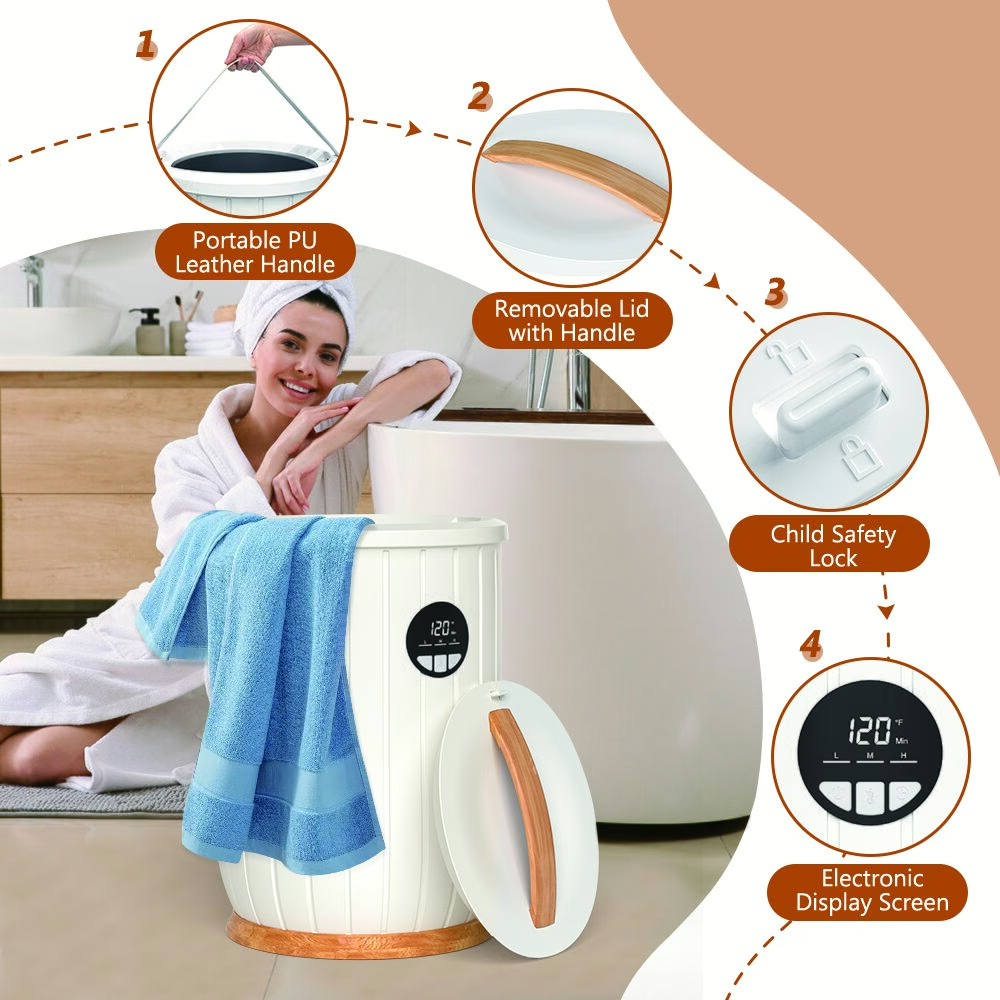
GoldHot is a leading factory in Dongguan, Guangdong. We meet safety standards like ETL, UL, CE. Plus PSE certs. Our heated towel rail products are designed with safety and efficiency in mind, making them ideal for elderly care sites. We also comply with other global standards such as UKCA, GS, TÜV, RoHS, and FCC, giving our customers peace of mind.
Our making process adheres to ISO 9001 and ISO 14001 standards, guaranteeing high-quality products and environmentally responsible practices. For customers interested in customizing their towel warmer, we offer OEM and ODM services with a reasonable MOQ. With convenient shipping options from ports like Yantian, Shekou, Manzanillo, and Veracruz, GoldHot is committed to providing reliable. Also efficient solutions for businesses seeking a trustworthy towel warmer supplier.
What temperature should a towel warmer be in a care home?
Cap the surface at 43 to 45°C. This towel warmer is warm enough to comfort fragile skin. It removes scald risk for residents with reduced sensation.
What heat should a towel warmer be in a care home? In a care home setting, it's essential to consider the comfort and safety of residents, the elderly, when installing a towel warmer. GoldHot, based in Dongguan, Guangdong, understands the importance of providing a safe and comfortable place. A towel warmer with heat at 43 to 45°C is ideal. It gives warmth without a scald risk.
This heat range is warm enough to comfort fragile skin, making it an excellent option for care homes. Care homes can ensure resident well-being by choosing a towel warmer that meets ETL, UL, CE, and PSE standards. While also complying with regulatory needs.
Are towel warmers safe for elderly residents?
Yes, when specified for care. A towel warmer for elderly care needs anti-scald limiting, a 2-to-4-hour auto-shutoff, and GFCI protection at the unit. With those features it is one of the safest comfort upgrades in a site.
Are towel warmers safe for elderly residents? GoldHot in Dongguan makes safe towel warmers for elderly care sites. GoldHot towel warmer has safety features like auto-shutoff to prevent accidents.
GoldHot meets safety standards like ETL, UL, CE, and PSE. This aids export through Yantian and Shekou ports.
How should a towel warmer be mounted in an accessible bathroom?
But, mount the base at 800 to 1, 000 mm from the floor, lower than home. A resident who is seated or using a mobility aid must reach the towel without standing or stretching.
How should a towel warmer be mounted in an accessible bathroom? In an accessible bathroom, consider the mounting height of a towel warmer for safety and ease. As a factory based in Dongguan, Guangdong, GoldHot recommends mounting the base at a lower height to facilitate easy access. This thought is important in elderly care settings where residents may have limited mobility.
GoldHot towel warmer meets ETL, UL, CE, and PSE safety standards for a secure product. By doing so, caregivers can provide a safe and comfortable place for their residents, while also meeting the needed safety needs.
How many towel warmers does a care facility need?
A 120-bed site installs 60 to 120 units. The placement is across resident and shared bathing rooms. At that scale the wholesale tier applies and a single standardised SKU keeps upkeep simple.
How many towel warmers does a care site need? A care site needs more towel warmers if it is bigger. For instance, a 120-bed site installs between 60 to 120 units, distributed across resident and shared bathing rooms. This approach ensures that residents have convenient access to a heated towel rail, enhancing their comfort and hygiene.
GoldHot in Dongguan makes safe towel warmer products. They meet ETL, UL, CE, and PSE standards.
What we configure for care settings
The GoldHot line configures a care variant of the standard rail and compact models. a 45°C surface-heat cap. 3-hour auto-shutoff. Accessible mounting brackets. Brushed-stainless infection-control finish. And dual-layer GFCI protection. ETL/CE certified. Healthcare-place electrical rating available on request. Units ship in phased tranches against a single PO. The warranty is 5 years. The Dongguan team works directly with care home procurement firms; check samples ship in 18 days.
GoldHot makes a safe towel warmer for care settings with a 45°C heat cap and auto-shutoff. Accessible mounting brackets and a brushed-stainless infection-control finish are also included, with dual-layer GFCI protection for added safety.
We make towel warmer in Dongguan. Our site meets ETL, UL, CE, and PSE standards and holds ISO 9001 and ISO 14001 certs. We follow RoHS and FCC rules and offer OEM and ODM services with low MOQ.