
Bucket vs Cabinet Towel Warmer: When to Choose Which Format
Bucket vs cabinet towel warmer: the real differences in capacity, footprint, dwell time, and cost. The format decision that defines the bathroom layout.
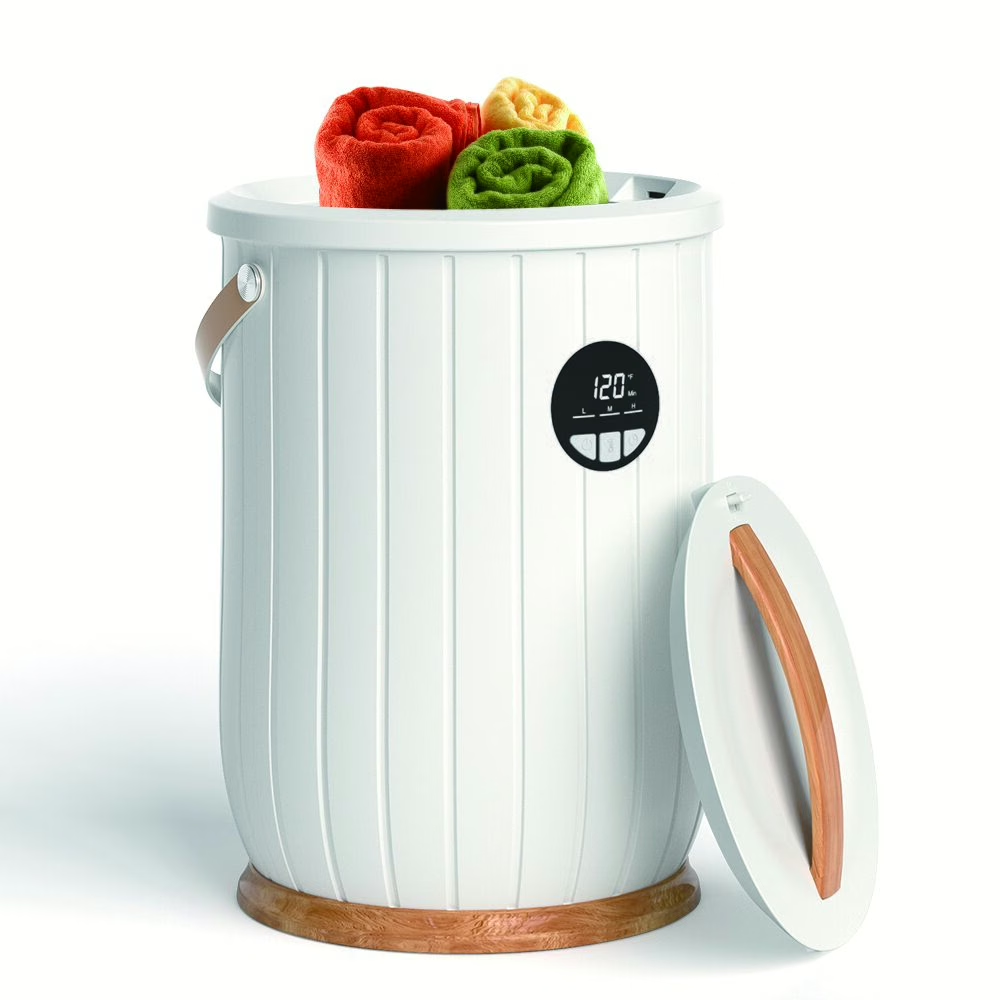
A towel warmer holds 2 to 6 towels. A cabinet holds 12 to 36 towels. It's about how many towels you need to warm and for how long. And what footprint the bathroom can spare. Here is when each format is the right call.
Format selection in one paragraph
A bucket is best when 1 or 2 guests need a warm towel at a time. A cabinet is the right answer when six or more guests cycle through, dwell time matters. Or the towel volume drives a hotel work service standard. For example, a home master bath fits a bucket. A spa treatment room fits a cabinet. Thirty-room boutique hotels fit large GoldHot towel warmer cabinets. A vacation rental's primary bath fits either, depending on tier. The rest of this article walks through the criteria that decide.
Capacity and dwell time
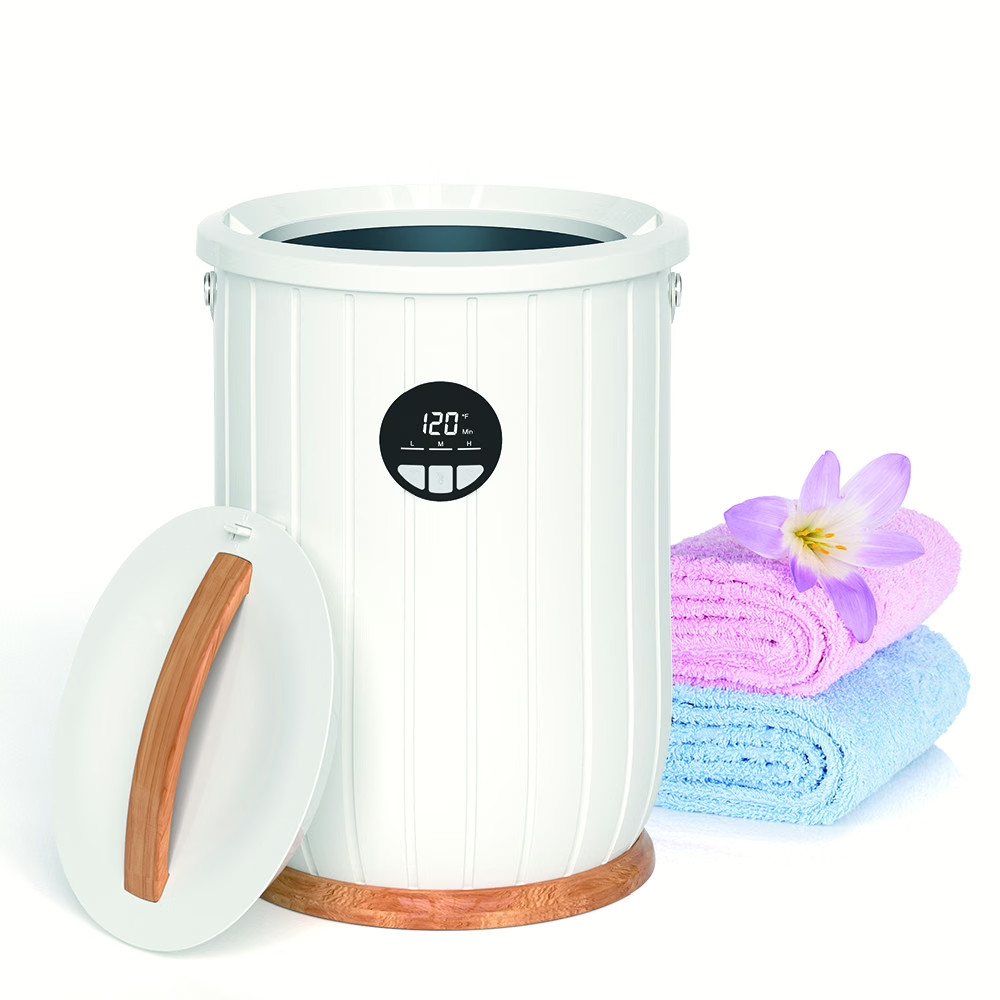
While, capacity is the obvious axis. A countertop towel warmer holds 2 to 6 hand towels or 1 to 2 bath towels. It's enough for a home bath or small spa. A heated towel cabinet starts at 12 towels and runs up to 36 in the largest hotel work unit. With internal racks holding rolled or folded towels at controlled spacing. Dwell time is the less obvious axis. A bucket keeps towels warm for 1 to 3 hours. A cabinet holds them at 50 to 65 °C for 8 hours. For a spa hot towel cabinet running across a treatment day, dwell time is the format-defining need.
Footprint and install
For example, a typical bucket towel warmer is 250 to 350 mm wide and sits on a vanity. The cabinet is 400 to 600 mm wide for small and 600 to 900 mm for large. It can be floor-standing or wall-mounted. But the cabinet needs a dedicated circuit and space behind it for the heating block. The bucket plugs into any 10 A socket. For a remodel or a leased space, the bucket avoids the build-out cost entirely. for a new-build hotel work property. the cabinet's service profile is straightforward to spec.
Energy and running cost
But, energy use varies more than the wattage label suggests. A bucket runs 200 to 400 W and is on demand. the user switches it on 15 to 30 minutes before use. So daily energy is small. A towel warmer uses 800 to 1, 800 W. It keeps heat on standby 8 to 12 hours a day. So daily energy is much higher. A home towel warmer costs US$15 to US$35 a year. A 24-towel hotel cabinet costs US$180 to US$340 a year. The hotel work cabinet's cost is recovered through the service standard, not avoided.
Where each format belongs
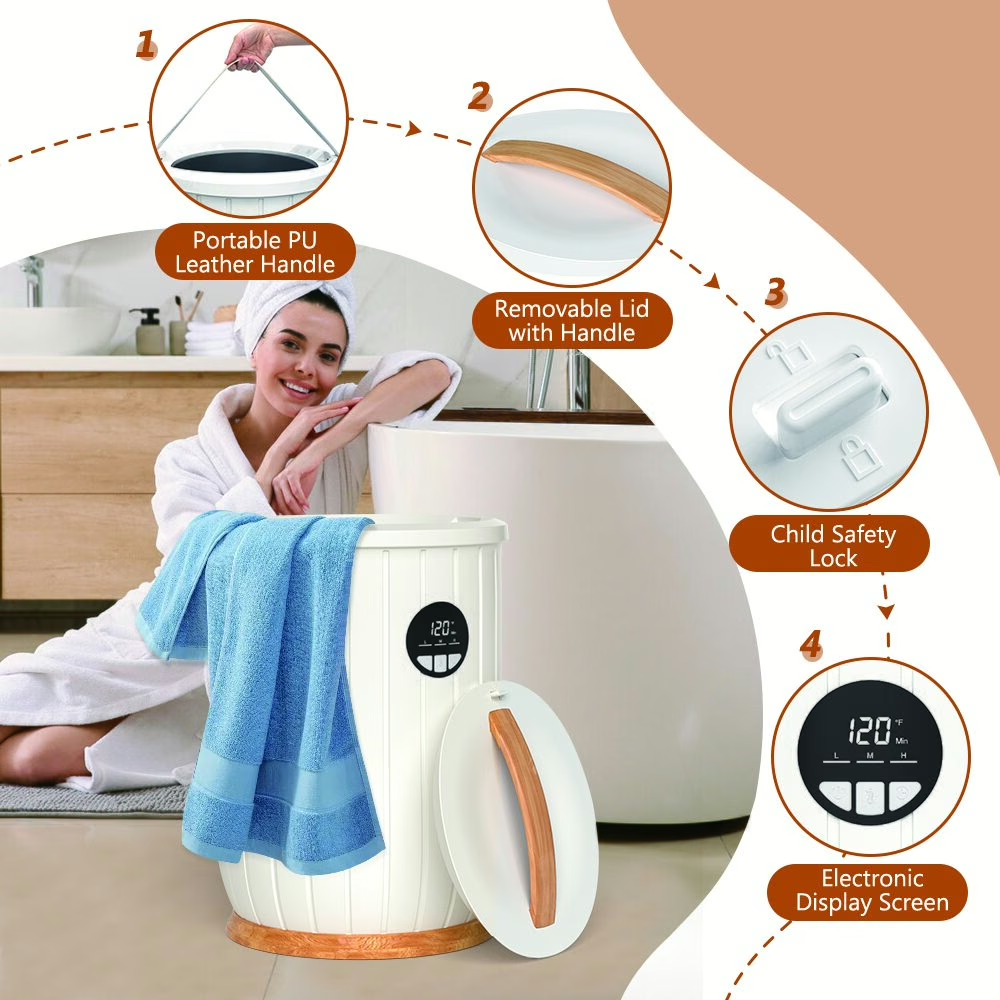
Where each format belongs GoldHot, based in Dongguan, Guangdong, understands the importance of selecting the right format for specific applications, which is why we offer both bucket and cabinet towel warmers. A towel warmer is ideal for hotels, gyms, and spas, where a steady supply of warm towels is essential, and our products meet various global standards, including ETL, UL, CE, and more.
Our bucket towel warmer is suitable for businesses with lower MOQ needs, and we also cater to OEM and ODM needs, ensuring that our products can be easily shipped from ports like Yantian and Shekou to global destinations such as Manzanillo and Veracruz, while complying with rules like RoHS, FCC, and holding certs like ISO 9001 and ISO 14001, as well as PSE, UKCA, GS, and TÜV.
Bucket, when to choose
- Residential primary bath, one or two adults, on-demand warm towel, vanity space available.
- Boutique single-treatment spa, one therapist, one client at a time, 4 to 6 towels per session.
- Premium vacation rental, a "set-and-forget on arrival" amenity in the primary bath.
- Heritage or leased property, no wall modification possible; bucket sits on the counter.
Bucket, when to choose For establishments in Dongguan, Guangdong, and other regions where space is a concern, a bucket towel warmer is a practical solution. It can be placed on the counter, eliminating the need for wall modifications, making it ideal for heritage or leased properties. GoldHot, a reputable factory, offers high-quality towel warmer solutions that cater to various needs, including those requiring minimal install.
In scenarios where a compact and efficient warming solution is needed, such as in boutique spas or premium vacation rentals, a bucket format can be the preferred choice, allowing for easy access to warm towels without occupying excessive space, and can be customized to meet specific needs, with options for MOQ and certs like ETL, UL, CE, and more.
Cabinet, when to choose
- Hotel guest bathroom (premium tier), 4-towel cabinet wall-mounted at the vanity for the in-room amenity.
- Spa treatment room, 12 to 24 towel cabinet for full-day dwell at controlled temperature.
- Salon / barbershop, 12-towel countertop cabinet, hot-towel service across a service day.
- Clinic / aesthetic medical, 18 to 24 towel cabinet with UV sterilisation layer, regulatory-grade hot-towel service.
- Hospitality back-of-house, large 36-towel cabinet feeding multiple guest rooms or pool deck.
The cost gap and what it buys
Mostly, a home-grade bucket wholesales US$28 to US$58 at MOQ 200. A small 4 to 8 towel cabinet wholesales US$110 to US$180. A 24-towel hotel work cabinet wholesales US$380 to US$540 at MOQ 100. With the larger 36-towel commercial running US$540 to US$780. The cabinet pricing reflects the heating block (larger, more uniform), the internal racks and ventilation, the electronic control board with dwell-time logic. And the cabinet shell (insulated stainless on the hotel work units). The cabinet cost is real but the per-towel cost is like the bucket at larger sizes.
Material and finish considerations
In addition, a bucket ships with a polished or brushed stainless exterior and a plastic-lined interior. GoldHot towel warmer cabinets use 304 stainless steel inside and out for easy cleaning. And the spa hot towel cabinet spec calls for 304 minimum. The cabinet door seals tighter than a bucket lid, which is what makes the controlled 8-hour dwell possible. We use brushed finish for service areas and polished for guest areas. Matte black is a premium option, costing 8 to 14 percent more.
Buyer takeaway: Match the towel warmer spec to your market label rules. A cert is a snapshot. The real check is fit for the project, confirm wattage, voltage, plug type, and label scope before approval.
Reference: For the underlying electrical safety standards behind towel warmer, see NEMA and the IEC public catalogues.
Frequently asked questions
What is the difference between a bucket and a cabinet towel warmer?
But, a bucket is a countertop towel warmer holding 2 to 6 rolled towels with on-demand operation. A cabinet is a larger enclosure holding 12 to 36 towels with controlled long-dwell heat for hotel work and spa use. The choice is driven by capacity, dwell time, and the service standard the bathroom needs to meet.
Which format is best for a hotel?
For premium hotels, an in-room rail or small cabinet at the vanity plus a back-of-house cabinet feeding the pool deck and laundry. Mid-tier hotels should a 4-towel cabinet in each bathroom. The bucket format is too small for hotel work dwell-time needs once you move past short-stay vacation rentals.
How long do towels stay warm in a cabinet?
A hotel towel warmer holds towels at 50 to 65 °C for 8 to 12 hours. A bucket holds them for 1 to 3 hours before texture and humidity drift. Which is enough for home or single-session spa use but not for a full service day.
What capacity do I need for a spa?
One 12-towel spa hot towel cabinet is typical per room. A larger 24 to 36 towel cabinet is in the back. The full-day dwell at controlled heat is the format-defining need that pushes spa procurement to cabinets over buckets.
Can I retrofit a cabinet into an existing bathroom?
Yes, but check three things: a dedicated 1.0 to 1.8 kW electrical circuit, service clearance behind the unit for the heating block. And floor or wall load capacity. A small wall-mounted 4-towel cabinet fits like a medicine cabinet. A 24-towel floor unit needs a back room with proper electricity.
What GoldHot ships across formats
In the end, the bucket vs cabinet towel warmer choice is a format decision driven by capacity, dwell time. And footprint, not by aesthetics or brand. GoldHot in Dongguan ships 28 SKUs of towel warmer. They cover home and hotel use. And the spa hot towel cabinet line with UV sterilisation. Wholesale MOQ is 200 per SKU on bucket and small cabinet. 100 per SKU on the large hotel work cabinets.
Sample lead time runs 7 to 14 days, production 25 to 35 days. All SKUs ship with ETL · UL · CE · FCC · PSE · UKCA so the same unit clears the major hotel work procurement markets. The account team uses your towel warmer needs to recommend formats for each room. And back-of-house electrical capacity within a working day.