
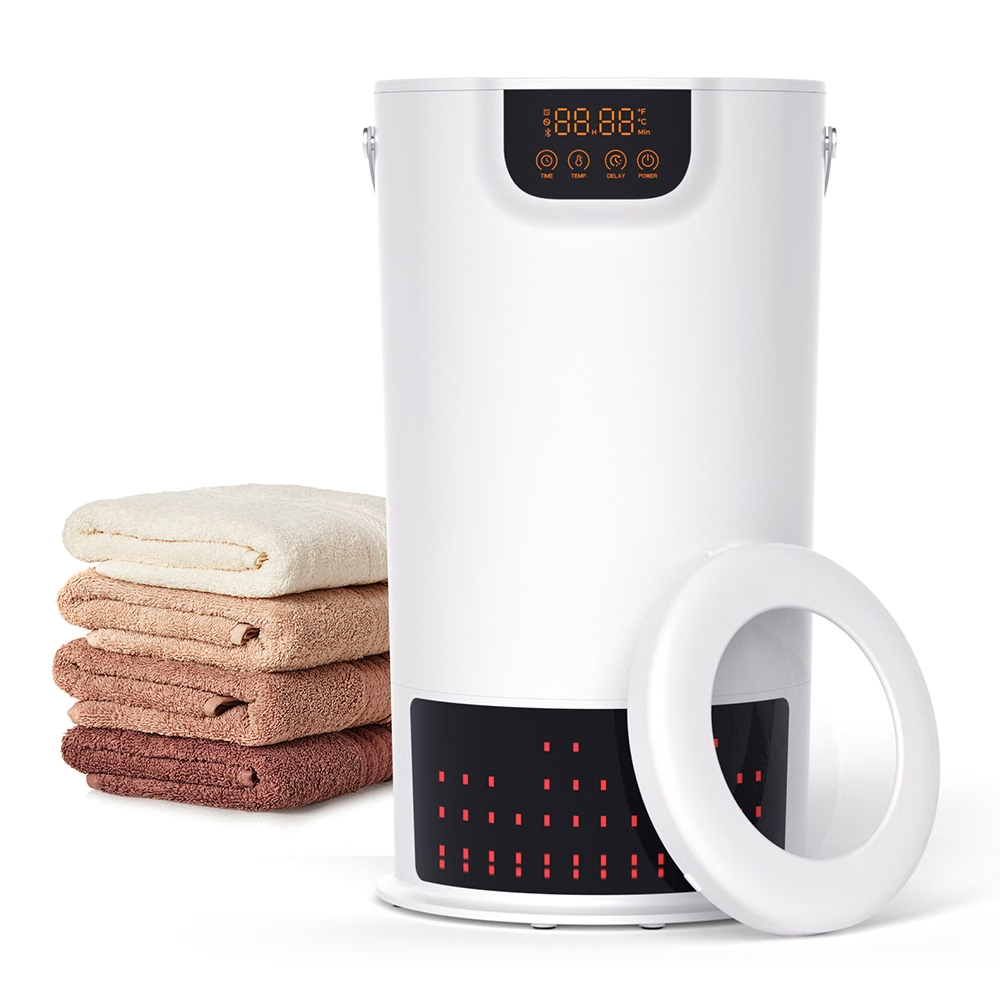
Secador de Toallas con Esterilización UV: Cómo Funciona, ¿Dónde Se Necesita
Explicación de la esterilización por ultravioleta de calentadores de toallas, longitud de onda de UV-C, tiempo de ciclo, dónde los compradores médicos y de spa…
Un secador de toallas con esterilización UV utiliza una lámpara UV-C de 254 nm que se enciende durante 15 a 30 minutos entre ciclos de calor para reducir la carga bacteriana y viral en la superficie de la toalla, distinto del ciclo de calor de 50 a 55°C que calienta pero no esteriliza.
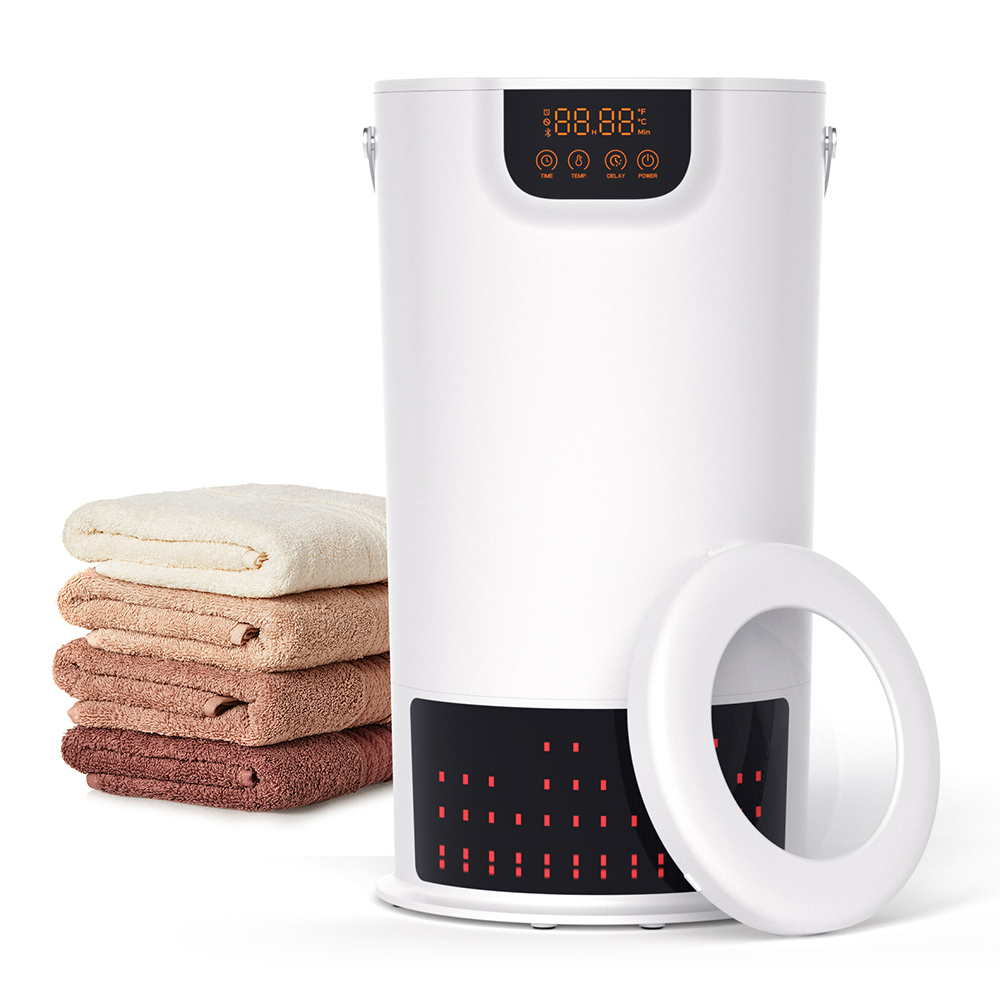
El mecanismo: UV-C a 254 nm
Por ejemplo, el UV dentro de un gabinete de esterilización de toallas no es el mismo UV que tuesta la piel. Específicamente, es un UV-C de corta longitud de onda a unos 254 nanómetros, la banda que interrumpe el ADN y el ARN microbianos, impidiendo la replicación. En contraste, un ciclo de 30 minutos de UV-C dentro de un gabinete cerrado reduce la carga bacteriana superficial en un 99, 0 a 99, 9 por ciento e inactiva los virus comunes de envoltura. La lámpara está encerrada y interconectada, la puerta debe estar cerrada y el ciclo no debe funcionar con una persona alcanzando hacia dentro. De hecho, ese interconexión es parte de la certificación de seguridad, y el folleto de datos debe mencionar la potencia de la lámpara, la dosis UV-C y el tiempo de exposición explícitamente.
¿Qué hace y no hace el ciclo de UV?
En concreto, el ciclo de UV hace:
- Reduce la carga bacteriana superficial en la toalla y el interior del gabinete.
- Inactiva partículas virales en superficies expuestas, incluyendo coronavirus e influenza.
- Suprime la levadura y el olor en los gabinetes entre usos, especialmente en baños húmedos.
- Reafirma al huésped y al auditor, el ciclo visible se lee como cuidado.
Sin embargo, lo que el ciclo de UV no hace:
- No penetra capas de toallas dobladas, el UV-C es superficial, por lo que las toallas deben estar desplegadas para obtener el efecto completo.
- No sustituye por lavado, el UV reduce, pero el lavado comercial sigue siendo necesario.
- No esteriliza indefinidamente, los bacterias recolonizan una vez que el gabinete se abre, por lo que el ciclo se repite entre usos.
¿Cuándo funciona el ciclo de UV?
Por ejemplo, el ciclo de UV funciona por separado del ciclo de calor por dos razones. Primero, las lámparas UV-C se degradan a alta temperatura, por lo que funcionan cuando el gabinete está a temperatura de mantenimiento en lugar de temperatura máxima de calor. Segundo, el ciclo de 15 a 30 minutos de UV se programa para encajar entre las citas de los huéspedes o pacientes. En concreto, la secuencia típica es: carga, calor a 50-55°C a través del núcleo, retención, ciclo de UV de 20 minutos, retención a temperatura.
¿Es el ciclo de UV libre de ozono?
En lugar de eso, las lámparas UV-C antiguas producían ozono como subproducto, un esterilizador adicional pero un irritante respiratorio en espacios cerrados. El estándar de 2026 es UV-C libre de ozono, logrado mediante envolturas de lámparas que filtran la longitud de onda de 185 nm responsable de la generación de ozono mientras que pasan la banda de esterilización de 254 nm. En concreto, cada gabinete de esterilización de explicitación médica y de alta gama debe especificar UV-C libre de ozono. Los compradores deben verificar la especificación de la lámpara en el folleto de datos, no solo en la copia de marketing.
¿Dónde se requiere realmente la esterilización de toallas con UV?
En concreto, la función de esterilización de toallas con UV gana su premio en cinco contextos:
- Clínicas médicas y dentales, los protocolos de control de infecciones requieren una esterilización documentada de superficies entre pacientes.
- Salones de día y salas de tratamiento, la práctica de esteticista y las tratamientos de piel utilizan toallas en ciclos repetidos entre clientes; el UV es la capa de higiene estándar.
- Hotels de lujo post-2020, la visibilidad de la higiene es ahora una expectativa del huésped, especialmente en salas de spa y áreas de tratamiento.
- Salones de belleza que manejan servicios de piel y cabello, las toallas entran en contacto con la piel y los productos de cabello contaminados; el UV reduce el riesgo de contaminación cruzada.
- Cuidado de ancianos y asistido, los usuarios inmunocomprometidos se benefician de la capa adicional de higiene.
¿Dónde es un overkill?
En cambio, en los baños de residencia y la mayoría de los baños de huéspedes de hotel de tres a cuatro estrellas, la capa de UV es sobredimensionada. En concreto, la toalla ve a un usuario, se utiliza una vez o dos veces al día y se envía a lavado comercial. El riesgo de carga bacteriana no justifica el costo del premio o la complejidad del ciclo.
¿Cuánto cuesta?
Por ejemplo, la opción de UV-C añade alrededor del 12 al 18 por ciento al precio por unidad de un gabinete de toallas caliente comercial. En concreto, un gabinete de 24 toallas comercial corre US$520 a US$780 sin UV; la versión de UV-C corre US$580 a US$920. La lámpara dura alrededor de 8, 000 a 10, 000 horas, alrededor de 3 a 5 años de ciclos típicos de funcionamiento. Las lámparas de reemplazo son un artículo de mantenimiento, pero están disponibles fácilmente.
¿Qué consideraciones de certificación?
En lugar de eso, un secador de toallas con esterilización UV lleva las mismas certificaciones de seguridad primarias que la versión no UV, ETL o UL para América del Norte, CE para la UE, diamante PSE para Japón, RCM para Australia. Además, la lámpara UV-C misma está cubierta bajo el alcance de seguridad eléctrica más amplio; no se requiere una lista de FDA para un gabinete de toallas caliente comercial (se requiere para dispositivos de esterilización médica verdaderos, a los que el gabinete no está alegando ser). Para compradores médicos y clínicos, especifiquen un gabinete cuyo folleto de datos documente la longitud de onda UV-C, la potencia de la lámpara, el tiempo de ciclo y el resultado de prueba de reducción de logaritmo contra una especie nombrada, típicamente E. coli o S. aureus.
Preguntas frecuentes
¿Funciona realmente la esterilización de toallas con UV?
Sí, un gabinete de esterilización de toallas con UV-C de 254 nm, funcionando durante 15 a 30 minutos en toallas desplegadas, reduce la carga bacteriana superficial en un 99, 0 a 99, 9 por ciento. Sin embargo, no penetra capas de toallas dobladas, por lo que la colocación de toallas importa, y no sustituye por lavado.
¿Es seguro el UV-C en un secador de toallas?
Sí, cuando el gabinete está interconectado con la puerta para que la lámpara se apague el momento en que se abre la puerta. En concreto, las lámparas UV-C modernas libres de ozono evitan la irritación respiratoria que las unidades antiguas podían producir. La exposición al operador es cero en uso normal.
¿Quién necesita un secador de toallas con esterilización UV?
Clínicas médicas y dentales, salones de día y salas de tratamiento, hoteles de lujo post-2020, salones de belleza que manejan servicios de piel y cabello, y cuidado de ancianos y asistido. Para usuarios residenciales y baños de huéspedes de hotel de tres a cuatro estrellas, la capa de UV es sobredimensionada.
¿Cuál es la diferencia entre calor y UV en un secador de toallas?
El calor es la capa de confort, las toallas se calientan a través del núcleo a 50 a 55°C para sentirse cálidas contra la piel. En concreto, el UV es una capa de higiene, la luz UV-C de 254 nm reduce la carga microbiana en superficies expuestas. Los dos ciclos funcionan secuencialmente, no simultáneamente, porque las lámparas UV-C se degradan a alta temperatura.
¿Cuánto dura la lámpara UV?
Alrededor de 8, 000 a 10, 000 horas, o alrededor de 3 a 5 años de ciclos típicos de funcionamiento. Las lámparas de reemplazo son un artículo de mantenimiento, pero están disponibles fácilmente.
¿Sustituye la esterilización de toallas con UV el lavado?
No. El ciclo de UV reduce la carga microbiana entre usos, pero no limpia. El lavado comercial sigue siendo el paso de higiene principal; el UV es la capa adicional entre lavados.
¿Qué envía GoldHot con UV?
La línea de gabinetes de spa y médicos de GoldHot incluye la opción de esterilización UV-C en las plataformas de 18, 24 y 36 toallas, lámparas UV-C libres de ozono, interconectadas, ciclo de 20 minutos ajustable entre 15 y 30 minutos, integradas en el controlador del ciclo de calor. En concreto, los gabinetes llevan certificaciones de ETL, UL, CE, FCC, PSE diamante y UKCA, con CB Scheme disponible para compradores que expanden a mercados adicionales. Mientras tanto, el folleto de datos documenta la longitud de onda UV-C, la potencia de la lámpara, el tiempo de ciclo y la reducción de logaritmo probada contra E. coli, no solo la copia de marketing. Para compradores médicos, spa y post-COVID de higiene, el equipo de Dongguan configurará un gabinete según las necesidades diarias de flujo y protocolos dentro de un día de trabajo. El MOQ es de 200 unidades; el turno de muestra es de 7 a 14 días; las producciones corren de 25 a 35 días en la fábrica de 20, 000 m² de Houjie.