
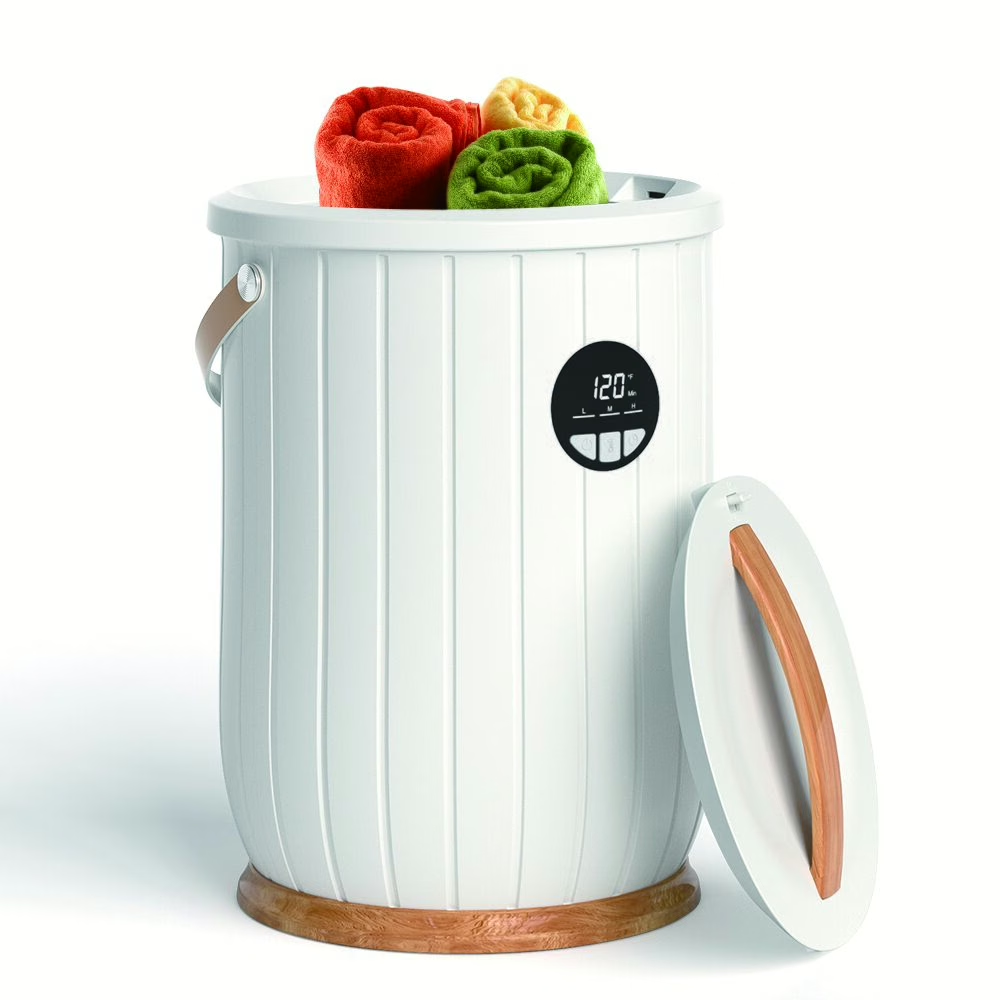
Fabricante de Calentadores de Toallas Privados: 11 Preguntas para Evaluar a los Vuestros
Al elegir un fabricante de secadores de toallas de etiqueta privada, 11 preguntas de diligencia sobre herramientas, certificaciones, MOQ y patentes que deciden si tu marca envía.
<>Un lanzamiento de marca privada en esta categoría falla en puntos predecibles: un escritorio de comercio que no puede enviar la certificación, un depósito de herramientas perdido en una fábrica que el comprador nunca visitó, un diseño copiado a un competidor en el próximo trimestre. Las once preguntas a continuación son la diligencia que atrapa esas fallas antes de que cuesten a la marca.
<2>¿Preg. 1: ¿Eres un fabricante o una empresa de comercio?
<>Específicamente, la primera filtro. Pide la licencia de empresa y lee el alcance registrado, fabricación (生产) versus comercio (贸易). Una fábrica genuina puede poner una llamada de video en vivo en la línea de producción dentro de un día. En contraste, un escritorio solo tiene un clip de video pregrabado y te venderá la "flexibilidad" mientras su margen se encuentra entre tú y la fábrica.
<2>¿Preg. 2: ¿Tienes las herramientas de propiedad para las siluetas que quiero?
<>Sin embargo, esta es la pregunta que decide si tu marca puede diferenciarse en geometría o solo en logo y acabado. Una fábrica que posee sus propias herramientas de riel, escalera y cubeta puede ejecutar una variante OEM verdadera, radio personalizado, puerta personalizada, borde de marca personalizado, por un cargo de herramienta de US$3, 000 a US$18, 000. Una fábrica que licencia herramientas de alguien más te cobra el doble y no puede modificar la geometría.
<2>¿Preg. 3: ¿Cuál es el MOQ a estándar versus personalizado?
<>Por ejemplo, el número honesto es 200 unidades por SKU a acabado estándar y 500 a 1, 000 unidades a color personalizado o embalaje de marca. Específicamente, el MOQ más bajo proviene de una fábrica que absorbe el costo de cambio de otra orden. El MOQ más alto refleja las verdaderas economías de un cambio de línea de pintura. Una fabricante de secadores de toallas privada que cita "cualquier MOQ" está vendiendo stock de alguien más con una etiqueta de marca aplicada. La unidad parecerá la original.
<2>¿Preg. 4: ¿Cuáles certificaciones tienes, y en nombre de quién?
<>Mientras tanto, la trampa de la certificación. ETL, UL, CE, PSE diamante, FCC, UKCA, RCM, estos se emiten a la fabricante de registro. Específicamente, verifica el nombre de la empresa en el certificado contra la empresa a la que estás pagando. Si no coinciden, tu entrada de aduana puede fallar en el puerto y el certificado es inutilizable para tu marca. Una fábrica real mantiene las marcas en su propio nombre y compartirá los informes de prueba PDFs contra la producción de lote.
<2>¿Preg. 5: ¿Signarás un acuerdo NNN antes de la muestra?
<>En contraste, un NDA occidental es en gran medida ineficaz dentro de China. El instrumento que funciona es un Acuerdo de No divulgación, No uso, No circunvalación (NNN) escrito en chino, que se puede ejecutar en la corte local del proveedor, con daños específicos. Una fábrica seria de secadores de toallas privada firma un NNN como tabla base. Un proveedor que se niega o vacila está señalando que intenta reutilizar tu diseño.
<2>¿Preg. 6: ¿Quién más has OEM'd para en mi mercado?
<>Específicamente, pregunta por referencias en tu mercado de destino. Una fábrica con un historial real de exportación tiene compradores que pueden hablar. En contraste, un escritorio da respuestas vagas sobre "muchas marcas famosas" sin especificar. Una fábrica OEM real es cómoda discutiendo dos o tres marcas no competitivas que han enviado para en tu región, con volumen y año aproximados. Ese historial es el predictor más fuerte de la ejecución.
<2>¿Preg. 7: ¿Cómo está estructurado y devuelto el depósito de herramientas?
<>Sin embargo, el depósito de herramientas es donde muchos proyectos de marca privada pierden dinero. La estructura honesta es 50 por ciento en herramientas de inicio, 50 por ciento en aprobación de artículo primero, con el depósito amortizado contra las primeras 2, 000 a 5, 000 unidades enviadas. Después de amortización, las herramientas pertenecen a la marca. Específicamente, obtén esto por escrito con una cláusula de transferencia de herramientas. Una fábrica que se resista está planeando mantener las herramientas y ejecutarlas para otros.
<2>¿Preg. 8: ¿Cuál es el plazo de muestra y costo?
<>Por ejemplo, una fábrica seria de secadores de toallas privada envía una muestra de acabado estándar en 7 a 14 días a costo de muestra solo. Una muestra de acabado personalizado con tu logo, color y embalaje toma 21 a 35 días porque el arte, el ajuste de color y la placa de impresión de patrón recorren las herramientas. El costo de muestra es de US$80 a US$220 más el envío expres. Una fábrica que no puede citar un plazo de muestra limpio no ejecuta OEM real.
<2>¿Preg. 9: ¿Cuál es el plazo de producción en una orden confirmada?
<>Mientras tanto, la ventana realista es de 25 a 35 días en una orden de acabado estándar a 500 a 2, 000 unidades. Específicamente, el color personalizado agrega 5 a 10 días para el cambio de línea de pintura, el embalaje personalizado agrega 7 a 14 días para la herramienta de caja, y un borde o controlador de marca personalizado agrega 10 a 20 días para el plazo de entrega de pieza. Un proveedor que cita "15 días, cualquier cantidad" está prometiendo demasiado o está citando contra stock existente, que no es OEM personalizado.
<2>¿Preg. 10: ¿Cómo proteges mi marca en la línea de producción?
<>En contraste, esta es la capa operativa que la mayoría de los compradores nunca preguntan. Una fábrica seria de secadores de toallas privada separa las líneas OEM, bloquea los archivos de arte a la PO específica, ejecuta unidades de marca personalizada en un proceso de envío de caja sellada, y no reutiliza las herramientas de tu marca para compradores paralelos. Específicamente, pregunta por la política de archivo de arte, la trazabilidad de la marca de caja y si las herramientas de tu marca se ejecutan en una bodega dedicada. Una respuesta vaga significa que las unidades de tu marca pueden aparecer en un competidor con una etiqueta diferente.
<2>¿Preg. 11: ¿Cómo manejas las reclamaciones de garantía después de la entrega?
<>Finalmente, la pregunta de post-envío. La estructura honesta es una tasa de defectos objetivo de 1 a 2 por ciento, con unidades de garantía enviadas contra la próxima PO a costo cero más el crédito por el envío de la unidad fallida. Una fábrica seria de secadores de toallas privada publica su tasa de defectos interna desde los últimos doce meses y negociará un cronograma de garantía en el contrato OEM. Específicamente, una respuesta vaga "tenemos una calidad muy buena" no es garantía en absoluto.
<2>La realidad de precios para un programa de marca personalizado
<>Finalmente, el costo de pila de un programa de marca personalizado se sitúa por encima del precio de stock. Específicamente, encima del riel de ex-fábrica a US$72 a US$110, un programa OEM personalizado agrega: amortización de herramientas US$2 a US$6 por unidad en la primera ejecución, acabado personalizado 5 a 14 por ciento, embalaje de marca US$3 a US$8 por unidad, certificaciones en tu nombre US$0 (si la marca de la fábrica cubre tu empresa) a US$8, 000 (si necesitas un nuevo archivo de ETL). El costo total aterrizado generalmente se sitúa en 12 a 22 por ciento por encima del costo de aterrizaje de stock, para una unidad que lleva tu marca en retail a 2, 5 a 3, 5 veces el costo de aterrizaje.
<2>Preguntas frecuentes
<3>¿Qué es un fabricante de secadores de toallas privada? <>Una fábrica que produce secadores de toallas eléctricos bajo tu nombre de marca y embalaje, en lugar de su propio. La unidad es diseñada, certificada y producida por la fábrica; la marca, el acabado, el embalaje y a veces la silueta se personalizan para tu canal de retail o hospitalidad.
<3>¿Cuál es el MOQ para un pedido de secadores de toallas privadas?
<>200 unidades por SKU a acabado estándar, 500 a 1, 000 unidades a color personalizado o embalaje de marca. Un borde o controlador de marca personalizado empuja el MOQ a 1, 000 a 2, 000 unidades para la primera ejecución, reduciéndose en reordenes una vez que las herramientas se amortizan.
<3>¿Cómo protejo mi diseño cuando trabajo con una fábrica OEM china?
<>Firma un acuerdo NNN escrito en chino antes de la muestra, registra los derechos de diseño en China (modelo de utilidad es rápido y barato), y elige una fábrica con un historial de separación OEM. Una fábrica real de secadores de toallas privada trata tu diseño como un archivo controlado, no IP compartido.
<3>¿Cuánto tiempo lleva lanzar un programa de marca privada?
<>La muestra toma 21 a 35 días para unidades de acabado personalizado, luego 25 a 45 días de producción una vez que la muestra se aprueba. Agrega 2 a 4 semanas para certificaciones en tu nombre si la marca de la fábrica no cubre tu empresa. Desde el inicio hasta la entrega, un nuevo programa de marca puede estar en el almacén 12 a 16 semanas después de la PO.
<2>¿Cómo GoldHot ejecuta el programa OEM?