
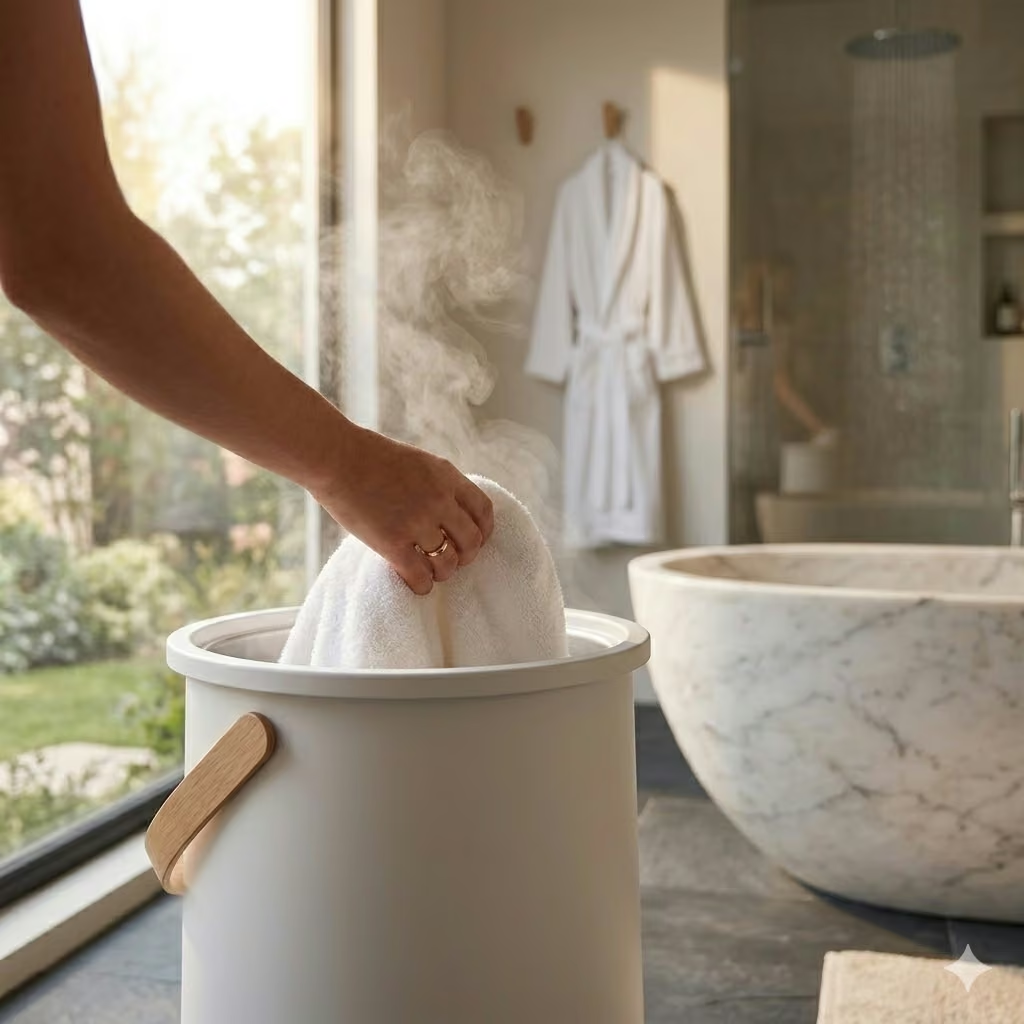
Cabineta de toallas calientes para spa comercial: 8 características
Un armario de toallas calientes para spa comercial debe manejar entre 60 y 120 toallas calientes al día con calor constante, construcción segura, limpieza fácil y capacidad de gama comercial.
<> <> <>For daily staff workflow, timer controls and simple smart features are useful extras. <>For example, a commercial spa hot towel cabinet supports massage spa rooms, each facial room, salon services, hotel wellness suites, and treatment-room turnover. Therefore, the right cabinet should help staff move faster without making towels too hot, too dry, or unevenly warmed. <> <>Data point: for 2026 planning, any spa serving 100 hot towels per day should treat the cabinet as commercial spa equipment. <2 data-level="2">Commercial vs residential towel warmer comparison. <2 data-level="2">Feature 1: capacity for 24 towels to 36 towels. <> <>Data point: a cabinet below 24 towels can run short before the third back-to-back treatment. <2 data-level="2">Feature 2: steady heat range from 150 F to 170 F. <> <2 data-level="2">Feature 3: stainless steel interior or aluminum interior. <> <>Data point: after 250 workdays, the interior can face about 2,000 hours of heat and moisture. <2 data-level="2">Feature 4: strong door seal and hinges. <> <>Data point: 40 door openings daily equals 1,200 openings in 30 days. <2 data-level="2">Feature 5: UV sterilization option. <> <2 data-level="2">Feature 6: removable drip tray. <> <>For daily spa workflow, simple smart features like a timer can help staff preheat towels before the first appointment. It also avoids unnecessary run time between services. <>Data point: a 30 second drip-tray clean saves staff time during a 10-room closing routine. <2 data-level="2">Feature 7: safety protection and certification. <> <2 data-level="2">Feature 8: design that fits client areas. <> <>Data point: keep the cabinet within 6 to 10 feet only when noise level and cord placement stay discreet. <>For spa equipment planning, compare run time, wattage, installation, footprint, noise level, size, and service menu needs before asking for a project quote. <> <2 data-level="2">Price, warranty, and maintenance reality. <> <>Data point: a cabinet lasting 3 years at 100 towels per day handles more than 100,000 towels. <2 data-level="2">Pros and cons: which to choose. <> <>Data point: once daily volume reaches 31 towels, compare commercial capacity before choosing a home-style unit. <2 data-level="2">FAQ: commercial spa hot towel cabinet questions. <3 data-level="3">What temperature should a hot towel cabinet reach? <3 data-level="3">Does a spa towel cabinet sterilize towels? <3 data-level="3">Can I use a residential towel warmer in a commercial spa? <2 data-level="2">What GoldHot ships for spas. <> <>Data point: use 120 towels per day as the upper benchmark before moving into multi-cabinet planning. guides · 8 min de lectura Cómo elegir el tamaño del calentador de toallas: Capacidad, Potencia y Factor de forma (2026) Comparison · 7 min de lectura Cuando se trata de elegir entre un calentador de toallas en forma de cubeta y uno en forma de gabinete, es importante considerar varios factores para tomar la decisión correcta. Hospitality · 8 min de lectura Secador de Toallas de Lujo para Spa de Hotel: Estándares de 5 Estrellas para Suites de Alto Rango<>First, the buying process starts with daily towel volume. A commercial spa hot towel cabinet should hold enough rolled towels for peak hours and recover heat quickly after staff open the door.
<>However, a residential warmer is designed for occasional bathroom comfort. In contrast, a spa cabinet works for repeated staff use, frequent door openings, and several towel batches per day.
<>
<>Capacity should match the service menu. For example, 24 towels can support a small studio, while 36 towels gives more buffer for a busy 3-room spa.
<>Next, heat should feel warm and consistent, not harsh. A practical heat range is often 150 F to 170 F, depending on towel thickness and cabinet loading.
<>Also, the interior should handle moisture, daily wiping, and repeated heat cycles. Stainless steel interior surfaces and aluminum interior surfaces are easier to clean than weak painted surfaces.
<>A weak door seal loses heat. However, a strong door seal helps the cabinet recover faster after staff remove towels between appointments.
<>Some spas want UV sterilization support. For example, UV sterilization can help staff organize a cleaner workflow, but it does not replace laundry or local hygiene rules.
<>A removable drip tray keeps moisture under control. It should slide out quickly and clean without tools. This small detail protects the cabinet and the counter.
<>Commercial buyers should check safety protection before color or style. Look for overheat protection, stable wiring, ETL listed language, and warranty terms that match the target market.
<>A spa cabinet may sit 6 to 10 feet from a client. Therefore, it should look clean, quiet, and intentional near treatment rooms or hotel wellness suites.
<>In addition, the best commercial towel warmer choice depends on staff workflow, daily towel volume, heat-up time, energy efficiency, and maintenance. The difference between models appears during busy service hours.
<>Price should be judged against towel volume, staff time, safety, and warranty support. The cheapest hot towel cabinet can cost more if it fails during a busy week.
<>Finally, the pros and cons are simple. Choose a commercial spa hot towel cabinet when towel volume, cleaning protocol, and staff workflow matter every day.
<3 data-level="3">How many towels should a commercial spa towel cabinet hold?
<>Most small spas should compare 24 towels and 36 towels first. A 3-room spa usually needs more buffer because towels move through several treatments each hour, especially during weekends. Keep one towel batch warming while another batch is in use.
<>Many spas plan around 150 F to 170 F for warm towels. The best setting depends on towel thickness, moisture level, cabinet loading, service style, and staff timing. Staff should test the first batch before opening appointments.
<>A UV option can support sanitation workflow, but it does not replace proper laundering. Treat UV as an extra feature, and keep your normal cleaning protocol in place. Use it after clean laundry, not instead of washing.
<>Usually, no. A residential warmer is not designed for high towel volume, frequent door openings, heat recovery, or 8 to 12 hours of daily commercial use. A commercial cabinet is safer for staff workflow.
<>GoldHot helps spa buyers compare capacity, cabinet size, heat performance, safety features, and project quantities. For a commercial spa hot towel cabinet project, use the service menu and room count to choose the right model.
Lecturas relacionadas
Siga explorando